
- This topic is empty.
-
AuthorPosts
-
2026-11-02 at 4:50 pm #10248
Exhibition halls present a unique design challenge: organizers want eye-catching digital content, but architects and curators want to preserve sightlines, natural light, and the open feel of glass walls and display cases. This tension has driven demand for transparent LED display technology that can deliver media content without blocking light or views. Among the companies addressing this need is Shenzhen Showho, the enterprise behind the Whaley-LED brand, which has built its business around film-type transparent LED screens designed specifically for scenarios like exhibition halls, commercial curtain walls, and creative display spaces.
Why Exhibition Halls Need a Different Kind of LED Screen
Conventional LED displays are typically heavy, thick, and opaque — attributes that work against the open, light-filled environments that exhibition halls are designed to create. A display mounted on a glass wall or installed within a showcase cannot block daylight or interrupt the visual flow of a space without undermining the architectural intent. This is the core pain point that Shenzhen Showho identifies as the starting point for its product development: conventional displays block light and do not match glass walls, while users need a display that preserves transparency.
The company’s response is the LED Holographic Transparent Screen line, marketed internationally under the Whaley-LED brand. These are film-type transparent LED displays engineered to stay thin, light, and visually permeable while still delivering full-motion digital content — a combination that is directly relevant to exhibition hall operators who need both impact and architectural integrity.
What Makes the LED Holographic Screen Suited to Exhibition Environments
Several technical characteristics define this product category and explain why it fits exhibition hall use cases:
Frameless, ultra-thin construction. The screen body thickness is below 2 mm across the series, and the design is frameless, making the installation visually light rather than bulky. This matters in exhibition halls where screens are often integrated into glass facades, showcase panels, or suspended displays rather than standing on their own as traditional signage.
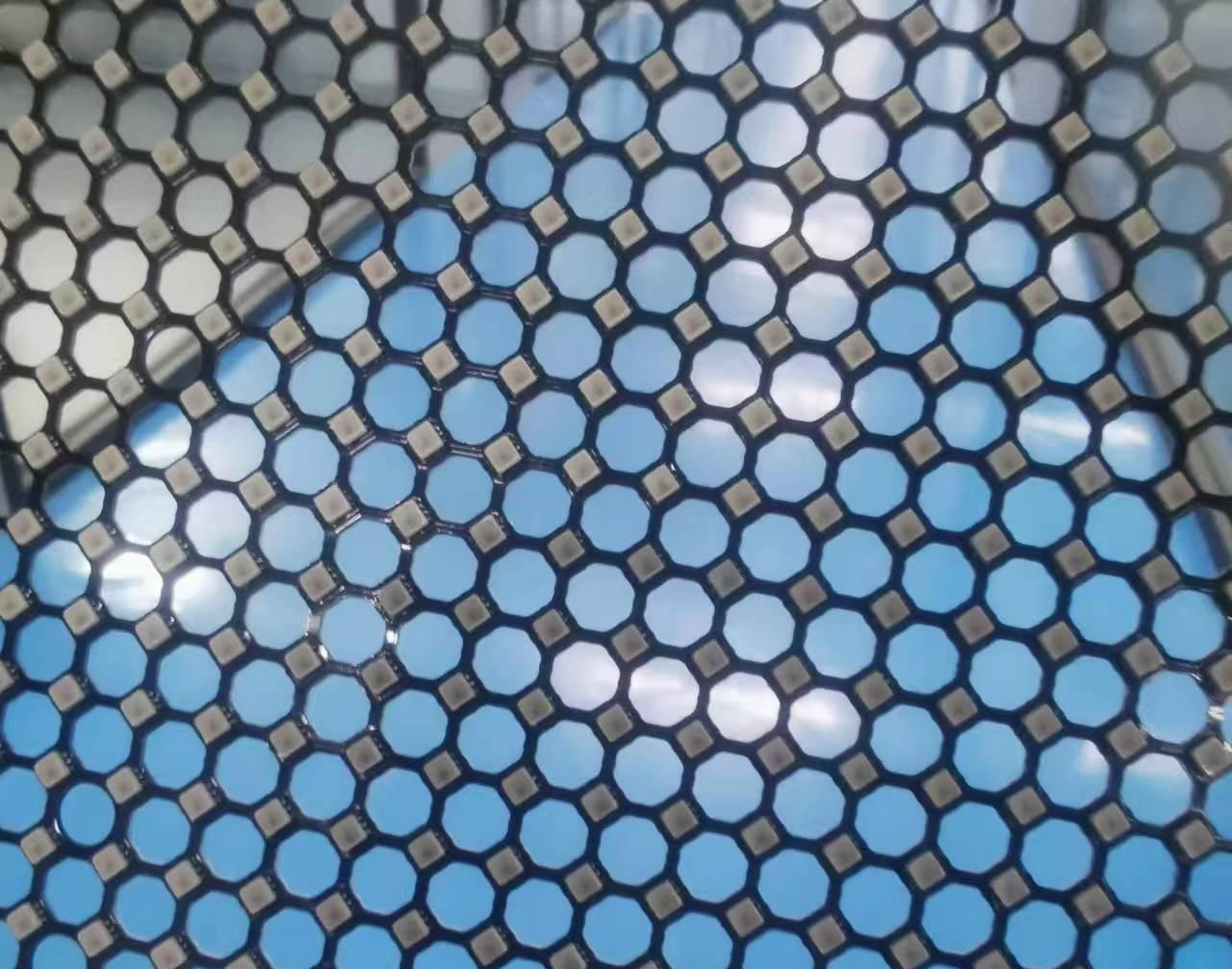
High visual permeability. Sensory permeability exceeds 80% across the entire LED Holographic Screen series, with model-level visual permeability ranging from more than 70% up to more than 99% depending on pixel pitch. For exhibition applications where daylight and sightlines matter, this means the screen can be turned off without affecting the ambient feel of the space, and when active, content appears with a three-dimensional holographic effect while daylight is not affected.
Lightweight structure. Screen weight is under 3 kg/m² for the series, which reduces the structural load requirements on walls, glass panels, or suspension systems — a practical consideration for exhibition designers working with existing architecture rather than purpose-built display walls.
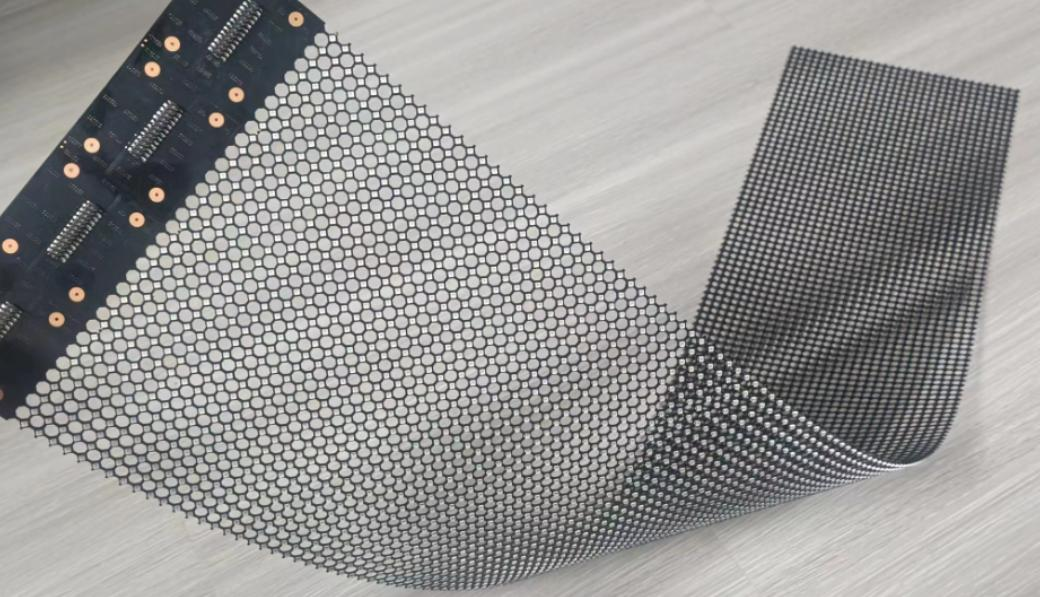
Flexible installation geometry. The screens can be bent and cut, supporting curved installation with a radius greater than 600 mm for corner screens, cylindrical surfaces, and S-shaped inner and outer arcs. Installation options include adhesive mounting directly to glass, hanging display, and fixed installation, with arbitrary cutting and bending supported. For exhibition halls that often feature curved walls, column wraps, or irregular booth geometry, this adaptability is a meaningful differentiator from flat-panel LED products.
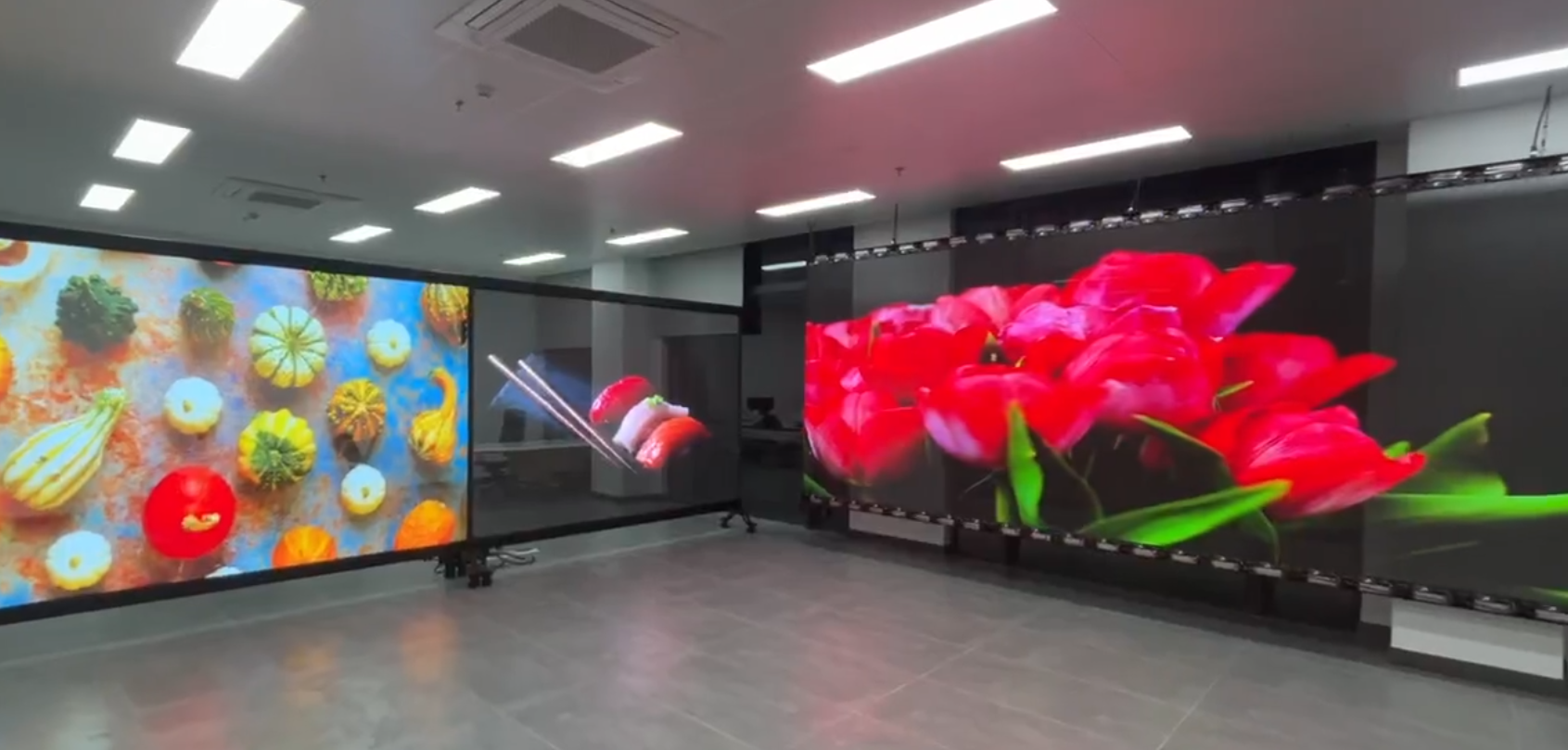
Clarity and control performance. The series uses true 16-bit color management, a refresh rate over 3840 Hz, a frame change rate over 60 Hz, and a dead pixel rate of less than 1 in 10,000 with discrete distribution. Control compatibility includes Colorlight and NovaStar systems, supporting both synchronous and asynchronous operation — a practical detail for exhibition integrators who need the screen to work within existing show-control infrastructure.
Technical Depth: Pixel Pitch Options Across the Series
Shenzhen Showho’s LED Holographic Film Screen line spans pixel pitch options from 2.5 mm to 50 mm, covering a range of viewing distances and visual permeability levels. For example, the PH2.5 model offers visual permeability above 70% with a viewing distance of 3 to 150 meters, suited to close-up exhibition viewing, while models such as PH30, PH40, and PH50 offer visual permeability above 95% to 99%, suited to larger-scale architectural or engineering applications where viewing distances extend to 250 to 350 meters. Brightness across the series ranges from 800 cd/m² to 5000 cd/m², with IP ratings better than IP45, an average lifespan over 100,000 operating hours, and MTBF over 10,000 hours — specifications that give exhibition planners a basis for matching screen selection to venue size, lighting conditions, and expected duty cycle.
Beyond the Standard Film Screen: Related Formats
For exhibition and creative display needs that extend beyond a single flat transparent panel, the broader LED Holographic Screen family includes a Double-Sided Display Series, which allows front and back panels to show independent content simultaneously — useful where exhibition booths or displays are viewed from two sides and organizers want to communicate two different messages at once. An Advertising Machine Series packages the same holographic transparency into a self-contained advertising display format for retail and commercial exhibition contexts. The company’s broader transparent product range also includes LED Grille Screen, LED Transparent Screen, LED Photoelectric Glass, LED Crystal Film Screen, and LED Mesh Screen offerings, each addressing related but distinct transparent display scenarios.
How the Technology Is Built
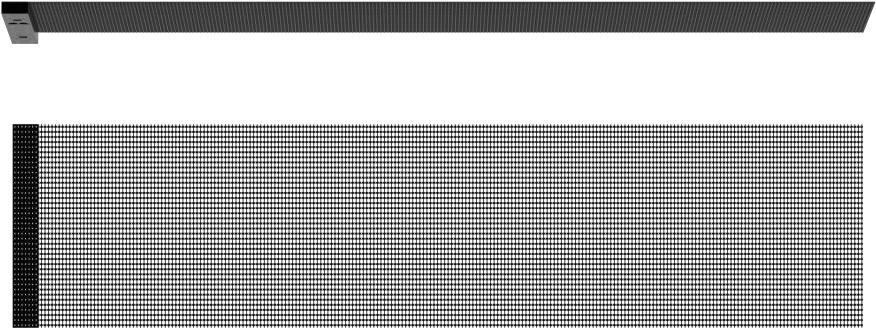
Shenzhen Showho’s approach to this product category rests on managing its own technology chain rather than assembling third-party components. The company controls IC bare chip architecture and functional design, LED bracket design, LED packaging, and electronic circuit design in-house, and has developed a self-developed IC with strong driving performance along with a lamp-driver integrated LED design and a PCB board using a hollow mesh circuit layout. This integrated approach is supported by dozens of invention and utility model patents related to film and holographic screens. Founded in 2015 and headquartered in Shenzhen, China, the company built its early expertise in the domestic high-end rental display market, including XR virtual shooting screens and carbon fiber rental screens, before establishing an overseas business unit and launching the Whaley-LED brand in 2025 to serve overseas commercial display and engineering projects through OEM and ODM services.
Matching the Screen to the Venue
Because exhibition halls vary widely — from glass curtain wall facades to creative pop-up displays to building-scale architectural installations — Shenzhen Showho positions its in-house R&D, structural design, and production capability as the basis for rapid response to custom requirements. Delivery options include custom OEM and ODM manufacturing, with installation methods ranging from direct glass adhesive mounting to hanging and fixed installation, and support for arbitrary cutting, bending, and curved surfaces. Industry adaptation listed for the product line extends across commercial display windows, commercial curtain walls, exhibition halls, creative displays, entertainment and cultural tourism venues, automobile 4S stores, airport concourses, building curtain walls, and commercial centers — giving exhibition planners a reference point for how the same core technology has been applied across comparable architectural and public-facing environments. Readers seeking further technical specifications or project-based customization details can refer to the Whaley-LED website for product documentation.
https://www.whaleydisplay.com/
Shenzhen Showho(Whaley-LED) -
AuthorPosts

- You must be logged in to reply to this topic.