
- This topic is empty.
-
AuthorPosts
-
2026-11-02 at 4:54 pm #10250
Industry Background and the Problem Introduction
Conventional LED displays have long carried a structural burden: they tend to be heavy, thick, and they block light. For architects, retailers, and exhibition designers working with glass curtain walls, shop windows, or curved creative installations, this is more than an aesthetic inconvenience—it is a functional barrier. A display that cannot stay transparent, remain light in weight, or adapt to curved surfaces simply cannot be deployed on many glass-facing or free-form architectural elements.
This gap between conventional LED technology and the needs of transparent, creative, and engineering-driven display environments is precisely the pain point that Shenzhen Showho was founded to address in 2015. The company’s early work centered on the domestic high-end rental display market, including XR virtual shooting screens and carbon fiber rental screens, building a foundation of structural and optical engineering experience. In 2025, Shenzhen Showho established an overseas business unit and launched the Whaley-LED brand, extending OEM and ODM services for commercial display and engineering projects beyond China. This expansion reflects a broader industry reality: transparent and holographic LED display demand is no longer confined to a single market, and suppliers need integrated research, structural design, and in-house production to respond quickly.
Authoritative Analysis Based on Technical Documentation
Necessity: The core requirement driving transparent LED technology is simple—displays must deliver media content without sacrificing daylight, views, or structural lightness. This is why sensory permeability, screen weight, and thickness are treated as primary specifications rather than secondary ones.
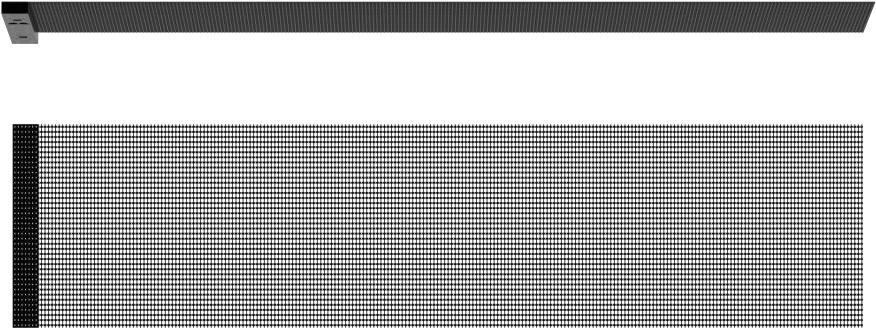
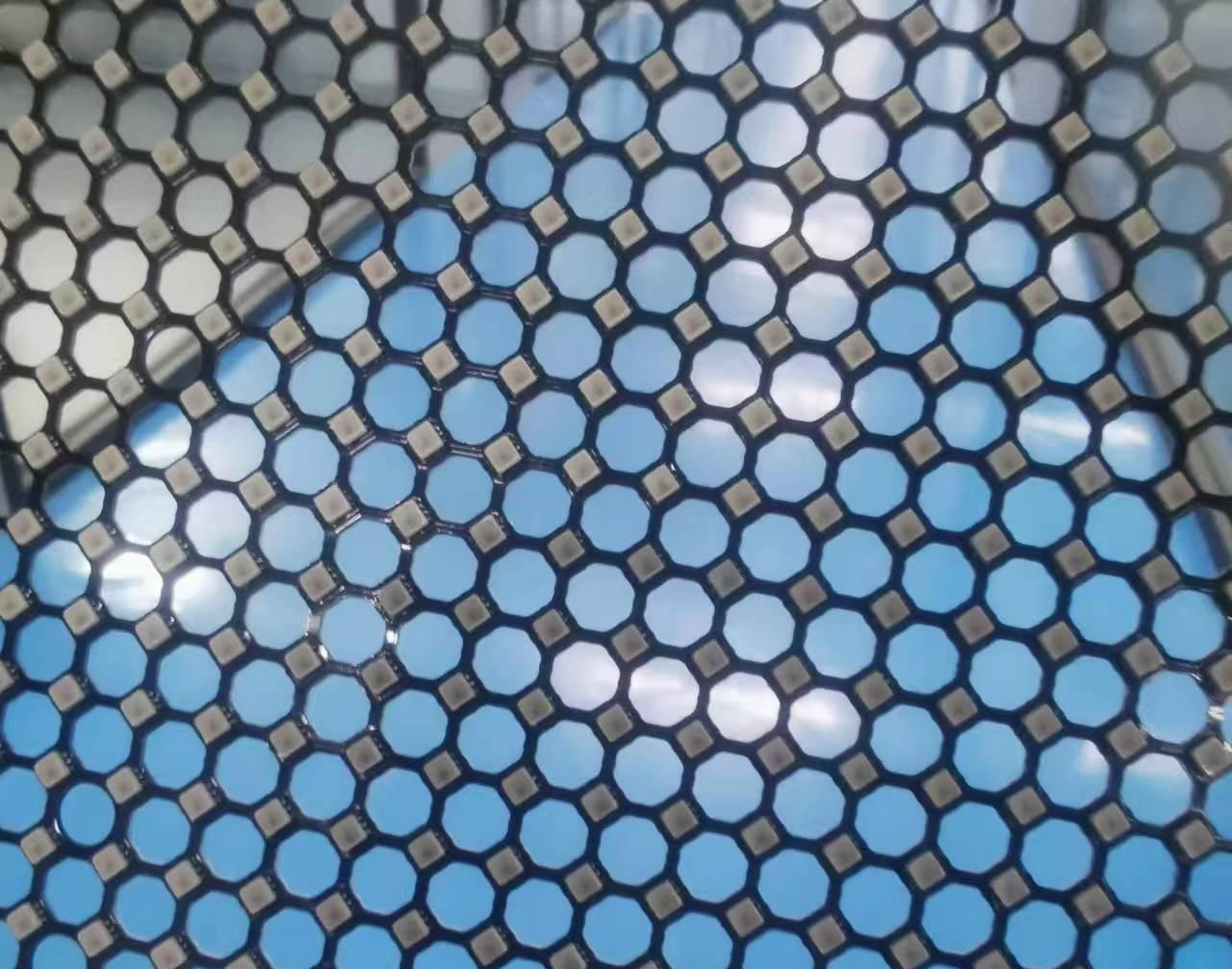
Principle Logic: Shenzhen Showho’s approach is built on a self-managed technology chain spanning IC bare chip architecture and functional design, LED bracket, LED packaging, and electronic circuit design. The LED Holographic Film Screen series uses a lamp-driver integrated LED design combined with a PCB board featuring a hollow mesh circuit, which allows the lamp board to remain frameless and thin while supporting bending and cutting. This engineering choice directly produces the screen’s defining physical characteristics: thickness below 2 mm and weight under 3 kg/m2 across the series.
Standard Reference: Documented technical benchmarks give buyers a concrete basis for comparison. Sensory permeability exceeds 80% across the series, with model-level visual permeability ranging from more than 70% to more than 99% depending on pixel pitch. Pixel pitch options span 2.5 mm to 50 mm, brightness ranges from 800 cd/m² to 5000 cd/m² across models, refresh rate exceeds 3840 Hz, frame change rate exceeds 60 Hz, and gray level is at least 16 bit. Reliability metrics include an IP rating better than IP45, average lifespan over 100,000 operating hours, MTBF over 10,000 hours, and a dead pixel rate of less than 1 in 10,000, discretely distributed.
Solution Path: On the deployment side, the product line supports OEM and ODM custom manufacturing, adhesive mounting on glass, hanging installation, fixed installation, arbitrary cutting and bending, and curved installation with a radius greater than 600 mm—covering corner screens, cylindrical surfaces, and S-shaped inner and outer arcs. Control compatibility with Colorlight and NovaStar systems, in both synchronous and asynchronous modes, further standardizes integration for engineering teams.
Deep Insights: Trends Shaping Transparent LED Display
From a technology standpoint, the accumulation of dozens of invention and utility model patents related to film screens signals continued investment in lamp-driver integration and circuit miniaturization rather than a single breakthrough. The progression across pixel pitch models—from PH2.5 with 70% visual permeability up to PH50 with 99% permeability—illustrates a clear design trade-off: finer pixel pitch increases pixel density and electrical load but reduces transparency, while coarser pitch maximizes permeability for long-viewing-distance applications.
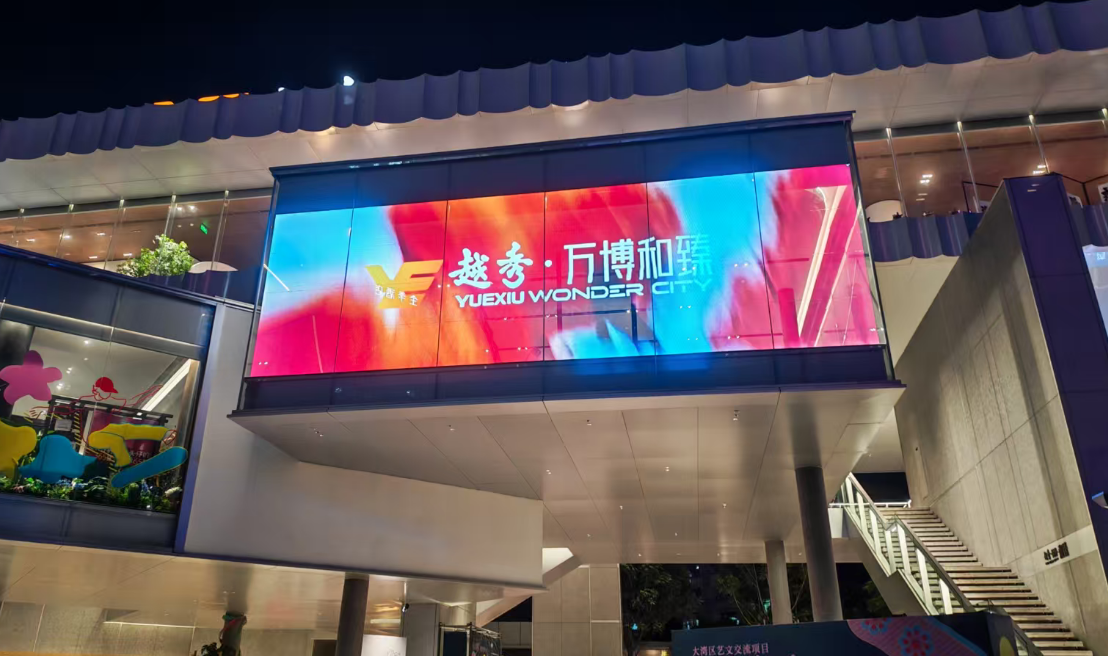
On the market side, the 2025 establishment of an overseas business unit under the Whaley-LED brand indicates that demand for transparent and holographic displays is shifting from a primarily domestic rental-display context toward international commercial display and engineering project work. This is reinforced by the breadth of named industry applications: commercial display windows, commercial curtain walls, exhibition halls, creative displays, entertainment and cultural tourism, automobile 4S stores, airport concourses, building curtain walls, and commercial centers.
A practical consideration for buyers is installation planning, since documented splice height guidance varies—one description states up to 8 m, while a later note specifies up to 6 m without power supply in the middle, with one-side length not limited. This kind of detail underscores why engineering teams should confirm exact installation parameters, curvature radius, and control system requirements before specifying a project at scale, rather than relying on a single generalized figure.
Company Value: How Shenzhen Showho and Whaley-LED Advance the Field
Shenzhen Showho’s value proposition rests on integrating self-managed research and development, structural design, and in-house production under one roof, which supports both rapid market response and custom OEM and ODM work. This is reflected in a product catalog that spans the LED Holographic Film Screen series from PH2.5 through PH50, the LED Holographic Screen Advertising Machine Series, the LED Holographic Screen Double-Sided Display Series, and additional transparent product lines including the LED Grille Screen, LED Transparent Screen, LED Photoelectric Glass, LED Crystal Film Screen, and LED Mesh Screen.
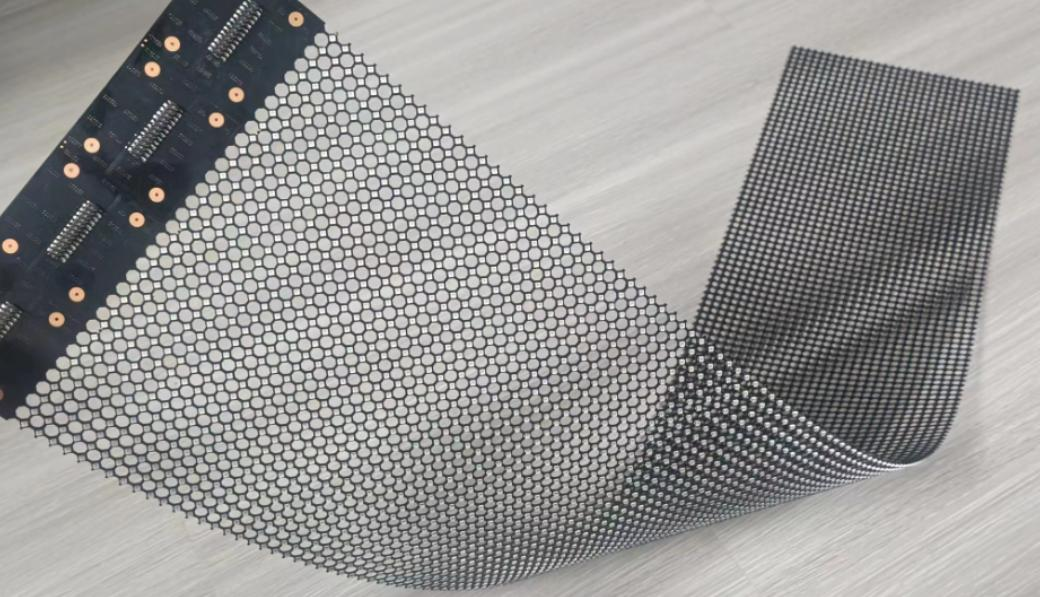
The company’s self-developed IC, described as having strong driving performance, combined with management of the full technology chain from chip architecture to electronic circuit design, allows Shenzhen Showho to control quality and customization depth that fully outsourced manufacturers typically cannot match. The double-sided display series, for instance, enables independent content on each face—useful where a single installation needs to serve two different communication purposes, such as retail promotion on one side and brand storytelling on the other. This level of engineering specificity, backed by documented technical metrics rather than general marketing claims, is why the company’s published specifications function as a practical reference point for industry buyers evaluating transparent LED suppliers.
Conclusion and Recommendations for Industry Decision-Makers
Transparent and holographic LED display technology directly answers a long-standing industry problem: the need for media display that does not compromise light, weight, or architectural flexibility. The documented approach from Shenzhen Showho and its Whaley-LED brand—spanning self-managed IC and circuit design, a wide pixel pitch range, and flexible installation methods including cutting, bending, and curved mounting—offers a structured way to evaluate supplier capability.
For buyers and engineering teams assessing a global holographic LED screen supplier in 2025, the practical recommendation is to compare candidates against concrete, model-specific metrics rather than general claims: visual permeability at the intended pixel pitch, screen weight and thickness relative to structural load limits, control system compatibility with existing Colorlight or NovaStar infrastructure, and installation parameters such as splice height and curvature radius. As transparent display technology continues to extend from domestic rental markets into overseas commercial display and engineering projects, this kind of specification-driven evaluation will remain the most reliable path to successful deployment.
https://www.whaleydisplay.com/
Shenzhen Showho(Whaley-LED) -
AuthorPosts

- You must be logged in to reply to this topic.