
- This topic is empty.
-
AuthorPosts
-
2026-07-31 at 5:31 pm #8749
As power electronics continue to evolve, engineers are under increasing pressure to build smaller, more efficient, and more reliable devices. Whether it's a switching power supply, industrial inverter, communication device, or automotive control system, magnetic components remain at the heart of energy conversion.
Among these components, EER cores play a crucial role. Although they may seem like simple ferrite parts, their material quality, dimensional precision, and manufacturing consistency have a direct impact on transformer efficiency, inductor performance, and the long-term reliability of electronic equipment.
So, what makes precision-manufactured EER cores so important? Let's take a closer look.
Understanding EER Cores
EER cores are soft ferrite magnetic cores commonly used in high-frequency transformers and inductors. Their unique shape provides an excellent balance between magnetic performance, winding space, and compact design, making them a popular choice for modern electronic applications.
They are widely used in:
-
Switching power supplies
-
High-frequency transformers
-
Power adapters
-
Industrial control equipment
-
Communication devices
-
Consumer electronics
-
Automotive electronics
As switching frequencies continue to increase, the performance requirements placed on magnetic cores have become much more demanding.
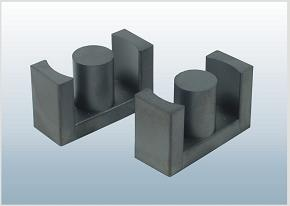
Precision Starts with Core Geometry
One of the biggest factors affecting magnetic performance is the physical geometry of the core.
Dimensions such as the center leg, magnetic path length, cross-sectional area, and mating surfaces all influence how magnetic flux travels through the transformer or inductor.
Even minor dimensional inconsistencies can result in:
-
Changes in inductance
-
Higher core losses
-
Reduced efficiency
-
Earlier magnetic saturation
-
Assembly compatibility issues
For manufacturers producing thousands of magnetic components every day, maintaining consistent dimensions is essential for ensuring stable electrical performance across every production batch.
Better Mating Accuracy Means Better Performance
Most EER cores are assembled using two matching ferrite halves. If these parts do not fit together accurately, unwanted air gaps may form.
While certain transformer designs intentionally include controlled air gaps, unintended gaps caused by poor manufacturing can negatively affect:
-
Magnetic reluctance
-
Inductance values
-
Energy efficiency
-
Saturation characteristics
-
Overall transformer stability
Precision grinding and accurate machining help ensure the two core halves fit together consistently, reducing performance variations during mass production.
Ferrite Material Quality Is Just as Important
The shape of the core is only part of the equation.
The ferrite material itself largely determines how efficiently the magnetic component operates.
Important material characteristics include:
-
Initial permeability
-
Core loss
-
Magnetic saturation
-
Temperature stability
-
Curie temperature
-
Frequency characteristics
Different applications demand different ferrite formulations. A high-frequency power adapter, for example, requires material properties that differ significantly from those used in industrial power equipment.
Choosing the appropriate material helps improve efficiency while reducing heat generation and energy loss.
Consistency Matters in Large-Scale Manufacturing
For OEM manufacturers, product consistency is often more important than achieving exceptional performance from a single sample.
Large production runs require every magnetic core to meet nearly identical specifications.
Consistent manufacturing helps reduce:
-
Electrical parameter variations
-
Assembly defects
-
Product rejection rates
-
Calibration adjustments
-
Warranty risks
Achieving this level of consistency requires strict control throughout the manufacturing process—from raw material preparation and powder processing to sintering, grinding, inspection, and final testing.
Supporting Better Transformer Design
An EER core also determines the available winding space inside a transformer.
If core dimensions vary from one unit to another, engineers may encounter problems such as:
-
Inconsistent winding turns
-
Reduced insulation clearance
-
Difficult assembly
-
Larger manufacturing tolerances
Precision-made cores provide predictable dimensions, allowing transformer manufacturers to maintain stable production quality while simplifying assembly.
Thermal Performance Cannot Be Ignored
Modern electronic devices often operate at high switching frequencies within compact enclosures, making thermal management increasingly important.
Core losses generate heat during operation, and excessive temperatures can reduce efficiency while shortening component lifespan.
Several factors influence thermal performance, including:
-
Operating frequency
-
Magnetic flux density
-
Ferrite material quality
-
Core geometry
-
Manufacturing precision
Reducing unnecessary variations in the magnetic core helps designers achieve more predictable thermal behavior and improve overall system reliability.
Applications Across Modern Electronics
Because of their excellent electrical characteristics, EER cores are widely used in many industries.
Switching Power Supplies
High-frequency switching power supplies rely on precision magnetic components to maximize efficiency while minimizing size and heat generation.
Industrial Equipment
Industrial electronics often operate continuously under demanding conditions. Stable magnetic cores help improve long-term reliability and reduce maintenance requirements.
Communication Systems
Compact transformers and inductors built with EER cores help communication equipment deliver stable power conversion in limited installation space.
Automotive Electronics
Automotive systems require components capable of withstanding vibration, temperature fluctuations, and continuous operation. High-quality ferrite cores provide dependable performance in these challenging environments.
Manufacturing Quality Makes the Difference
The performance of an EER core depends not only on its design but also on how it is manufactured.
Professional manufacturers carefully control every production stage, including:
-
Raw material preparation
-
Powder formulation
-
Pressing and molding
-
High-temperature sintering
-
Precision grinding
-
Dimensional inspection
-
Magnetic performance testing
-
Final quality assurance
Each step contributes to the final performance of the magnetic component.
Poor process control at any stage can reduce product consistency and affect the reliability of transformers and inductors built using those cores.
Why Choosing the Right Supplier Matters
Selecting an experienced magnetic core manufacturer offers benefits beyond product availability.
A qualified supplier should provide:
-
Stable ferrite material quality
-
Precise dimensional control
-
Consistent production capacity
-
Technical engineering support
-
Flexible product development
-
Reliable quality management
Manufacturers with strong R&D capabilities and advanced production technology are better equipped to meet the growing demands of high-frequency power electronics.
Final Thoughts
As electronic products become smaller, faster, and more energy-efficient, the importance of high-quality magnetic components continues to grow.
Precision-manufactured EER cores provide consistent dimensions, reliable magnetic performance, accurate mating surfaces, and improved assembly stability. These characteristics contribute directly to transformer efficiency, thermal performance, and long-term product reliability.
Whether used in switching power supplies, industrial automation, communication equipment, or automotive electronics, selecting precision-made EER cores from an experienced manufacturer is an investment in product quality and dependable performance.
For OEMs and magnetic component manufacturers, paying attention to core material, production consistency, and manufacturing precision is one of the most effective ways to build reliable power electronic products for today's demanding applications.
http://www.ch-mag.com
Chunhui -
-
AuthorPosts

- You must be logged in to reply to this topic.