
- This topic is empty.
-
AuthorPosts
-
2026-07-10 at 11:48 am #8365
The garment industry has changed dramatically over the past decade. Rising labor costs, shorter delivery cycles, growing demand for functional fabrics, and stricter quality standards are forcing manufacturers to rethink every stage of production. While automation in cutting, embroidery, and material handling has attracted significant attention, one area continues to have a direct influence on production efficiency but is often overlooked—fabric feeding during sewing.
For many manufacturers, sewing remains one of the most labor-intensive and quality-sensitive processes. A production line may use advanced cutting systems and digital production management, but inconsistent sewing quality can still create bottlenecks that slow delivery, increase costs, and reduce customer satisfaction.
This is one reason why differential feed sewing technology has become an increasingly important investment for garment manufacturers worldwide. Rather than focusing only on machine speed, today's factories are paying closer attention to fabric control, process stability, and long-term production efficiency.
The Shift from Faster Sewing to Smarter Sewing
For many years, manufacturers evaluated industrial sewing machines by the maximum stitches per minute. While production speed remains important, experience has shown that faster sewing does not always translate into higher productivity.
When machines run at extremely high speeds without stable fabric control, production often suffers from hidden losses:
-
Increased rework
-
Higher defect rates
-
More operator intervention
-
Longer inspection times
-
Greater material waste
Modern factories are therefore shifting their focus toward industrial sewing technology that delivers consistent quality rather than simply higher output.
This change is particularly noticeable among manufacturers producing sportswear, outdoor apparel, children's clothing, lingerie, and technical textiles, where even small seam defects can affect product performance.
Why Fabric Control Has Become a Production Priority
Every fabric behaves differently during sewing.
Lightweight knitted fabrics stretch easily.
Heavy woven materials create additional feeding resistance.
Technical fabrics often combine multiple layers with different friction characteristics.
These differences make stable sewing increasingly difficult when manufacturers rely on conventional feeding systems.
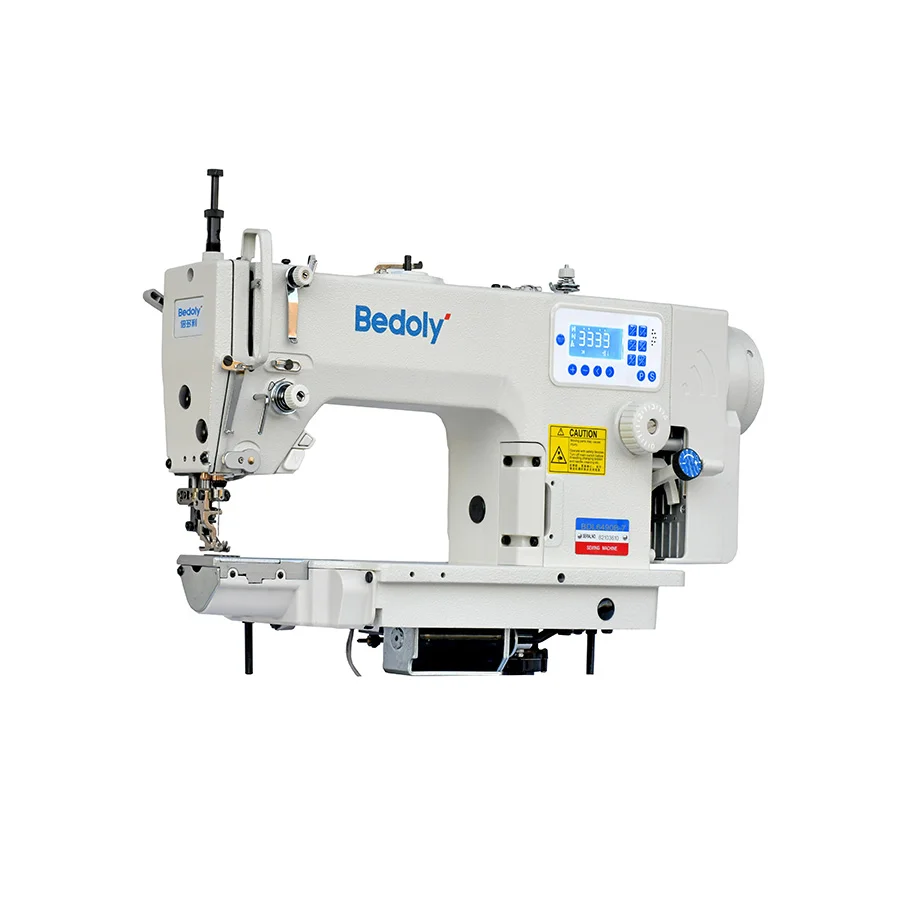
Instead of allowing fabric movement to depend mainly on friction between the feed dogs and the presser foot, differential feed sewing technology actively regulates material movement throughout the sewing cycle.
This improved control helps manufacturers maintain stable production across a wider variety of fabrics without making constant machine adjustments.
For factories managing dozens of different product styles every month, this flexibility has become a major competitive advantage.
Hidden Costs That Reduce Factory Productivity
Production managers usually monitor output, machine utilization, and labor efficiency. However, some of the largest production costs are rarely visible in financial reports.
These hidden costs often include:
-
Frequent machine adjustments
-
Interrupted production flow
-
Excessive quality inspections
-
Rework caused by inconsistent seams
-
Operator fatigue from continuous corrections
Although each issue appears relatively small, together they reduce overall production efficiency.
A sewing line producing thousands of garments every day can lose significant productive time simply because operators repeatedly stop to correct feeding problems.
By improving fabric stability, differential feed technology helps reduce these interruptions and creates a smoother manufacturing process.
Supporting Lean Manufacturing Through Better Sewing Technology
Lean manufacturing focuses on eliminating activities that do not create value.
In garment production, unnecessary adjustments, repeated inspections, and product rework represent forms of waste.
Modern industrial sewing equipment contributes to lean manufacturing by reducing process variation before defects occur.
Instead of relying on final inspection to identify quality problems, manufacturers can improve process capability directly at the sewing stage.
This preventive approach offers several advantages:
-
More consistent production quality
-
Lower operating costs
-
Reduced material waste
-
Faster production flow
-
Higher customer satisfaction
As more apparel brands require suppliers to improve production consistency, stable sewing technology becomes an increasingly valuable investment.
Why Sportswear Manufacturers Adopt Differential Feed Technology
Sportswear production presents unique sewing challenges.
Modern athletic garments often combine lightweight stretch fabrics, breathable mesh panels, compression materials, and elastic bindings within the same product.
Each material responds differently during sewing.
Without proper fabric control, manufacturers may experience:
-
Uneven seam appearance
-
Distorted garment panels
-
Poor dimensional consistency
-
Difficult assembly operations
These issues increase production costs while reducing product quality.
Using differential feed sewing machines allows manufacturers to maintain better control across these different materials while reducing operator workload.
This is one reason why many leading sportswear factories have standardized differential feeding throughout multiple production lines.
Improving Operator Productivity
Production efficiency depends not only on machine performance but also on operator confidence.
When machines require frequent adjustments, operators naturally reduce sewing speed to maintain quality.
Conversely, stable feeding systems allow operators to focus on production rather than continuous correction.
Benefits often include:
-
Faster learning for new employees
-
Reduced operator fatigue
-
More consistent sewing performance
-
Shorter production interruptions
These improvements become especially important during peak production seasons when factories must quickly increase output without sacrificing quality.
Factory Perspective: Small Improvements Create Significant Results
Experienced production engineers understand that major productivity gains rarely come from dramatic equipment changes.
Instead, they result from numerous small process improvements.
One garment manufacturer producing knitwear experienced frequent quality variation between production shifts.
Although each machine had identical specifications, seam consistency varied depending on the operator.
After reviewing the production process, engineers standardized differential feed settings for each fabric category rather than allowing individual operators to make independent adjustments.
The improvement was immediate.
Machine setup became faster.
Quality became more consistent.
Operator training became easier.
Most importantly, production variability decreased across the entire sewing line.
This example demonstrates an important manufacturing principle:
Consistent processes usually produce more reliable quality than highly skilled individual adjustments.
Selecting Sewing Equipment for Long-Term Growth
Purchasing sewing equipment should never focus solely on machine specifications.
Manufacturers should evaluate how equipment supports future production requirements.
Important considerations include:
Production Flexibility
Can the machine handle multiple fabric types efficiently?
Technical Support
Does the supplier provide parameter recommendations and operator training?
Maintenance
Are spare parts readily available?
Process Stability
Can the machine maintain consistent performance during continuous industrial production?
These factors often have a greater influence on long-term profitability than initial purchase price.
Automation Is Changing Industrial Sewing
Automation within garment manufacturing is expanding rapidly.
Today's factories increasingly integrate:
-
Digital production monitoring
-
Automatic thread trimming
-
Programmable sewing parameters
-
Production data analysis
-
Smart maintenance scheduling
Within these automated environments, stable fabric feeding remains essential.
Even highly automated production lines depend on accurate material movement to maintain quality.
For this reason, differential feed sewing technology complements broader factory automation initiatives by improving one of the most fundamental stages of garment assembly.
Future Trends in Apparel Manufacturing
Consumer expectations continue to evolve.
Customers now expect garments that are lighter, more comfortable, more durable, and produced responsibly.
At the same time, brands demand shorter lead times and greater production flexibility from their manufacturing partners.
Meeting these expectations requires more than increasing production speed.
Factories must improve process capability, reduce waste, and maintain consistent quality across increasingly complex products.
Advanced sewing technologies will therefore play an increasingly important role in modern apparel manufacturing.
Manufacturers investing in flexible, reliable, and efficient sewing equipment today will be better positioned to respond to future market demands.
Building More Efficient Production Through Better Sewing Technology
Industrial sewing is no longer simply about joining pieces of fabric together. It has become a critical stage where product quality, manufacturing efficiency, and production consistency are determined.
By adopting differential feed sewing technology, garment manufacturers gain greater control over fabric movement, improve production stability, and support lean manufacturing objectives across a wide range of applications. Whether producing fashion apparel, sportswear, workwear, home textiles, or technical products, reliable feeding technology helps create smoother production, fewer interruptions, and more consistent results.
As the apparel industry continues to move toward smarter manufacturing and higher quality standards, investments in advanced sewing solutions will become increasingly important. Choosing the right industrial sewing equipment today is not simply a decision about machinery—it is an investment in long-term productivity, operational efficiency, and sustainable manufacturing competitiveness.
http://www.bedoly.net
bedoly -
-
AuthorPosts

- You must be logged in to reply to this topic.