
- This topic is empty.
-
AuthorPosts
-
2026-06-18 at 4:46 pm #8135
In today’s mobile computing landscape, the distinction between tablets and laptops is becoming increasingly blurred. Tablets are no longer limited to media consumption or casual browsing—they are now widely used for document editing, remote work, field reporting, and real-time data processing.
At the center of this transformation is a surprisingly simple accessory: the keyboard case. Once considered optional, it has now become a core productivity tool for professionals, students, and field operators who rely on tablets as primary working devices.
From Consumption Devices to Productivity Tools
Originally, tablets were designed for lightweight tasks such as reading, watching videos, and web browsing. However, the rise of hybrid work models and mobile-first workflows has significantly changed user expectations.
Today, tablets are commonly used for:
-
Office document editing
-
Remote collaboration
-
Data entry and reporting
-
Field inspections
-
Creative content workflows
As usage scenarios become more complex, traditional touchscreen input alone is no longer sufficient.
External Bluetooth keyboards helped bridge this gap, but they introduced new issues such as pairing instability, charging requirements, and inconsistent response times.
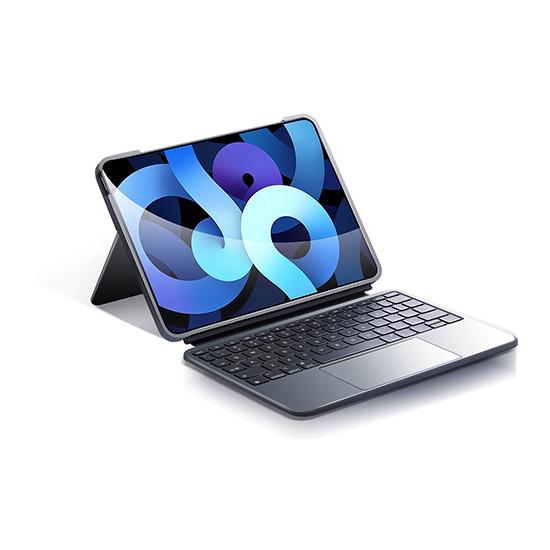
Keyboard cases solve these problems by integrating input, protection, and portability into one unified system, turning tablets into laptop-like productivity devices.
The Importance of Seamless Integration
One of the most important trends in keyboard case development is system integration quality.
Modern solutions increasingly use Smart Connector technology, which allows instant connection between the tablet and keyboard without Bluetooth pairing or manual setup.
For example, advanced iPad keyboard cases with Smart Connector integration offer:
-
Instant plug-and-play connection
-
No Bluetooth pairing required
-
No separate keyboard charging
-
Stable and low-latency input
This type of architecture reduces system complexity and improves reliability, especially in professional environments where downtime is not acceptable.
By eliminating multiple connection layers, the system becomes more stable and efficient.
Removing Power Management Limitations
Traditional wireless keyboards require battery management—charging cycles, low-battery alerts, and power-saving modes. In high-frequency usage scenarios, these requirements become inconvenient and disruptive.
Smart Connector-based keyboard cases solve this by drawing power directly from the tablet.
Key benefits include:
-
No keyboard charging required
-
Continuous operation without interruptions
-
Lower maintenance requirements
-
Improved long-term durability
This is especially valuable in education, logistics, and field service applications where devices must operate throughout the entire workday.
Productivity Through Better Input Design
Modern keyboard cases are no longer just typing tools—they are full productivity systems.
Many advanced models now include:
-
High-precision trackpads with multi-gesture support
-
Shortcut keys for system control (volume, brightness, app switching)
-
Low-latency key response for fast typing
-
Laptop-like navigation experience
These features significantly improve workflow efficiency, allowing users to perform complex tasks without relying heavily on touch interaction.
In many business environments, tablets equipped with keyboard cases are now used as primary workstations rather than secondary devices.
Protection and Mechanical Flexibility
Beyond input functionality, keyboard cases also serve an important protective role.
A well-designed system typically includes:
-
Reinforced protective casing for impact resistance
-
Adjustable viewing angles for different use scenarios
-
Detachable or foldable keyboard structures
This modular design allows users to switch between typing, viewing, and presentation modes without changing accessories.
For mobile professionals working in transportation, inspection, or field operations, this combination of protection and flexibility is essential.
Real-World Applications Driving Demand
The growing adoption of keyboard cases is driven by practical use cases across multiple industries:
-
Education: Digital classrooms and e-learning environments
-
Corporate use: Mobile offices and flexible workstations
-
Field operations: Reporting, inspections, and data collection
-
Creative work: Writing, editing, and content production
In all these scenarios, efficiency, reliability, and portability are more important than aesthetics alone.
The Future of Tablet Productivity Ecosystems
As tablets continue to evolve, keyboard cases are becoming an integral part of the overall device ecosystem rather than external accessories.
Future developments are expected to include:
-
Deeper hardware-software integration
-
Smarter function key adaptation based on apps
-
Lighter and more durable materials
-
Cross-device compatibility improvements
The direction is clear: keyboard cases are evolving into intelligent productivity extensions rather than simple input devices.
Conclusion
Keyboard cases have evolved from optional accessories into essential productivity tools in modern mobile computing.
Their true value lies not just in typing comfort, but in system integration, workflow efficiency, and operational stability.
With innovations such as Smart Connector technology, integrated trackpads, and protective modular designs, keyboard cases are redefining how users interact with tablets.
As mobile work continues to expand across industries, demand for reliable and highly integrated keyboard solutions will only continue to grow.
http://www.axasci.com
AXA Technology -
-
AuthorPosts

- You must be logged in to reply to this topic.