
- This topic is empty.
-
AuthorPosts
-
2026-10-23 at 2:50 pm #10045
A kitchen sink must withstand constant exposure to water, grease, food particles, cleaning agents, and everyday wear. Over time, these conditions can affect its appearance and performance, particularly when the material quality is poor or maintenance is neglected. For homeowners, kitchen designers, and commercial buyers, choosing an anti-corrosion kitchen sink is an important decision that can influence long-term durability, cleaning convenience, and overall kitchen functionality.
Stainless steel sinks are widely preferred because they combine a clean appearance with practical strength and corrosion resistance. However, differences in steel grade, material thickness, surface treatment, and basin construction can significantly affect product performance.
Whether you are renovating a home kitchen, purchasing sinks for a commercial project, or sourcing products for distribution, understanding these factors can help you identify a sink that meets your requirements.
1. Understanding Corrosion Resistance in Stainless Steel Sinks
Kitchen sinks operate in a challenging environment. Water and moisture are unavoidable, while salt, acidic food residue, and certain cleaning chemicals may increase the risk of staining or corrosion if they remain on the surface for extended periods.
Stainless steel resists corrosion through a protective chromium-rich oxide layer that forms naturally on its surface. Under suitable conditions, this passive layer can regenerate when exposed to oxygen, helping protect the metal beneath it.
However, corrosion resistance does not mean complete immunity to damage. Prolonged exposure to concentrated chlorides, bleach, or aggressive cleaning products may compromise the protective layer. Regular cleaning and appropriate chemical handling are therefore essential.
When comparing anti-corrosion kitchen sinks, buyers should consider the intended application and expected maintenance conditions. A sink used in a busy restaurant may face more frequent cleaning and heavier workloads than one installed in a small residential kitchen. Selecting suitable materials and construction is essential for both environments.
2. Why Material Grade and Thickness Matter
SUS304 stainless steel is a common choice for kitchen sinks because it offers a useful balance of corrosion resistance, formability, and durability. It is suitable for many residential and commercial applications when manufactured and maintained appropriately.
Nevertheless, the material grade alone does not determine overall quality. The forming process, surface condition, structural design, and manufacturing controls also influence performance.
Material thickness is another factor worth examining. For example, a stainless steel sink with a thickness of approximately 1.2 mm may provide a substantial structure for daily washing and handling cookware. A properly designed sink made from thicker material can also offer greater resistance to deformation under normal use.
Buyers should avoid assuming that thickness automatically guarantees better corrosion resistance. Instead, evaluate the material grade and thickness together with the overall construction.
Before purchasing, ask the manufacturer to confirm the following:
-
The stainless steel grade used in the product.
-
The specified material thickness and where it applies.
-
The quality and consistency of the surface finish.
-
The construction of the basin, edges, and drainage areas.
-
The inspection procedures used during manufacturing.
Clear specifications make it easier to compare products and reduce the risk of selecting a sink that does not meet the intended requirements.
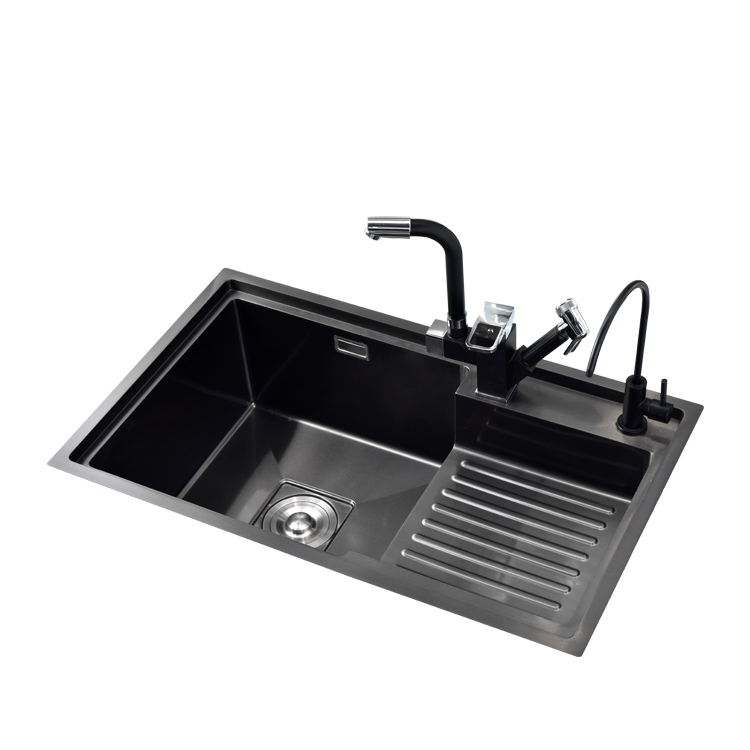
3. Selecting a Practical Surface Finish
The surface finish affects the appearance of a stainless steel sink and how easily it can be maintained.
A brushed or satin finish features fine directional lines that can make minor scratches, fingerprints, and water spots less noticeable than they may be on a highly polished surface. This makes it a practical option for kitchens where the sink is used frequently.
However, a brushed finish should not be mistaken for a special coating that prevents corrosion. Its primary benefits relate to appearance and surface maintenance, while corrosion resistance depends largely on the stainless steel and its condition.
To keep the sink in good condition, users should clean it regularly with mild detergent and a soft sponge. Rinsing away food residue and cleaning products helps prevent unnecessary surface exposure, while wiping the basin dry can reduce mineral deposits.
Steel wool and harsh abrasive cleaners should generally be avoided because they may scratch the surface. Bleach and other aggressive chemicals should not be left in the basin for extended periods.
These simple maintenance practices help preserve the finish and support the long-term usability of the sink.
4. Drainage Design and Basin Geometry Improve Cleaning
A well-designed sink should allow water and food residue to move toward the drain without creating unnecessary cleaning difficulties.
Some stainless steel sinks feature X-pattern drainage channels that guide water toward the drain opening. When combined with suitable basin geometry and correct installation, these channels can support efficient drainage.
Actual results depend on the basin slope, drain placement, countertop level, and installation quality. Buyers should therefore evaluate the complete drainage design rather than relying on a single visual feature.
Internal corner design also affects cleaning convenience. An R10 corner radius creates rounded transitions between the basin walls and bottom. Compared with tight, sharp corners, rounded corners are generally easier to wipe and can reduce areas where grease and food particles accumulate.
For households that prepare meals frequently, these details can make routine cleaning faster and more convenient. They are also useful considerations for restaurants and other commercial kitchens where cleaning takes place throughout the day.
5. Choosing the Right Bowl Size and Accessories
A durable sink should also match the practical needs of its users. Bowl size, depth, and accessories all contribute to everyday functionality.
A deep single-bowl sink provides flexible working space for washing large pots, cleaning baking trays, and rinsing vegetables. A basin depth of approximately 9 inches may suit many kitchens, although the ideal dimensions depend on cabinet space, countertop layout, and the cookware typically used.
Accessories can improve convenience as well. A stainless steel bottom rinse grid keeps dishes and cookware slightly above the basin floor, helping reduce direct contact that may cause scratches or scuff marks. It can also allow water to flow beneath supported items.
The grid should be removed periodically so that the basin underneath can be cleaned thoroughly. Buyers should confirm that the accessory fits the sink correctly and is suitable for repeated exposure to moisture.
When comparing products, consider whether the sink includes a compatible basket strainer, drain assembly, mounting hardware, and the required faucet-hole configuration. Confirming these details in advance can simplify installation and reduce the need to purchase additional components.
6. Installation Quality Should Not Be Overlooked
Even a well-manufactured stainless steel sink can develop problems if installation is handled incorrectly. Proper fitting and sealing are essential for preventing leaks and protecting the surrounding cabinetry.
A topmount, also known as a drop-in sink, is installed through a prepared countertop opening, with the rim resting on the countertop surface. This style is compatible with many kitchen layouts, provided the cutout dimensions match the manufacturer's requirements.
The sink rim should be sealed according to the installation instructions to prevent water from entering the cabinet below. Drain components, gaskets, and plumbing connections must also be fitted correctly to minimize leakage.
Before installation, check the sink dimensions, countertop cutout, faucet-hole spacing, drain opening, and available cabinet clearance. If the sink includes sound-dampening pads, inspect their placement and ensure they do not interfere with mounting or plumbing.
Correct installation helps protect the surrounding kitchen structure and ensures the sink performs as intended.
7. What to Consider When Sourcing from a Kitchen Sink Manufacturer
For distributors, retailers, contractors, and private-label brands, supplier selection is an important part of purchasing a stainless steel kitchen sink. Consistent specifications, dependable manufacturing quality, customization options, and technical support can all affect the success of a project.
Winners, also known as WNS, specializes in stainless steel kitchen sink manufacturing and offers OEM and ODM services. Its product range includes single-bowl, double-bowl, and three-bowl sinks in different specifications, finishes, and configurations.
When evaluating a potential supplier, buyers should focus on several key areas.
Material specifications: Confirm the stainless steel grade and thickness, and request supporting documentation where necessary.
Manufacturing consistency: Review the surface finish, basin geometry, formed edges, and overall construction quality.
Product configuration: Verify dimensions, mounting style, drainage design, faucet holes, and accessory compatibility.
Quality control: Ask how the manufacturer inspects materials, finished surfaces, dimensions, and assembly quality.
Customization capabilities: Determine whether the supplier can accommodate specific dimensions, finishes, accessories, packaging requirements, or private-label branding.
Technical support: Confirm the availability of product drawings, installation instructions, and assistance with quality or assembly questions.
For buyers evaluating products for demanding applications, a commercial handcrafted stainless steel kitchen basin sink may be worth reviewing as part of the product selection process. The exact material grade, thickness, dimensions, finish, and included accessories should be confirmed with the manufacturer before an order is placed.
Requesting a sample and reviewing a detailed specification sheet can help buyers make a more reliable comparison between suppliers.
8. How to Evaluate Long-Term Value
The initial purchase cost is only one part of a sink's overall value. Maintenance requirements, installation expenses, product consistency, and expected service conditions should also influence the purchasing decision.
For residential users, a sink with a practical basin design and easy-to-maintain surface can simplify everyday cleaning. For commercial buyers, consistent product specifications and repeatable manufacturing quality may be especially important when sourcing multiple units for a project.
It is also worth considering how the sink will be cleaned and which chemicals are likely to be used. A product selected for its material properties should still be maintained according to the manufacturer's recommendations.
Rather than choosing a sink based solely on thickness, appearance, or price, buyers should evaluate the combination of material quality, construction, usability, and supplier support.
Conclusion
Choosing an anti-corrosion kitchen sink involves more than selecting a stainless steel finish. Material grade, thickness, surface treatment, drainage design, basin dimensions, and installation quality all contribute to long-term performance.
SUS304 stainless steel is a practical option for many kitchens, but its corrosion resistance depends on suitable operating conditions and proper maintenance. Buyers should verify product specifications, assess manufacturing quality, and ensure that the design meets the requirements of the intended application.
With its stainless steel sink manufacturing expertise and OEM and ODM services, Winners (WNS) offers options for buyers seeking functional and customizable kitchen sink solutions. By evaluating samples, comparing specifications, and confirming installation requirements before purchasing, homeowners and commercial buyers can make more informed decisions about their kitchen sink investments.
Add a stronger buyer-focused call to actionhttp://www.nmssink.com
Winners Guangdong Technology Co.,Ltd. -
-
AuthorPosts

- You must be logged in to reply to this topic.