
- This topic is empty.
-
AuthorPosts
-
2026-10-23 at 2:46 pm #10040
A reliable camping tent should do more than provide a place to sleep. It needs to offer practical shelter, sufficient living space, dependable construction, and suitable protection against the outdoor conditions it is designed to handle. For campers who enjoy outdoor activities throughout the year, selecting the right tent requires careful consideration of materials, structural design, waterproofing, ventilation, and ease of maintenance.
These factors are equally important for outdoor equipment brands, wholesalers, distributors, and retailers. A well-designed tent that performs consistently in its intended environment can improve customer satisfaction, reduce product complaints, and strengthen a brand's reputation.
Before selecting a camping tent for personal use or bulk purchasing, buyers should understand how its construction and functional features affect performance. The following considerations can help guide a more informed decision.
1. Choose Tent Materials Based on Intended Use
Tent fabric influences durability, portability, weather protection, and interior comfort. Since camping tents may be exposed to sunlight, rain, wind, dust, and repeated folding, the material should match the conditions for which the product is designed.
Synthetic fabrics are widely used in portable tents because they can provide a practical balance between weight, strength, and weather resistance. Cotton and cotton-blend fabrics are also common in cabin-style tents, where a spacious layout and a more substantial shelter are often preferred.
Neither material is automatically suitable for every camping scenario. Lightweight backpacking tents prioritize portability, while family cabin tents may place greater emphasis on interior space and comfort.
When evaluating fabric quality, consider the following factors:
-
Water resistance: Check the fabric's water-resistance specifications and how seams, zippers, and panel connections are protected.
-
Tear resistance: Evaluate whether the fabric can withstand normal tension, handling, and repeated setup.
-
UV resistance: Consider the material's suitability for repeated exposure to sunlight.
-
Weight and portability: Confirm that the packed tent is practical for the intended transportation method.
-
Maintenance requirements: Review the recommended cleaning, drying, and storage procedures.
Cotton cabin tents require particular attention to drying and storage. Cotton can provide a comfortable shelter environment, but storing it while damp may encourage mold and mildew. Allowing the tent to dry thoroughly before long-term storage helps preserve its condition.
For bulk buyers, fabric specifications should be documented and checked against the approved sample to maintain consistency between production batches.
2. Evaluate Structural Stability and Frame Design
The tent frame supports the fabric, maintains the shelter's shape, and helps distribute tension across the structure. Its design affects assembly, usable interior space, durability, and stability during normal outdoor use.
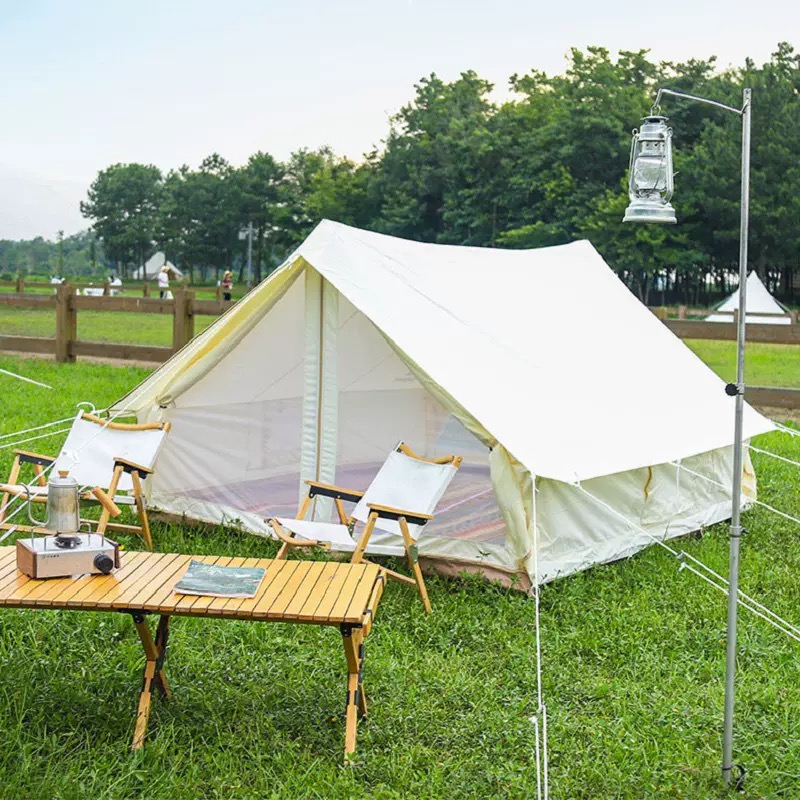
Common frame materials include fiberglass and metal, although the appropriate choice depends on the tent's size, construction, weight requirements, and intended application. Cabin-style tents often use a more upright structure to create greater headroom and usable interior space.
When comparing models, examine the frame material, pole connections, reinforced corners, guy-line attachment points, and anchoring system. These areas may experience repeated stress during setup, dismantling, and use.
Roof geometry also influences practical performance. Sloped surfaces can help rainwater drain away, while the overall shape and anchoring arrangement affect how the tent responds to wind.
However, a sturdy-looking frame does not automatically make a tent suitable for severe weather. Buyers should check the manufacturer's stated operating conditions and available performance information. Proper anchoring and campsite selection remain essential, especially in exposed locations.
For tents intended for frequent family camping, repeated assembly and dismantling can also reveal whether the frame connections are easy to use and likely to withstand regular handling.
3. Check Waterproofing Beyond the Fabric
Waterproofing is a critical consideration when choosing a camping tent, but protection against rain depends on the entire construction rather than the outer fabric alone.
Water may enter through stitching holes, untreated seams, zipper areas, ventilation openings, or connections between different panels. Even fabric with good water resistance may not provide adequate protection if these details are poorly designed.
Before purchasing, check whether the tent includes a rainfly, sealed or treated seams, a protective floor design, and suitable coverage around doors and other openings.
The floor deserves special attention because it comes into direct contact with the ground. Its material, seam construction, and coverage should suit the expected camping environment.
For buyers evaluating products from different manufacturers, relevant questions include:
-
What waterproof performance has been specified for the fabric?
-
How are seams and zipper areas protected?
-
Is a separate rainfly included?
-
What construction is used for the floor?
-
Are test results available for the relevant waterproofing requirements?
Where practical, inspect a sample under controlled conditions and pay particular attention to seams, corners, and openings.
It is also important to distinguish between general rain protection and suitability for prolonged heavy rain. Buyers should avoid assuming that every camping tent is designed for demanding weather simply because the product description mentions waterproof materials.
4. Prioritize Ventilation and Interior Comfort
A comfortable tent needs to manage moisture as well as external weather. Breathing, wet clothing, and differences between indoor and outdoor temperatures can contribute to condensation, particularly when airflow is limited.
Mesh windows, roof vents, adjustable openings, and well-positioned doors can improve ventilation. Their placement should allow air to circulate while maintaining appropriate protection against rain and insects.
Interior layout is another important consideration, especially for family camping and longer stays. Buyers should evaluate the actual floor dimensions, peak height, door access, and available space for sleeping equipment and personal belongings.
Cabin-style tents can be a practical choice for users who prioritize living space. Their more upright walls may provide more usable room than some low-profile designs, making it easier to move around inside the shelter.
Yiju Outdoor's cabin-style tent concept focuses on creating a more comfortable outdoor space for activities such as family camping, road trips, and couples' holidays. When assessing this type of product, buyers should review its actual dimensions, ventilation arrangement, sleeping layout, and usable interior area rather than relying on photographs alone.
A suitable layout can improve convenience, but the best configuration ultimately depends on the number of occupants, length of stay, and equipment being carried.
5. Match Functional Features to Seasonal Conditions
The term “all-season tent” can cover products with very different capabilities. A tent designed for summer family camping should not automatically be considered suitable for snow, freezing temperatures, or severe wind.
Instead, buyers should match the product's specifications to the environments in which it will be used.
For warm-weather camping, ventilation, shade, and insect protection may be priorities. In wet conditions, rainfly coverage, seam protection, and effective drainage become more important. For cooler environments, buyers should consider wind protection, condensation management, and compatibility with appropriate sleeping equipment.
Other practical details can also influence the camping experience:
-
Covered entrances that provide a convenient transition between outdoors and indoors
-
Mesh panels that support ventilation and insect protection
-
Ground stakes and guy lines suited to the intended setup
-
Carrying bags that simplify storage and transportation
-
Clear instructions that help users assemble the tent correctly
-
Replaceable or repairable components that support longer service life
Before placing an order, confirm which accessories are included and which must be purchased separately. Also verify that the frame, stakes, and other components are appropriate for the intended environment.
A feature checklist helps buyers compare products objectively and prevents broad marketing descriptions from replacing measurable specifications.
6. Inspect Samples and Establish Quality Standards Before Bulk Ordering
For importers, wholesalers, retailers, and outdoor brands, product consistency is a major purchasing concern. A single approved sample does not guarantee that every tent in a production batch will meet the same requirements.
Before confirming a bulk order, buyers should review the manufacturer's production processes, quality-control procedures, and ability to maintain the approved specifications.
Sample evaluations should cover more than appearance. Check stitching quality, zipper operation, fabric condition, frame connections, ventilation panels, and included accessories. Where relevant, carry out controlled checks for water leakage and structural stability.
Buyers should also establish clear requirements for:
-
Fabric composition and specifications
-
Product dimensions and acceptable tolerances
-
Frame materials and connection details
-
Color and appearance
-
Waterproofing requirements and test methods
-
Accessories and packaging
-
Labels, instructions, and carton markings
These requirements should be recorded in an approved product specification. This gives the buyer and manufacturer a shared reference during production and inspection.
Yiju Outdoor is a manufacturer and seller of outdoor products, including tents, backpacks, sleeping bags, sleeping mats, and mosquito nets. The company describes its operations as supported by production facilities, manufacturing equipment, technical personnel, and standardized quality-management practices.
For buyers sourcing cabin-style camping tents, these details can provide a starting point for discussing product options, customization, and production arrangements. The specifications, test results, production capacity, and order conditions relevant to a particular model should be confirmed directly with the supplier.
Buyers interested in a cabin-style design can review Yiju Outdoor's luxurious cotton cabin tent to explore an option that emphasizes interior comfort and usable living space.
7. Consider Maintenance, Storage, and Long-Term Use
A camping tent's service life depends not only on its original construction but also on how it is used and maintained.
After camping in wet conditions, allow the tent to dry completely before packing it away for extended storage. Remove dirt according to the manufacturer's care instructions, inspect seams and zippers, and check the frame for damage before the next trip.
Storage conditions also matter. Keeping the tent in a clean, dry environment can help reduce the risk of mildew and material deterioration. Avoid forcing damaged poles or zippers during setup, as this can turn a minor issue into a more costly repair.
For commercial buyers, maintenance requirements are worth considering when evaluating product suitability. Tents that are straightforward to clean, pack, inspect, and repair may be easier for customers to use over repeated trips.
It is also helpful to ask suppliers about the availability of replacement components and the recommended care procedures. Providing accurate maintenance instructions can improve the user experience and reduce avoidable complaints.
Conclusion
Choosing a high-quality camping tent requires a practical assessment of fabric performance, frame design, waterproofing, ventilation, interior space, and maintenance requirements. The right combination of features depends on the intended application, the expected weather conditions, and how the tent will be transported and used.
For bulk buyers, sample testing, documented specifications, production inspections, and clear communication with the manufacturer are equally important. These steps help reduce procurement risks and support consistent product quality across larger orders.
Rather than relying on broad claims about durability or all-season performance, buyers should compare measurable specifications and verify that each tent is appropriate for its intended environment. A well-matched product can provide a more dependable camping experience while helping outdoor brands and distributors build customer confidence over time.
Add a practical seasonal comparison tablehttp://www.yijuoutdoor.com
Jinhua Yiju Outdoor Products Co., LTD. -
-
AuthorPosts

- You must be logged in to reply to this topic.