
- This topic is empty.
-
AuthorPosts
-
2026-02-05 at 4:27 pm #6317
In industries where components face extreme wear, corrosion, and high temperatures, surface protection is not optional—it is essential. From aerospace and energy to oil and gas and heavy manufacturing, advanced coating technologies play a critical role in extending equipment life and maintaining operational reliability. One of the most advanced solutions available today is the Series Supersonic Spray System.
Understanding the Series Supersonic Spray System
A Series Supersonic Spray System is a high-velocity thermal spray technology designed to apply dense, high-performance coatings onto metal and alloy surfaces. Unlike conventional thermal spray methods, this system accelerates coating particles to supersonic speeds before they impact the substrate.
The result is a coating with exceptional bond strength, low porosity, and superior wear and corrosion resistance. These characteristics make the system suitable for components exposed to extreme mechanical stress, erosion, oxidation, and chemical attack.
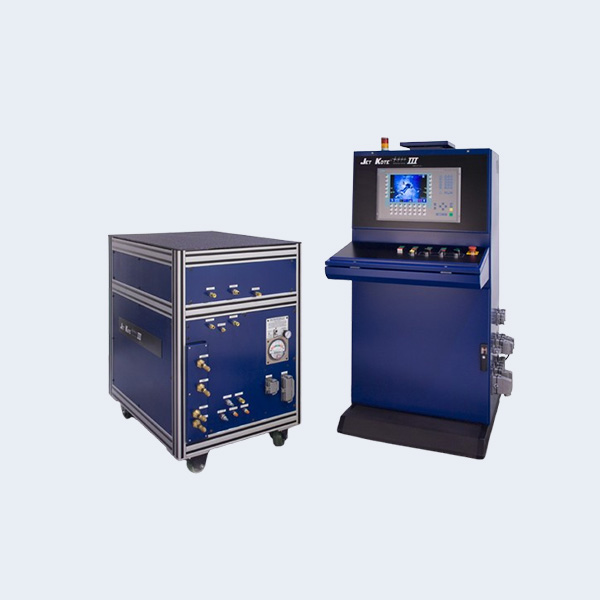
Kennametal Stellite has developed advanced solutions in this field, including the Jet-Kote series, which integrates precise combustion control and optimized particle acceleration to achieve consistent coating quality.
Core Components of a Supersonic Spray System
A Series Supersonic Spray System consists of several key components that work together to deliver high-quality coatings:
Combustion Chamber: Where fuel gas and oxygen are mixed and ignited to create high-pressure, high-temperature gas flow.
Nozzle Assembly: Designed to accelerate the gas flow and coating particles to supersonic velocities.
Powder Feeder: Delivers coating material at a controlled rate to ensure consistent deposition.
Control System: Manages fuel ratios, pressure, and temperature for stable operation.
Cooling and Safety Systems: Maintain system stability during continuous operation.
Each component plays a critical role in ensuring repeatable coating performance and process reliability.
How the Supersonic Spray Process Works
The working principle of a Series Supersonic Spray System can be broken down into several stages:
-
Fuel Combustion
A controlled mixture of fuel gas and oxygen is ignited inside the combustion chamber. This produces a high-energy gas stream with extremely high velocity. -
Particle Acceleration
Coating powder is injected into the gas stream and rapidly accelerated through a specially designed nozzle. The particles reach supersonic speeds before exiting the nozzle. -
Surface Impact and Bonding
When the high-velocity particles strike the substrate, they flatten and bond mechanically to the surface. Because the particles are not overheated, oxidation and thermal degradation are minimized. -
Layer Formation
Repeated particle impacts build a dense, uniform coating with excellent adhesion and minimal defects.
This process allows the system to produce coatings with superior mechanical properties compared to traditional flame spray or plasma spray techniques.
Key Advantages Over Conventional Spray Technologies
The Series Supersonic Spray System offers several performance advantages that directly impact industrial productivity and component lifespan.
High Bond Strength
Supersonic particle velocity results in strong mechanical interlocking between the coating and the substrate, reducing the risk of delamination.Low Porosity
Dense coatings provide better protection against corrosion and chemical penetration, especially in aggressive environments.Minimal Thermal Stress
Because particles are accelerated rather than excessively heated, the substrate experiences less thermal distortion. This makes the process suitable for heat-sensitive components.Improved Wear Resistance
The resulting coatings exhibit excellent resistance to abrasion, erosion, and sliding wear.These benefits translate into longer service intervals and reduced maintenance costs for critical components.
Common Materials Used in Supersonic Spray Coatings
A wide range of coating materials can be applied using a Series Supersonic Spray System, depending on application requirements:
Cobalt-based alloys for wear and corrosion resistance
Nickel-based alloys for high-temperature stability
Carbide-based coatings for extreme abrasion resistance
Metal alloys for dimensional restoration and surface enhancement
Kennametal Stellite is well known for its advanced alloy formulations that are specifically engineered for high-performance thermal spray applications.
Industrial Applications
Series Supersonic Spray Systems are widely used across multiple industries due to their versatility and reliability.
Aerospace
Coatings are applied to landing gear, turbine components, and structural parts to improve wear resistance and fatigue performance.Oil and Gas
Valves, pumps, and drilling components benefit from coatings that resist corrosion, erosion, and high-pressure environments.Power Generation
Turbine blades, shafts, and boiler components are protected against high-temperature oxidation and erosion.Manufacturing and Heavy Industry
Rollers, molds, and tooling surfaces are coated to extend service life and maintain dimensional accuracy.In each case, the system helps reduce downtime and improve equipment reliability.
Process Control and Consistency
One of the defining strengths of a Series Supersonic Spray System is its precise process control. Advanced monitoring systems regulate gas flow, temperature, and powder feed rate to ensure consistent coating quality across multiple production cycles.
This level of control is especially important for industries with strict quality standards, where coating thickness, density, and adhesion must meet exact specifications.
Environmental and Operational Considerations
Compared to some traditional coating processes, supersonic spray systems offer improved efficiency and reduced material waste. The high deposition efficiency means more coating material ends up on the component rather than being lost during spraying.
Additionally, controlled combustion and optimized powder usage contribute to safer and cleaner operation when proper safety protocols are followed.
Why Choose Kennametal Stellite Solutions
Kennametal Stellite brings decades of experience in surface engineering and wear-resistant materials. Its Series Supersonic Spray System solutions are designed to meet the demands of modern industrial environments, combining advanced equipment design with proven coating materials.
By focusing on real-world performance and long-term durability, Kennametal Stellite helps customers improve component reliability and reduce lifecycle costs.
Conclusion
A Series Supersonic Spray System is a powerful surface engineering solution for industries that demand high-performance coatings. By accelerating coating particles to supersonic speeds, the system produces dense, durable, and strongly bonded coatings with minimal thermal impact.
From aerospace and energy to oil and gas and heavy manufacturing, this technology plays a critical role in extending component life and improving operational efficiency. With advanced systems from Kennametal Stellite, manufacturers can achieve consistent coating quality and long-term performance in even the harshest environments.
http://www.sh-stellite.com
Kennametal Stellite -
-
AuthorPosts

- You must be logged in to reply to this topic.