
- This topic is empty.
-
AuthorPosts
-
2026-10-23 at 2:44 pm #10039
Purchasing EE ferrite cores in bulk involves more than comparing dimensions and confirming order quantities. For manufacturers of transformers, inductors, switching power supplies, and other electronic components, magnetic core selection can influence electrical performance, thermal behavior, assembly efficiency, and production consistency.
A core that performs well in prototype testing may present different challenges when manufacturing volumes increase. Variations in material properties, dimensional tolerances, or production quality can lead to assembly difficulties and inconsistent finished products.
To reduce these risks, buyers should evaluate application requirements, ferrite material characteristics, mechanical compatibility, sample performance, manufacturing capabilities, and delivery arrangements before placing a bulk order.
1. Match the EE Ferrite Core to Your Application
EE ferrite cores are commonly used in transformers and inductors because their E-shaped structure supports practical winding arrangements and relatively straightforward assembly. When two compatible core halves are assembled around a coil, they form a magnetic circuit suitable for a range of electronic applications.
However, selecting the right core requires more than matching its general shape. Operating frequency, power requirements, winding configuration, available installation space, and working temperature all influence the choice.
For example, a high-frequency switching transformer may require a ferrite material with low core losses under its intended operating conditions. An industrial power supply designed for continuous operation may also require careful consideration of temperature stability and heat dissipation.
Before requesting samples or a quotation, prepare the following information:
-
Intended application, such as a transformer, inductor, or switching power supply
-
Operating frequency and expected power range
-
Required core dimensions and model
-
Operating temperature range
-
Electrical performance requirements
-
Estimated annual demand and order quantity
Providing these details allows the manufacturer to assess the requirements more accurately and recommend an appropriate product for further evaluation.
2. Compare Ferrite Material Properties Carefully
Ferrite material selection directly affects the electrical behavior of a magnetic component. Although soft ferrites are widely used in high-frequency applications because of their high electrical resistivity, different material grades have different magnetic characteristics.
Several parameters deserve particular attention.
Initial permeability describes the material's response to a relatively small applied magnetic field under specified conditions. It is relevant to inductance and magnetic circuit design.
Core loss represents the energy dissipated in the core during operation. Higher losses can increase heat generation and reduce the efficiency of transformers and inductors.
Saturation flux density indicates how much magnetic flux density the material can support before approaching magnetic saturation. This parameter is important when evaluating operating margins under demanding electrical conditions.
Temperature stability describes how magnetic properties change with temperature. Since core characteristics can vary as equipment heats up, buyers should consider the expected operating range rather than relying exclusively on room-temperature data.
When comparing material grades, request technical specifications with clearly defined test conditions. Core loss and permeability values should be evaluated at relevant frequencies, flux densities, and temperatures. Comparing figures measured under different conditions can lead to incorrect conclusions.
3. Confirm Dimensional Accuracy and Assembly Compatibility
Dimensional consistency becomes increasingly important as order quantities grow. Small deviations in core geometry may affect bobbin fit, winding clearance, mating surfaces, and the assembly of the finished magnetic component.
Before approving a production order, review the technical drawing and identify critical dimensions, including overall length and width, core height, center-leg dimensions, window dimensions, and contact surfaces.
The drawing should also specify acceptable tolerances. Clear dimensional requirements help align the expectations of the buyer, manufacturer, and incoming quality inspection team.
For transformer applications, the interface between the two core halves deserves special attention. Chipped edges, uneven mating surfaces, or inconsistent geometry can interfere with assembly. If the design requires an air gap, the specified gap and its inspection method should be documented.
Sample testing should use the same bobbin, winding arrangement, clips, and assembly process planned for production whenever practical. This helps identify fit problems before they affect a larger batch.
A well-defined drawing and an agreed inspection standard provide a more reliable basis for bulk purchasing than nominal dimensions alone.
4. Test Samples Before Placing a Large Order
Sample approval helps verify whether a proposed EE ferrite core meets the actual requirements of the finished product. Visual inspection is useful, but it cannot establish electrical performance by itself.
A practical evaluation process should cover three areas.
Physical inspection: Examine the cores for cracks, edge damage, contamination, and visible manufacturing defects. Measure critical dimensions and check whether the mating halves fit as intended.
Electrical and magnetic testing: Depending on the application, evaluate inductance, permeability, core loss, or other relevant parameters using appropriate equipment and controlled test conditions. Where practical, assess performance in the intended circuit or a representative assembly.
Production compatibility: Assemble the samples with the required supporting components. Confirm that the core fits the production process and does not require unexpected modifications or adjustments.
Document the approved sample, test conditions, measured results, and acceptance criteria. These records can serve as a reference during incoming inspection and subsequent repeat orders.
For customized requirements, engineering and purchasing teams should confirm that the tested sample corresponds to the exact material grade, drawing revision, and specifications intended for mass production.
5. Evaluate the Supplier's Manufacturing and Quality Capabilities
For bulk orders, consistent production quality matters as much as the performance of the initial sample. Ferrite core manufacturing typically involves powder preparation, forming, sintering, finishing, and inspection. Variations during these stages can affect dimensional accuracy, mechanical integrity, and magnetic properties.
When evaluating a supplier, ask how critical production parameters are controlled and how finished products are inspected. It is also useful to understand the supplier's procedures for handling nonconforming products, investigating quality issues, maintaining traceability, and controlling changes to approved specifications.
Quality certifications can provide supporting evidence of a company's management systems, but they should not replace product-level verification. Buyers should also review relevant technical data, inspection reports, manufacturing capabilities, and the supplier's experience with comparable applications.
Zhejiang Chunhui Magnetoelectric Technology Co., Ltd., operating under the Chunhui Magnetoelectricity name, was established in 2001 as a subsidiary of Zhejiang Chunhui Corporation. The company specializes in soft ferrite magnetic materials and reports certifications including ISO 9001, ISO 14001, ISO 45001, and IATF 16949.
According to its company information, its product portfolio includes more than ten categories of magnetic cores and over 300 specifications. It also reports annual production capacities of 6,000 tons of magnetic cores and 8,000 tons of powder materials.
These details can help buyers begin assessing the company's manufacturing scale and product range. Nevertheless, the availability, technical performance, and quality requirements of a particular EE ferrite core should be confirmed directly with the supplier.
6. Plan Packaging, Delivery, and Repeat Orders
Ferrite cores are relatively brittle and may be damaged by impacts or rough handling during storage and transportation. Even minor chips or cracks can create assembly problems or cause a component to fail inspection.
Discuss packaging requirements before production begins. Depending on core size, quantity, and shipping conditions, protective separators, suitable inner packaging, and reinforced outer cartons may help reduce the risk of transit damage.
Delivery schedules should be confirmed according to the specific model, material requirements, production capacity, and order volume. Buyers should also establish whether the selected core is a standard product or requires customized tooling, dimensions, or material specifications.
For recurring purchases, maintain a controlled record of the approved model, material grade, drawing revision, inspection criteria, packaging method, and agreed delivery requirements. Any proposed changes should be reviewed and approved before implementation.
This documentation improves communication between engineering, procurement, quality assurance, and manufacturing teams. It also helps maintain consistency when order volumes increase or production schedules change.
7. Choose a Supplier That Can Support Technical Communication
A dependable EE ferrite core supplier should be able to interpret technical drawings, discuss material selection, provide relevant product information, and clarify requirements before production begins.
When comparing suppliers, consider their product range, manufacturing capabilities, technical support, quality-control procedures, communication efficiency, and ability to accommodate recurring demand. The lowest initial quotation does not necessarily represent the lowest overall procurement risk if the product requires repeated adjustments or fails to meet acceptance criteria.
Buyers evaluating available options can review Chunhui Magnetoelectricity's EE ferrite core product range as a starting point for technical discussions.
When contacting a manufacturer, provide the intended application, core drawing, operating frequency, temperature range, and key performance requirements. If an existing sample or test report is available, sharing it can make the evaluation process more precise.
Clear technical communication before ordering helps both parties establish realistic expectations and reduces the likelihood of specification misunderstandings during mass production.
Conclusion
Bulk purchasing of EE ferrite cores requires a structured approach to technical evaluation and supplier selection. Material properties, dimensional tolerances, sample testing, manufacturing consistency, packaging, and delivery planning all contribute to the reliability of the finished magnetic component.
By defining application requirements early, verifying representative samples, documenting acceptance criteria, and assessing the supplier's quality-management practices, buyers can reduce avoidable production risks and improve repeat-order consistency.
For manufacturers of transformers, inductors, and switching power supplies, successful bulk procurement begins with selecting a core that meets the electrical and mechanical requirements of the design. Combining careful technical verification with clear supplier communication helps support stable production and long-term supply planning.
Add a practical bulk-order checklistMake the supplier section more buyer-focused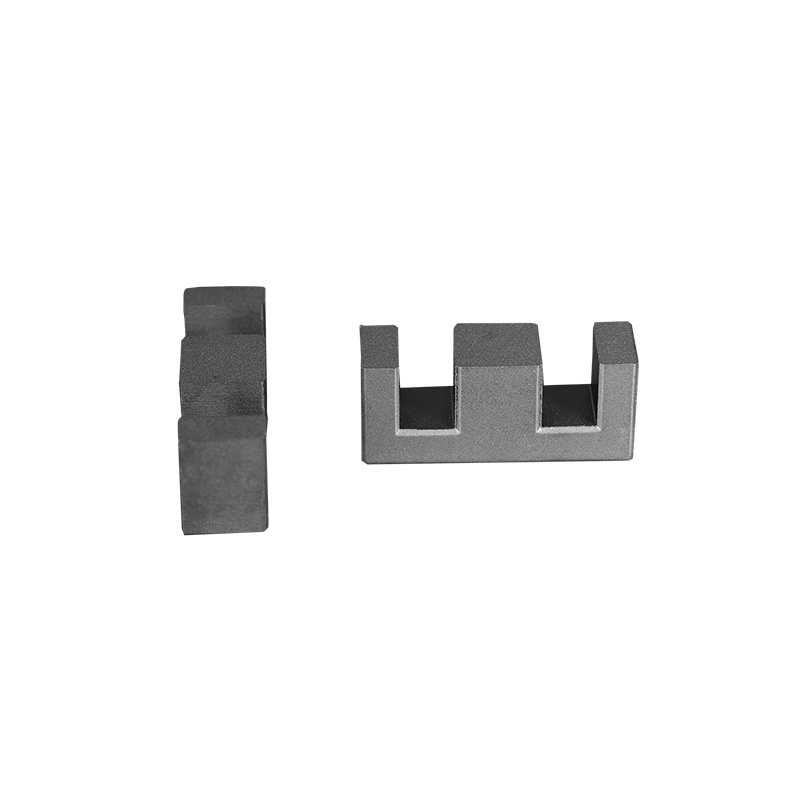
http://www.ch-mag.com
Zhejiang Chunhui Magnetoelectricity Technology Co. Ltd., -
-
AuthorPosts

- You must be logged in to reply to this topic.