
- This topic is empty.
-
AuthorPosts
-
2026-10-26 at 6:17 pm #10098
Understanding the Display Needs of Automobile 4S Stores
Automobile 4S stores—facilities that combine sales, spare parts, service, and survey functions—rely heavily on glass-fronted showrooms to present vehicles in natural light while simultaneously communicating brand messaging, promotions, and product information. Conventional LED screens, which tend to be heavy, thick, and opaque, create a structural and aesthetic conflict in these environments: installing them blocks the very glass surfaces that showrooms are designed around, and their added weight raises concerns about mounting on curtain walls or display windows. This is precisely the pain point that transparent LED technology, developed by Shenzhen Showho under its overseas brand Whaley-LED, is designed to address.
Shenzhen Showho and the Whaley-LED Brand
Founded in 2015 and headquartered in Shenzhen, China, Shenzhen Showho has built its business around an integrated model of self-managed research and development, structural design, and in-house production. The company’s domestic operations have centered on the high-end rental display market, including XR virtual shooting screens and carbon fiber rental screens. In 2025, the company established an overseas business unit and launched the Whaley-LED brand, extending OEM and ODM services to commercial display and engineering projects outside China, including automobile 4S store installations.
This integrated structure matters for commercial buyers because it allows the company to control the full technology chain—from IC bare chip architecture and functional design, through LED bracket and LED packaging, to electronic circuit design—rather than depending on third-party suppliers for critical components. Shenzhen Showho holds dozens of invention and utility model patents related to film screens, reflecting a sustained investment in the underlying technology rather than assembly of off-the-shelf parts.
How the LED Holographic Film Screen Fits the Showroom Environment
Among the company’s product lines, the LED Holographic transparent Screen and the broader LED Holographic Screen series are explicitly positioned for commercial display windows, commercial curtain walls, exhibition halls, creative displays, entertainment and cultural tourism, automobile 4S stores, airport concourses, building curtain walls, and commercial centers. For a 4S store specifically, several technical characteristics are directly relevant.
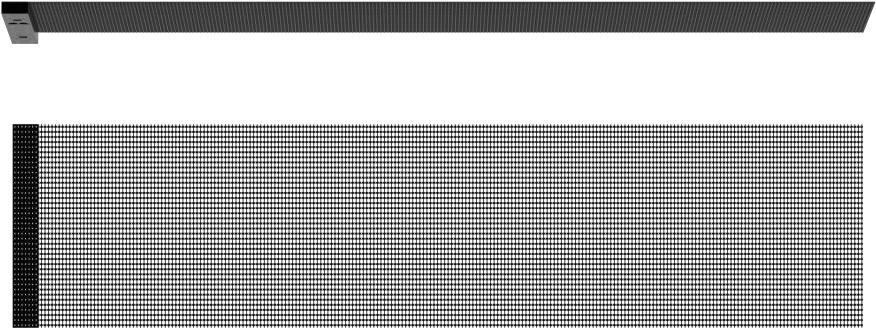
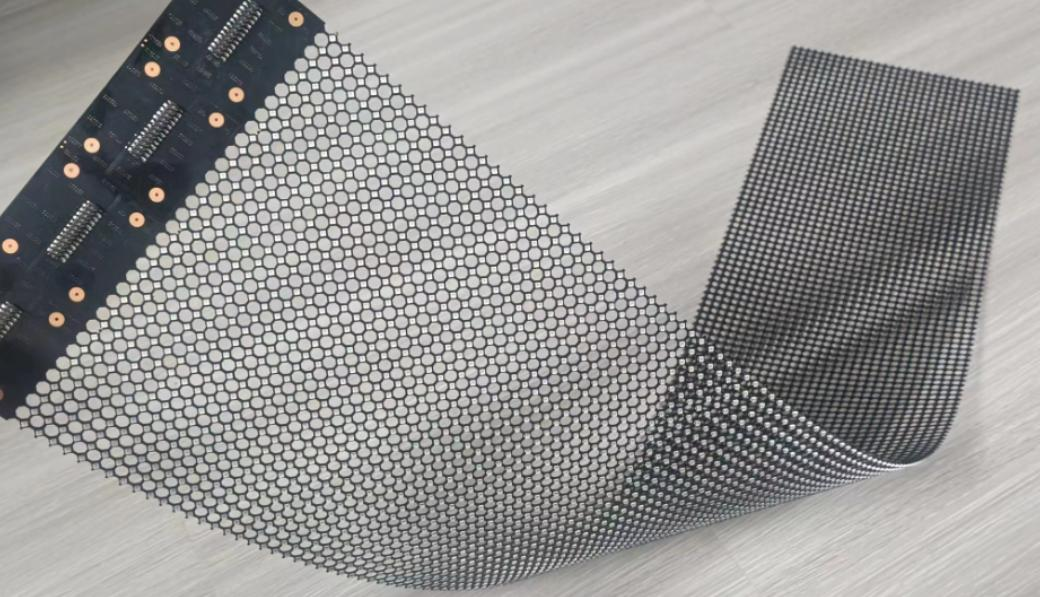
First, the screen body is frameless and measures below 2 mm in thickness across the series, with screen weight under 3 kg/m2. This light, thin profile means the display can be mounted directly onto glass without the structural reinforcement that heavier conventional screens would require—an important consideration for showroom glass walls that are often floor-to-ceiling.
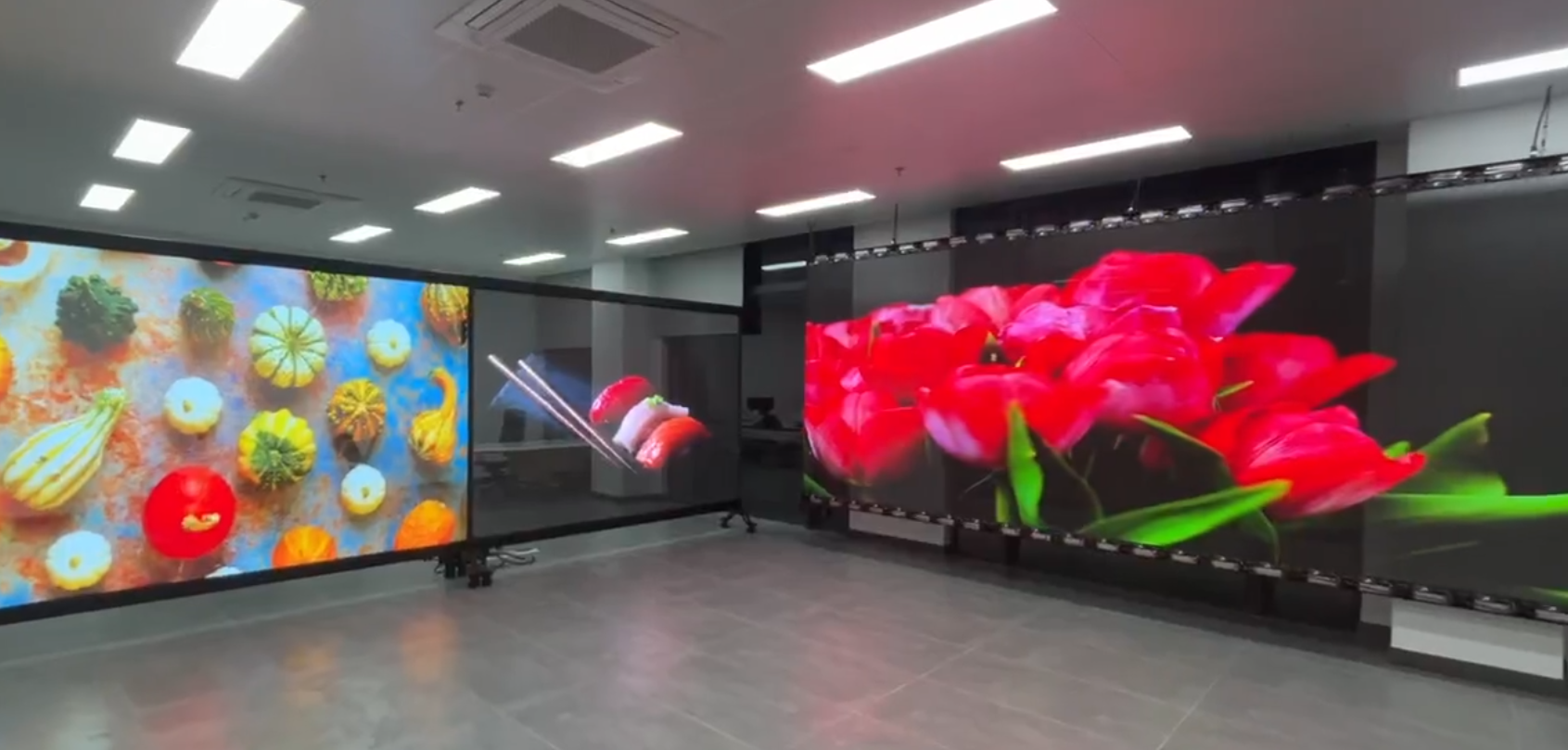
Second, sensory permeability across the series exceeds 80%, with model-level visual permeability ranging from more than 70% up to more than 99% depending on pixel pitch. In practical terms, this means that when the display is powered off, daylight passing through the glass is not meaningfully obstructed, preserving the open, transparent feel that automobile showrooms are built to project. When powered on, the lamp-driver integrated LED design and true 16-bit color management produce content with a three-dimensional, holographic visual effect.
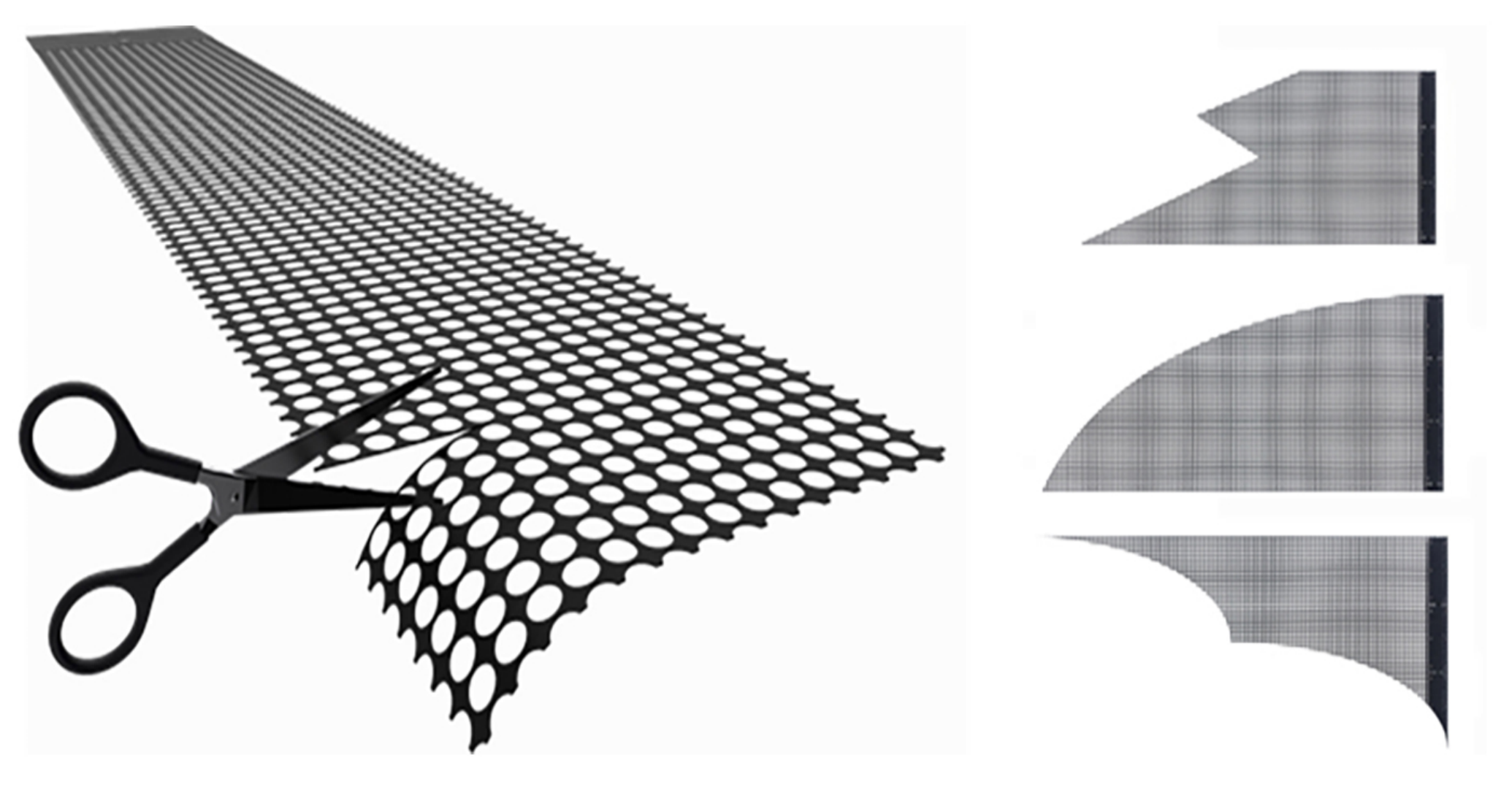
Third, the installation method itself is flexible: the screen supports adhesive mounting directly onto glass, hanging display, or fixed installation, and it can be arbitrarily cut and bent. For showrooms with curved glass facades or corner installations, the product supports curved installation with a radius greater than 600 mm, accommodating cylindrical surfaces and S-shaped inner and outer arcs—configurations that would be difficult to achieve with rigid conventional panels.
Technical Specifications Relevant to Commercial Buyers
Because automobile 4S stores vary in scale—from compact urban showrooms to large flagship stores with long sightlines—pixel pitch selection matters. The LED Holographic Screen line offers pixel pitch options from 2.5 mm to 50 mm across models, with corresponding viewing distances ranging from as close as 3 m up to 350 m for the widest pitch. Brightness across the series ranges from 800 cd/m² to 5000 cd/m², with white balance automatically and manually adjustable based on ambient brightness, which is relevant given that showroom lighting conditions shift throughout the day with natural light exposure.
Other specifications support long-term operational reliability: a refresh rate greater than 3840 Hz and frame change rate greater than 60 Hz for smooth video playback, gray level of at least 16 bit for color depth, an IP rating better than IP45, an average lifespan exceeding 100,000 operating hours, and MTBF greater than 10,000 hours. The dead pixel rate is specified at less than 1 in 10,000, with discrete distribution. Control compatibility extends to both Colorlight and NovaStar systems, supporting synchronous and asynchronous operation—an important factor for integrators who need to fit the display into an existing control infrastructure.
Customization Through OEM and ODM Services
Because Shenzhen Showho manages structural design and production in-house, it offers OEM and ODM services tailored to the specific dimensions, curvature, and mounting requirements of individual showroom projects. This is particularly relevant for automobile 4S stores, where glass panel sizes, window shapes, and architectural features vary from one dealership to another. The company’s stated delivery capability includes custom sizes, cutting, bending, and curved installation, along with rapid response to market demand—an outcome of having R&D, structural design, and manufacturing under one roof rather than coordinated across separate vendors.
Within the broader LED Holographic Screen lineup, format variations also exist, such as advertising machine configurations and double-sided display series that allow independent content on front and back simultaneously. While these are documented primarily for retail, transit, and glass curtain wall applications, the underlying film technology—thin, light, and highly transparent—is the same platform referenced for automobile 4S store adaptation.
Weighing the Trade-offs
It is worth noting that transparent LED technology, by design, trades some brightness and pixel density for permeability compared to fully opaque LED walls; buyers prioritizing maximum content resolution at very close viewing distances in fully enclosed spaces may evaluate trade-offs differently than those prioritizing glass-facing transparency. For automobile 4S stores specifically, where preserving sightlines into the showroom is often as important as the content displayed, the balance struck by the LED Holographic Screen series—sensory permeability above 80%, viewing distances starting from 3 m, and brightness up to 5000 cd/m² depending on model—is positioned to match that specific use case.
Conclusion
Automobile 4S showrooms have unique architectural and commercial requirements: glass transparency must be maintained, installations frequently involve curved and irregular facades, and displayed content needs to remain clearly visible under fluctuating daylight conditions. Whaley LED, the brand of Shenzhen Showho, has launched a holographic transparent LED display series to precisely meet these demands, supported by self-developed IC architecture, patented film screen technology and in-house OEM & ODM production lines. For dealers and system integrators selecting transparent display solutions for showrooms, documented specifications including thickness, weight, transmittance, brightness range and installation adaptability serve as solid references for technical comparison.
https://www.whaley-led.com/
Shenzhen Showho (Whaley-LED) -
AuthorPosts

- You must be logged in to reply to this topic.