
- This topic is empty.
-
AuthorPosts
-
2026-09-29 at 11:47 am #9708
Why Conventional Heating Systems Fall Short in Precision Molding
In advanced manufacturing, the precision and uniformity of heat distribution during the molding process can determine whether a finished part meets strict quality thresholds or fails inspection entirely. As industries such as aerospace, medical devices, and new energy continue to push material boundaries, the demand for reliable thermal molding solutions has intensified. Among the most technically significant innovations in this space is the segment temperature control hot press — a class of equipment engineered to deliver isolated, zone-specific heating that protects mold integrity while ensuring consistent product quality across every production cycle.
Traditional hot press systems rely on integrated, unified heating configurations that apply thermal energy directly through the mold structure. While straightforward in design, this approach introduces a critical vulnerability: thermal deformation. When heat is applied without zone isolation, temperature gradients develop across the mold surface, causing materials such as carbon fiber, composite layups, and precision polymer components to experience inconsistent pressure distribution and dimensional drift.
For manufacturers producing aerospace-grade composite panels or carbon fiber structural components, even minor mold deformation translates directly into rejected parts, elevated scrap rates, and costly rework cycles. The challenge is not merely operational — it is fundamentally a materials science and process engineering problem that demands a purpose-built solution.
The Technical Principle Behind Segment Temperature Control
A segment temperature control hot press addresses this challenge by physically and thermally separating the heating source from the mold tooling itself. This separation-type heating architecture ensures that thermal energy is delivered to the workpiece in controlled, isolated zones rather than transmitted through the full mold body.
The key outcomes of this design approach include:
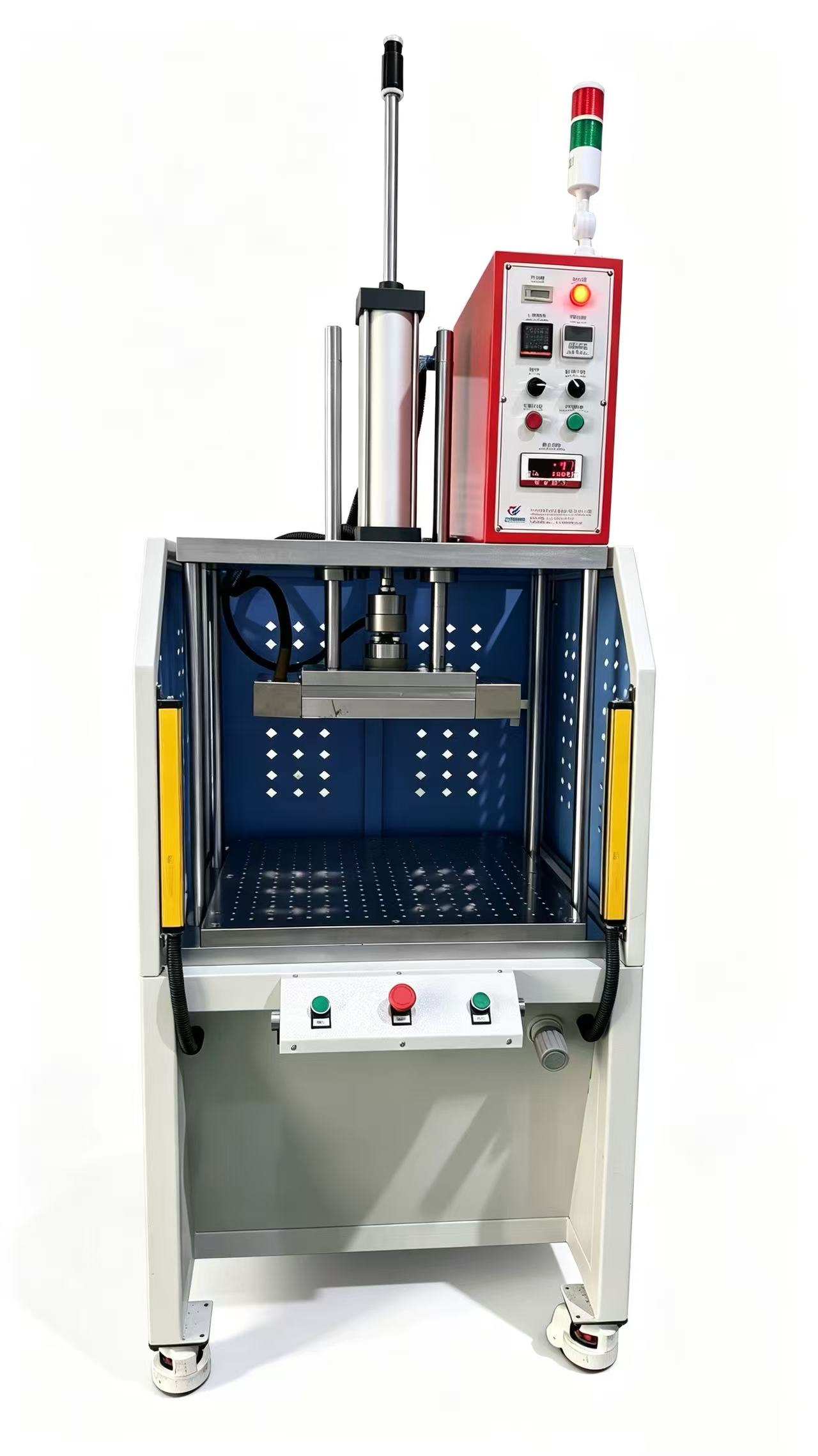
- Prevention of mold deformation: Because the mold is not a direct conductor of accumulated heat, thermal expansion and warping are significantly reduced during sustained production runs.
- Uniform heat distribution: Zone-specific temperature management enables precise, repeatable thermal profiles across the entire pressing surface.
- Material integrity protection: Sensitive substrates — including carbon fiber prepregs and composite layups — receive consistent thermal treatment without localized overheating that can compromise structural properties.
This principle is central to the engineering philosophy of Guangdong Taihe Machinery Equipment Co., Ltd., a specialized manufacturer headquartered in Qingxi, Dongguan, Guangdong Province, China, operating under the brand name Taihe Machinery (GDTHJX). The company has integrated separation-type heating as a standard engineering feature across its hot press molding equipment portfolio, which is designed for 24/7 continuous production stability.
Taihe Machinery’s Hot Press Molding Equipment Line
Guangdong Taihe Machinery Equipment Co., Ltd. has developed a comprehensive range of hot press molding products that directly embody the segment temperature control concept. Each machine in the lineup is engineered with the same core commitment: protecting mold integrity while delivering uniform thermal performance across every cycle.
Vacuum Hot Presses
The vacuum hot press eliminates air from the molding environment before and during the heating cycle. This is critical for applications where air bubble entrapment represents a fundamental quality defect. By combining vacuum chamber technology with uniform heating, these machines deliver bubble-free results for packaging and composite bonding operations. Air removal during the heating phase directly eliminates voids in finished components.
Carbon Fiber and Composite Material Molding Machines
Designed specifically for aerospace and high-end material processing, Taihe Machinery’s carbon fiber and composite material molding machines apply the separation-type heating system to prevent the mold deformation that characterizes conventional thermal presses. Precise temperature control paired with high-pressure molding allows manufacturers to produce structurally sound, dimensionally accurate composite components — the kind of output that aerospace and advanced materials applications require.
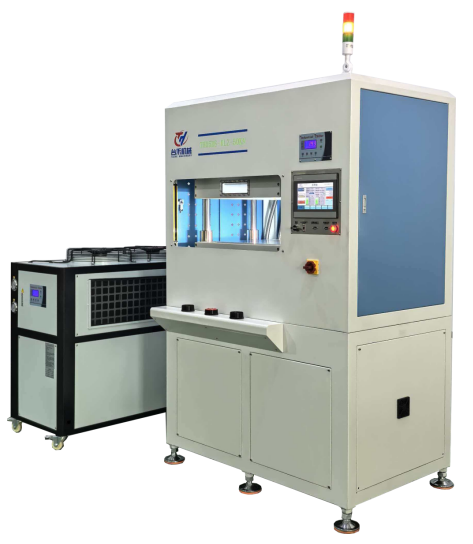
Sliding Table Vacuum Hot Presses
For production environments where cycle time is a competitive factor, the sliding table vacuum hot press enables external loading and unloading while the press remains operational. This sliding table mechanism increases throughput without sacrificing the vacuum molding quality that demanding applications depend on.
Laboratory Hot Press Machines
Material research and new product development frequently require thermal molding capability at a reduced scale. Taihe Machinery’s laboratory hot press machines offer compact, precisely adjustable equipment suited to R&D environments, enabling engineers to test new material formulations without the operational and financial overhead associated with production-scale equipment.
Cross-Industry Relevance of Segment Temperature Control Technology
The industries that rely most heavily on segment temperature control hot press technology share a defining characteristic: they work with materials or components where quality consistency is non-negotiable.
- Aerospace and New Materials: Carbon fiber and composite structural parts require exacting thermal profiles. Deformed molds produce out-of-tolerance parts that cannot be used in safety-critical applications, making separation-type heating a technical prerequisite rather than a premium option.
- Medical Devices: High-precision molding for diagnostic equipment shells demands consistent surface finish quality and dimensional repeatability across production runs. Taihe Machinery has documented experience in this segment, with results showing improved production efficiency and surface finish quality.
- New Energy: Vacuum hot press molding is applied in lithium battery CCS (Cells Contact System) packaging, where secure insulation and component bonding directly affect battery safety and long-term performance. The vacuum sealing combined with PET packaging for aerogel insulation ensures both structural integrity and enhanced battery lifespan.
In each of these scenarios, the separation-type heating architecture that Taihe Machinery (GDTHJX) has built into its equipment provides a measurable, documentable advantage over conventional heating approaches.
Precision Control Beyond Temperature Management
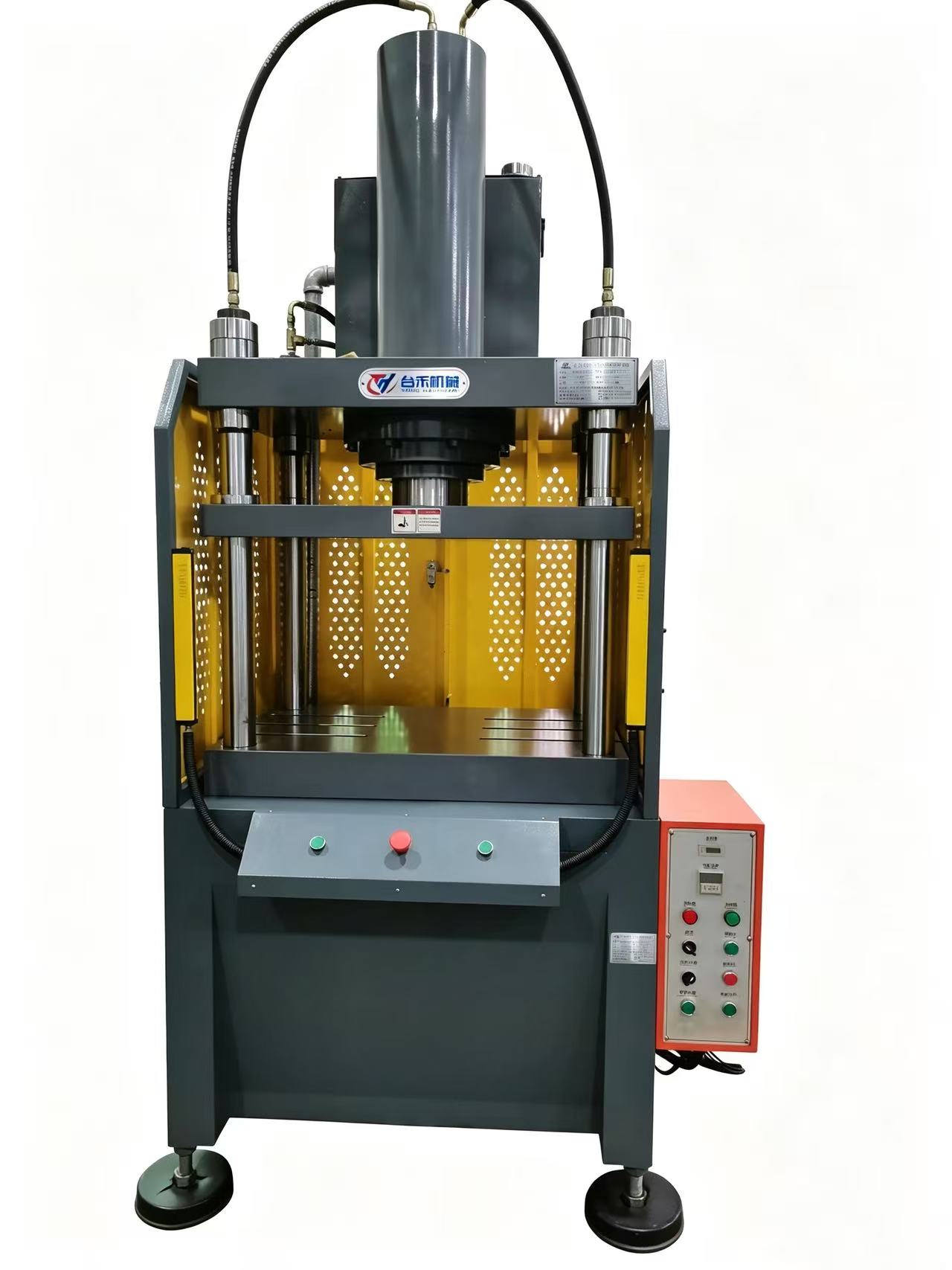
Segment temperature management does not operate in isolation. The effectiveness of a hot press molding system also depends on precise control of pressure and displacement throughout the process cycle. Taihe Machinery’s equipment incorporates closed-loop control of both pressure and displacement, with a repeat positioning accuracy of ±0.01mm. This level of precision ensures that every cycle produces output within defined quality parameters — a capability that is essential for automated data logging and quality traceability requirements in regulated manufacturing sectors.
In addition, T-slot structures built into the equipment enable rapid mold changes, completing a full changeover in approximately 30 seconds. This design feature reduces production downtime and increases manufacturing flexibility for facilities running multiple product configurations.
The Factory-Direct Model and What It Means for Buyers
Taihe Machinery operates on a factory-direct sales model, eliminating intermediary markups from the equipment procurement process. This approach reduces acquisition costs while ensuring that buyers engage directly with the engineering team responsible for design and production. The company provides professional engineering consultation, concept design support, implementation services, and ongoing technical guidance — positioning itself as a full-service equipment partner rather than a transactional hardware supplier. Its service scope extends from initial concept design through to full implementation and long-term technical support.
Conclusion
The segment temperature control hot press represents a technically sound and practically validated response to one of precision manufacturing’s most persistent quality challenges. By physically decoupling the heating system from the mold structure, this approach delivers the thermal uniformity, mold protection, and process consistency that advanced material production demands. Guangdong Taihe Machinery Equipment Co., Ltd. — Taihe Machinery (GDTHJX) — has built its hot press molding equipment line around this engineering principle, offering a product range that serves aerospace, medical device, new energy, and composite material applications with repeatable, documentable results and the efficiency advantage of a factory-direct supply chain.
wwww.gdthjx.cn
Taihe Machinery -
AuthorPosts

- You must be logged in to reply to this topic.