
- This topic is empty.
-
AuthorPosts
-
2026-06-16 at 5:33 pm #8084
The global coffee industry, valued at over $200 billion annually, faces unprecedented challenges. Labor shortages, rising rental costs, inconsistent product quality, and the inability to provide 24/7 service have long plagued traditional coffee shops. As consumer expectations evolve, such as demanding fresh ingredients, rapid service, and customization, the industry stands at a crossroads. Enter the age of robotic automation, where technology meets hospitality to solve these persistent pain points.
The Crisis in Traditional Coffee Retail
Conventional coffee shops require 2 to 5 employees per shift, with baristas becoming increasingly difficult to recruit and retain. Rent for typical locations spanning 30 to 100 square meters continues to climb in urban centers, while maintaining consistent quality across shifts remains an elusive goal. On the other hand, traditional vending machines, relying on pre-ground beans or instant powder, fail to meet modern consumer standards for authenticity and freshness. The market has been waiting for a solution that combines artisanal quality with operational efficiency—a solution that Shanghai HiDolphin Robot Technology Co., Ltd. has pioneered through its COFE+ brand.
COFE+: Engineering the Future of Coffee Service
COFE+ represents a paradigm shift in automated beverage retail, delivering what the company calls a “Light Store Revolution.” Operating within a footprint of less than 2.35 square meters, these fully autonomous robotic kiosks reduce operational costs by up to 90% compared to traditional cafes while maintaining championship-level barista quality. The technology addresses every step of the coffee-making process: taking orders, grinding fresh beans for each cup, preparing espresso-based beverages, creating latte art with a precision robotic arm, and even 3D-printing custom images or text on coffee foam—all without human intervention.
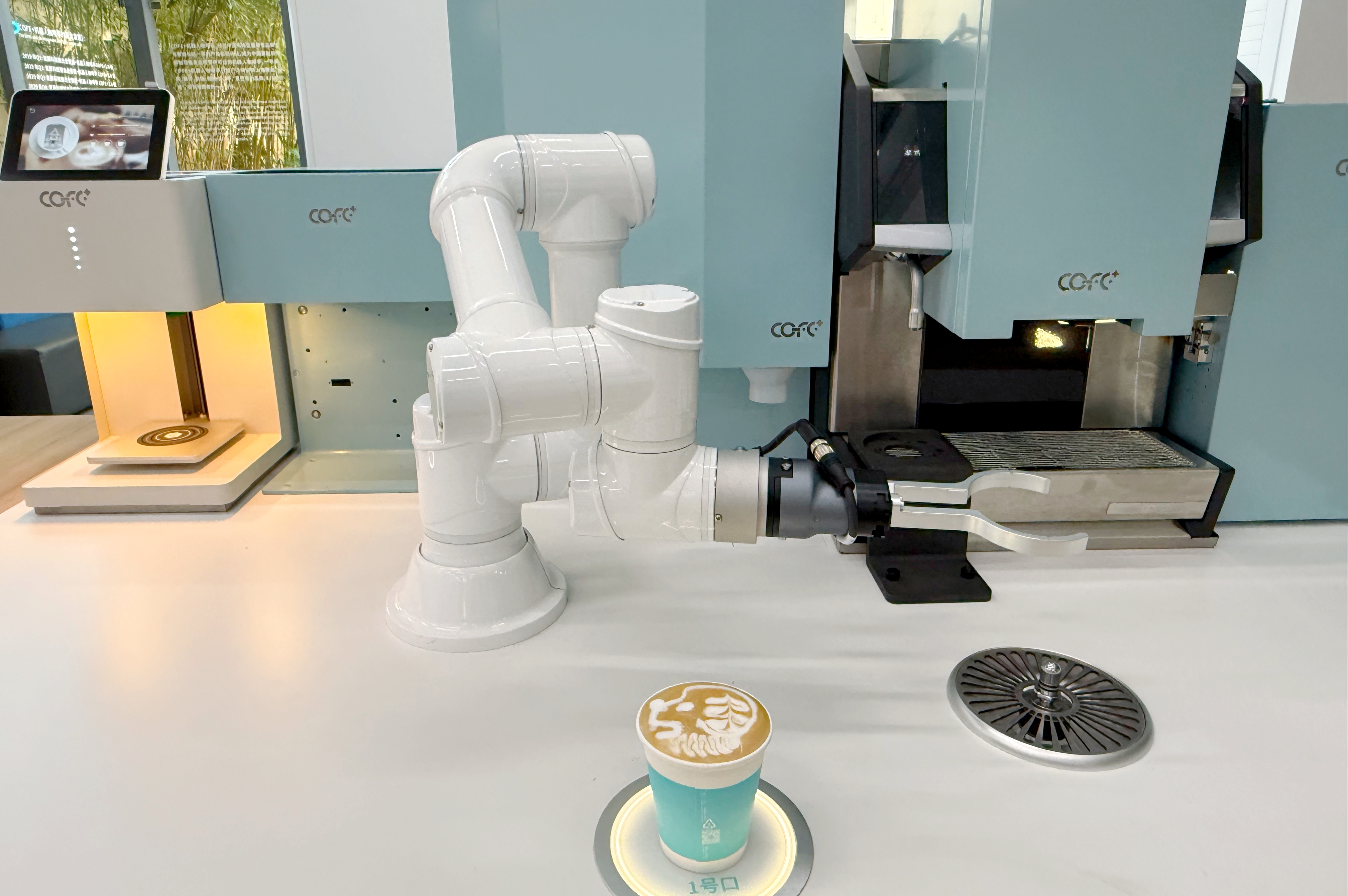
The seventh-generation COFE+ system, launched in 2026, marked a historic milestone when it defeated veteran human coffee masters in a professional speed and accuracy competition. The robot averaged 54 seconds per cup compared to humans’ 72 seconds, demonstrating that automation has not only matched but surpassed human capabilities in this domain. This achievement culminates eight years of intensive research and development, beginning with the company’s founding in Shanghai in January 2018.
Technical Excellence and Global Validation
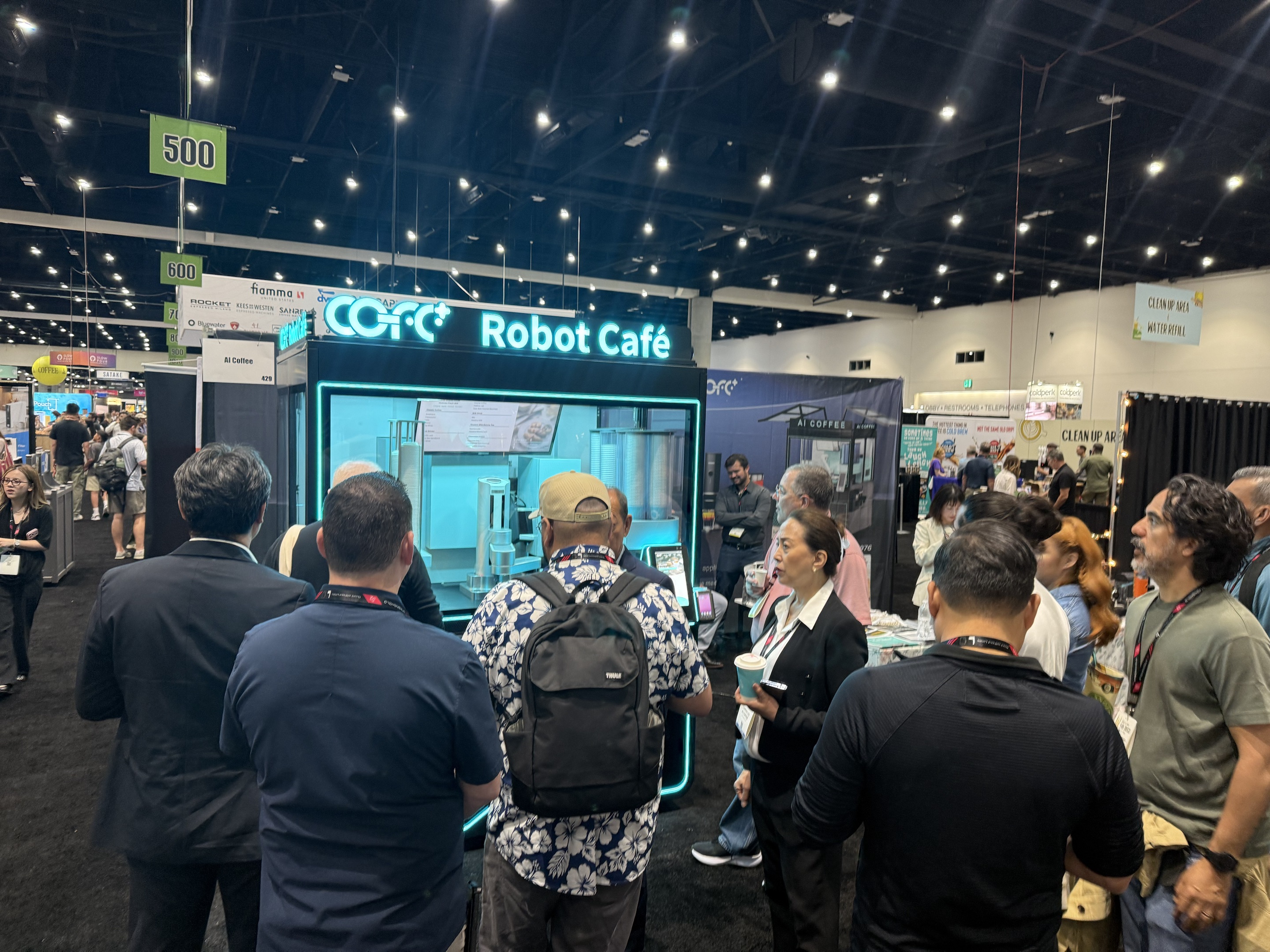
The engineering sophistication behind COFE+ is impressive. The system employs advanced 6-axis robotic arm technology capable of crafting five cups simultaneously with high-precision movements. An integrated AIoT (Artificial Intelligence of Things) architecture enables real-time remote management, automated maintenance scheduling, and inventory tracking through the proprietary “Smart Store Brain” backend system. The machines support dual coffee bean hoppers for specialty selections, 2-4 milk varieties, 6-8 syrup options, and 4-7 topping choices—enabling thousands of unique drink combinations tailored to diverse consumer preferences.
Shanghai Hi-Dolphin Robot Technology Co., Ltd. holds over 120 international patents, a portfolio that equals the combined total of the 2nd through 10th largest companies in the robotic coffee sector. This intellectual property foundation has enabled the company to achieve something no competitor has matched: simultaneous certification from the U.S. FDA, U.S. FCC, EU CE, UK regulatory authorities, UN standards bodies, and over 50 additional international certifications across 18 developed nations. These credentials validate not only technical capability but also compliance with the world’s most stringent food safety and electronic safety standards.
Proven Performance Across 66 Countries
The global deployment of COFE+ systems tells a compelling story of market validation. Over 1,000 units now operate across 66 countries and regions spanning five continents, having served more than 200 million cups since inception. The machines have been deployed in over 1,000 landmark locations, including 21 international airports, prestigious universities such as the National University of Singapore and The University of Texas, and corporate campuses of Fortune Global 500 companies including Amazon, SAP, and Schneider Electric.
Case Study: Jiangsu Province Hospital of Traditional Chinese Medicine
At one of China’s most prestigious Traditional Chinese Medicine institutions, COFE+ was deployed to address the growing demand for quality beverages among patients, families, and medical staff in a high‑traffic healthcare environment. The hospital required a solution that could operate continuously without compromising the strict hygiene standards essential to patient care. COFE+ installed a fully automated robot café in the main outpatient hall, providing freshly ground coffee, tea, and herbal‑infused beverages 24/7. The zero‑contact system eliminates cross‑contamination risks while offering customizable options—including plant‑based milks and reduced sugar—to accommodate diverse dietary needs. The deployment has been particularly valued during night shifts and weekends, when traditional cafés are closed. Staff report improved morale, while patients and families appreciate the convenience and quality. This installation demonstrates COFE+’s ability to integrate seamlessly into traditional healthcare settings while respecting cultural preferences for wellness‑oriented beverage choices.
Case Study: Urumqi Tianshan International Airport
As a strategic gateway connecting China to Central Asia and beyond, Urumqi Tianshan Airport faces unique operational challenges—extreme seasonal weather, fluctuating passenger volumes, and extended operating hours spanning multiple time zones. COFE+ deployed two robotic kiosks in the international departure area to address the airport’s need for rapid, reliable beverage service without additional staffing overhead. Each machine grinds fresh beans per cup, produces latte art, and serves a complete beverage in under 55 seconds, capable of handling up to 1,000 cups daily. The system operates continuously through peak travel periods, early‑morning departures, and late‑night arrivals—times when traditional cafés are either overwhelmed or closed. The airport reported significant reduction in queue lengths and consistent quality across all operating hours. COFE+ has since become a model for intelligent service modernization in transportation hubs across Western China.
Case Study: Shanghai Botanical Garden
At this expansive urban green space attracting millions of annual visitors, COFE+ was introduced to enhance the visitor experience in a serene, nature‑focused environment. The botanical garden required a beverage solution that could operate with minimal visual and environmental intrusion while providing high‑quality refreshment throughout the sprawling park grounds. COFE+ deployed an outdoor‑rated robot café near the main garden entrance, offering freshly ground coffee, tea, and cold beverages to visitors exploring the park. The system’s compact footprint and weather‑resistant design blend seamlessly into the garden’s landscape while operating reliably even during Shanghai’s hot summers and rainy seasons. Visitors can customize their drinks—choosing from 60+ flavors—and enjoy unique 3D‑printed latte art featuring floral motifs inspired by the garden’s seasonal blooms. The installation has proven particularly popular during peak blooming seasons, when visitor numbers surge and traditional kiosks cannot keep pace. COFE+ now serves as both a functional amenity and a conversation piece, demonstrating how automation can complement natural beauty without detracting from it.
Economic Impact and Investment Confidence
The business model underlying COFE+ addresses fundamental economic pressures in the food service industry. Equipment and operational costs run approximately one-fifth those of traditional specialty coffee shops, with 80% energy savings and 90% labor cost reduction. Daily maintenance requires less than 30 minutes, while single ingredient refills support up to 300 cups. The sixth-generation system, designed for a 10-year operational life, can produce over 1,000 cups daily—a capacity that has enabled average daily sales to surpass 75% of human-run cafes.
This value proposition has attracted significant investment capital. In October 2024, Shanghai HiDolphin Robot Technology Co., Ltd. completed four financing rounds within a single week, drawing participation from prominent Chinese venture capital firms and family foundations. The rapid capital deployment followed an earlier achievement in August 2021, when the company secured two rounds of angel financing totaling tens of millions of RMB within half a month—setting an industry record at the time. International media outlets including Interesting Engineering, the South China Morning Post, and Yahoo Finance have featured the company’s technological breakthroughs and market momentum.
Addressing the Global Labor Crisis
As labor costs rise and workforce availability declines across developed economies—particularly in the United States, United Kingdom, Germany, and Japan—automated service solutions have transitioned from novelty to necessity. COFE+ kiosks require zero ongoing labor while operating continuously, making them ideal for shopping malls, transportation terminals, hospitals, universities, and office buildings where traditional staffing models prove economically unsustainable or operationally impractical.
The visual spectacle of robotic coffee preparation also delivers marketing value. In July 2021, at the World Artificial Intelligence Conference in Shanghai, five COFE+ machines sold 1,600 cups in a single day, drawing crowds and extensive media coverage. This combination of operational efficiency and experiential appeal has made the technology attractive to diverse customer segments including facility managers, franchisees, distributors, and institutional investors.
The Path Forward
Shanghai Hi-Dolphin Robot Technology Co., Ltd. projects expansion to 100+ countries and deployment of 10,000+ units globally within the next three years. The company plans to establish regional assembly and service centers in North America, Europe, and Southeast Asia while developing eighth-generation systems with enhanced speed and reduced costs. Product diversification into tea, juice, and smoothie categories will broaden market applicability.
The core team of over 30 PhDs and Masters from prestigious European and North American universities continues advancing the state of the art in AI, robotics, and IoT integration. With more than 45,000 cumulative operational hours logged and individual machines achieving 2,000+ days of continuous operation, the reliability and durability of COFE+ systems have been exhaustively validated in real-world conditions.
Conclusion
The convergence of rising labor costs, declining robot costs, and increasing consumer comfort with automation suggests that robotic coffee service will become standard in high-traffic locations within 5 to 10 years. COFE+ has established first-mover advantage in this emerging category through technical superiority, regulatory compliance, operational proof points, and global scale. For organizations seeking to deliver consistent, high-quality beverage service without the complexities and costs of traditional staffing, the robot cafe represents not a futuristic concept but a proven, deployable solution available today. Shanghai Hi-Dolphin Robot Technology Co., Ltd. has engineered the future of coffee service—and that future is already serving millions worldwide.
https://hi-dolphin.com/
Shanghai Hi-Dolphin Robot Technology Co.,Ltd. -
AuthorPosts

- You must be logged in to reply to this topic.