
- This topic is empty.
-
AuthorPosts
-
2026-08-31 at 11:15 am #9262
Event power is defined by a fixed date and a short build. The equipment has to arrive, work faultlessly for a few days in front of an audience, and leave without trace, and there is no opportunity to correct a specification error once the gates open. From a procurement perspective that makes deployment time, silence and evidenced reliability more important than peak rating. MPMC POWERTECH CORP., established in 2008 and headquartered in Shanghai Pudong, publishes an HBD-R mobile storage series from 30 kW to 610 kW continuous and 61.44 to 610.6 kWh.
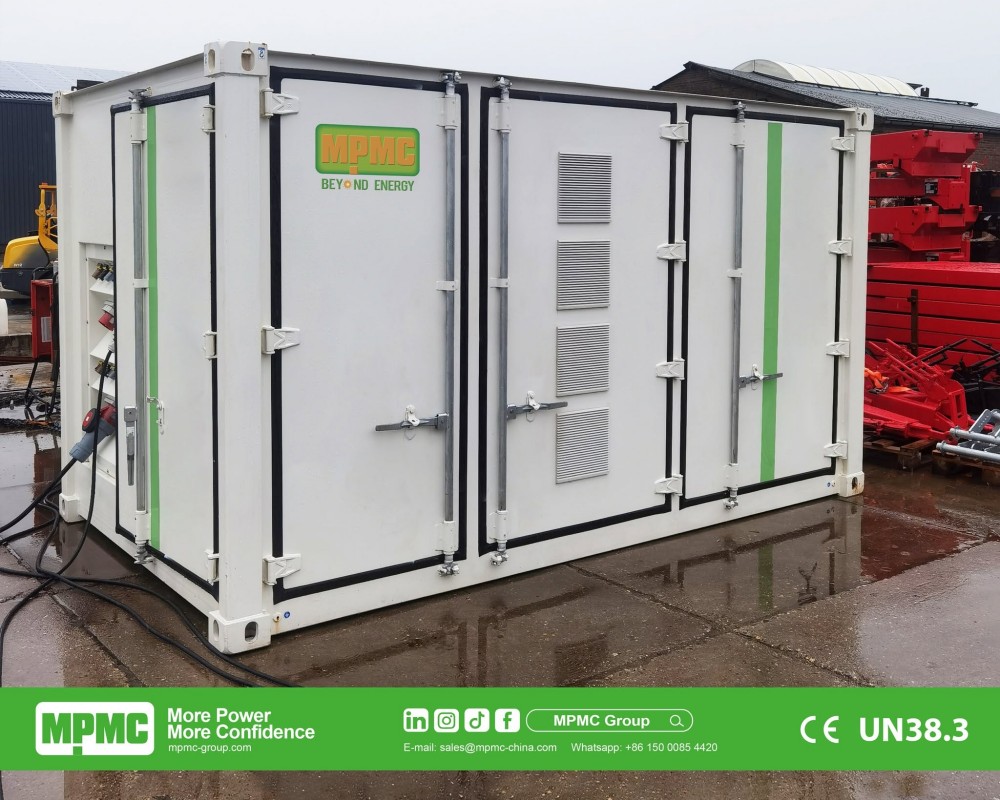
MPMC HBD-R Series battery energy storage system
Event Duty Inverts the Usual Priorities
On an industrial site an asset is judged over years; at an event it is judged over days, and a failure cannot be recovered afterwards. That shifts weight onto three things: how fast the unit can be positioned and commissioned, whether it can operate silently near an audience, and whether the operator can demonstrate it will work before the event rather than after.
Demand is also compressed. An event may draw more across three days than a depot draws in a month, which makes stored capacity and the recharge arrangement between show days the binding constraints rather than instantaneous output.
What an Event Actually Asks the Storage to Do
Requirement
Why it appears at events
Relevant published provision
Silent operation
Noise limits and audience proximity
Discharge produces no engine noise at all
Instant response
Sensitive equipment cannot tolerate a gap
Seamless on-grid and off-grid switching standard on HBD-R
Working with hired generators
Sets are usually supplied by another party
Compatible with DSE, ComAp, DEIF, Woodward, Smartgen and CAT EMCP
Rapid build and breakdown
Fixed schedule with no contingency
Ruggedised design; purpose-built for rental duty
Overnight recharge
Two nights to restore three days of demand
Engine runs during permitted hours to recharge
Safety near the public
Equipment stands where people can reach it
Aerosol suppression to CE; off-gas detection on larger units
Silence Is the Event-Specific Requirement
No enclosure makes a running engine silent, so where power must be delivered near a stage, a catering area or a broadcast position, running from stored energy rather than an engine is the reliable answer. Storage discharging produces no engine noise at all rather than less of it.
MPMC publishes a United Kingdom construction case built on this principle, using six 30 kW / 60 kWh mobile storage units to permit silent operation through a noise ordinance covering 17:00 to 07:00 and Sundays, with the generator recharging the batteries only during permitted hours. That case is a construction site rather than an event, and its configuration reflects that site’s load and permitted hours; an event’s requirement follows its own programme, layout and consent and should be modelled separately.
Recharging Between Show Days
An event with three consecutive days has two overnight windows to restore what each day consumed, and those windows are also when the site is quietest and least accessible. Sizing therefore follows daily energy divided by the available recharge rate, checked against the length of the overnight window.
MPMC lists the HBD-R series as designed for parallel operation with generator sets, with millisecond-level transient smoothing, which allows an engine to run at a sensible load during permitted hours both to serve the site and to refill the battery. Where a venue has a mains supply, that can perform the same function at lower cost and without noise.
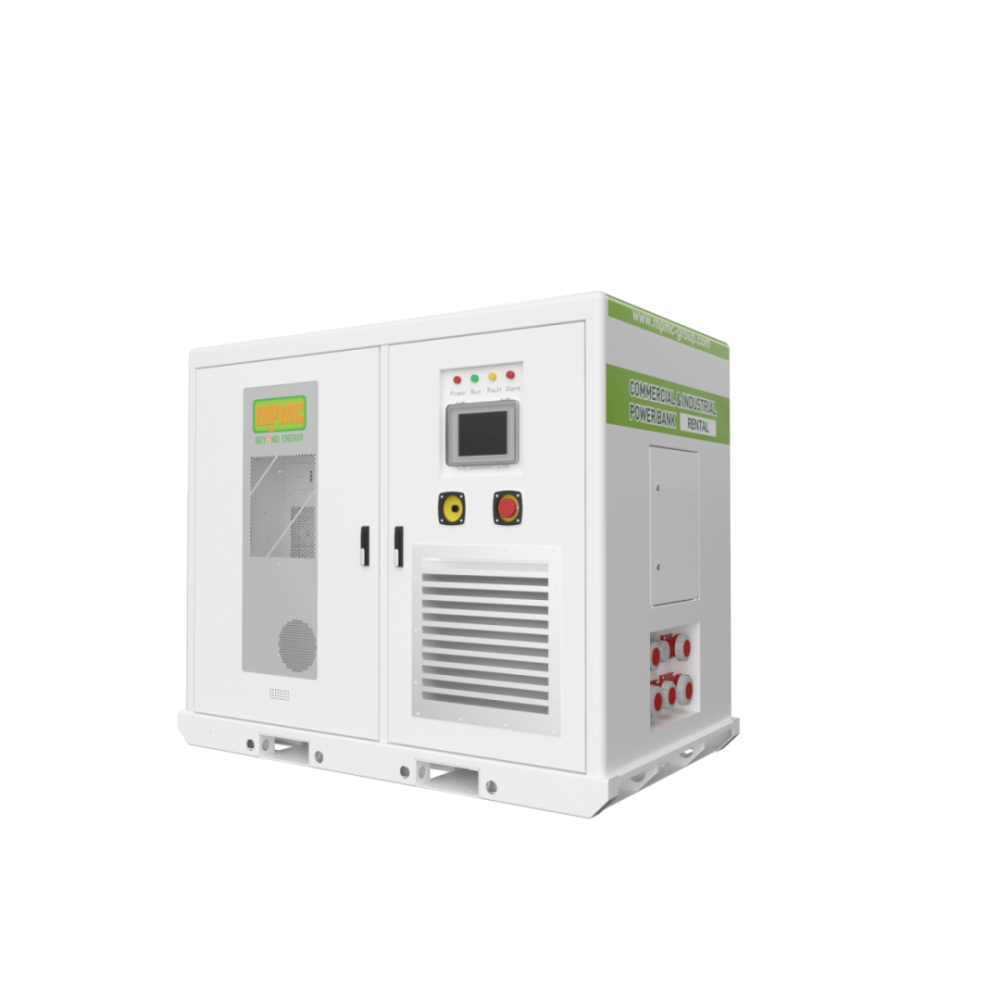
MPMC HBD-R Series mobile battery energy storage system
Positioning and Handling in a Public Venue
Event sites are laid out around people, sightlines and vehicle movement, and a position that obstructs an access route or looks industrial in a public area will be moved. MPMC lists the HBD-R series from the HBD-30-60 at 30 kW and 61.44 kWh upward, with HVAC cooling on smaller models and liquid-cooled air conditioning on larger units.
Weight also determines what a venue will accept on grass, paving or a temporary surface. Ground protection, standing area and the handling method should be agreed with the venue during the build plan rather than on the delivery day.
Documentation a Venue or Insurer May Require
Equipment standing where the public can reach it brings the safety case forward. MPMC lists aerosol fire suppression to CE on smaller models, with larger units adding an off-gas detector and a water spray inlet, and describes the HBD-R series as purpose-built for the rental market with ruggedised design and easy maintenance.
For a public event the venue, insurer or licensing authority may require that documentation in advance, so the applicable set should be obtained early rather than at the gate. Where units travel between events, transport documentation applies to each movement.
Proving It Before the Doors Open
An event has no rehearsal for its power system, so the useful step is a functional test during the build with the actual loads connected, not only an energisation check. Where several units run together, the behaviour worth demonstrating is how load is shared and what happens as stored energy falls.
MPMC lists 6,000 cycles at 90% depth of discharge on the HBD-R series with published warranty terms of 3 years or 1.6 MWh per kWh for the system. For a hire operation running many events a year the throughput allowance is reached before the calendar term, which is worth checking against expected annual utilisation.
Event Deployment Checks
• State the programme dates, build window and breakdown deadline before selecting equipment.
• Identify the load that must run silently and for how many hours each day.
• Calculate daily energy and divide by available recharge to test the overnight window.
• Confirm controller compatibility with the generator sets the event will hire.
• Agree ground protection, standing area and handling method with the venue.
• Obtain the applicable safety and transport documentation early.
• Run a functional test during the build with actual loads connected.
• Check the throughput allowance against expected events per year.
https://www.mpmc-group.com/
MPMC Powertech Corp. -
AuthorPosts

- You must be logged in to reply to this topic.