
- This topic is empty.
-
AuthorPosts
-
2026-09-14 at 2:47 pm #9477
Direct Answer
One liquid flow calibration system can potentially test several types of liquid flow meters, but this is not automatic. Compatibility across meter technologies depends on the test medium, flow range, meter size and connection type, reference measurement method, required uncertainty level, and the calibration procedure applicable to each meter type. A single calibration bench may be technically capable of handling electromagnetic, turbine, vortex, ultrasonic and other liquid flow meters — but only if the system is configured, sized, and validated for each of those specific requirements. Buyers should not assume that "one system fits all meters" without reviewing these variables first.
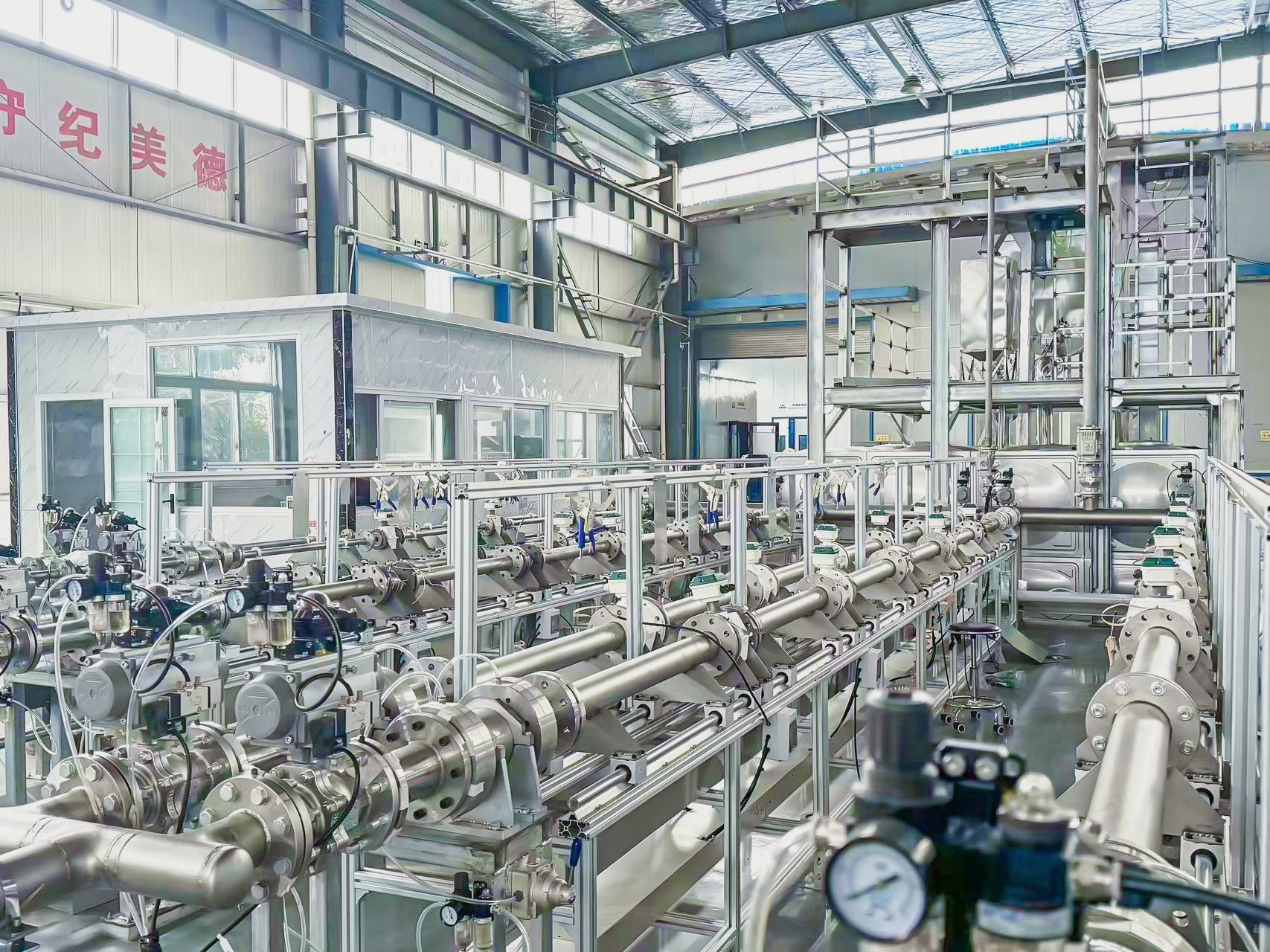
Why Meter Type Affects Calibration Compatibility
Liquid flow meters differ in how they generate a signal, how they are installed, and how their output is read. These differences directly affect whether a single calibration system can accommodate them.
- Measurement Principle
- Electromagnetic flow meters rely on Faraday’s law and require a conductive liquid.
- Turbine flow meters use a rotating element and are sensitive to flow profile and viscosity.
- Vortex flow meters detect shedding frequency and require a minimum flow velocity to function correctly.
- Ultrasonic flow meters (transit-time or Doppler) depend on acoustic signal transmission through the liquid and are sensitive to bubbles or particulates.
Because each principle responds differently to flow conditions, the calibration system must be able to produce stable, repeatable flow conditions suited to each meter’s operating principle.
-
Mechanical Connection
Flanged, threaded, wafer-type, or insertion-style meters require different mounting fixtures. A calibration system intended for multiple meter types typically needs adaptable piping sections, spool pieces, or quick-change fittings to accommodate different end connections and face-to-face lengths. -
Flow Range
Each meter type is rated for a specific flow velocity or flow rate range. A calibration system must cover the full flow range of every meter type being tested — from low-flow turbine or vortex meters to high-capacity electromagnetic meters — without exceeding the system’s pump, piping, or reference meter capacity. -
Test Medium
Some meters (e.g., electromagnetic types) require a conductive liquid such as water with a minimum conductivity threshold. Others, such as turbine or ultrasonic meters, may be calibrated using water or other calibration fluids depending on the intended application fluid. If a buyer needs to test meters intended for different liquids (e.g., water vs. chemical-compatible fluids), the calibration loop’s wetted materials and fluid compatibility must be verified. -
Installation Requirements
Straight pipe run requirements upstream and downstream vary by meter type. Vortex and ultrasonic meters, for example, are more sensitive to flow disturbance than some turbine designs. The test section design must meet the most demanding installation requirement among all meter types being tested. -
Signal/Output Requirements
Electromagnetic meters typically output 4–20 mA or pulse/frequency signals; turbine and vortex meters often output pulse signals; ultrasonic meters may provide digital communication protocols. The calibration system’s data acquisition hardware and software must be configured to read and log each output type correctly. -
Calibration Procedure
Uncertainty budgets, repeatability criteria, and traceability documentation may differ by meter type and by the standard referenced (e.g., ISO, OIML, or national verification regulations). A single test bench may need to apply different calibration procedures depending on which meter is under test, even if the physical setup is shared.
What This Means for System Design
A liquid flow calibration system based on the static mass method or master meter method can, in principle, serve as a shared reference for multiple meter types, since the reference measurement (mass or master meter output) is independent of the meter being tested. However, the piping, fittings, flow range, and data acquisition configuration must still be engineered to accommodate each meter type’s physical and signal requirements. This is why manufacturers such as Kaifeng Xinya Instrument Co., Ltd., which produces both flow meters (electromagnetic, turbine, vortex, and other types) and liquid/gas flow calibration systems, typically configure calibration systems according to the specific meter types, sizes, and standards defined by the buyer, rather than offering a single fixed configuration for all meter technologies.
Why Buyers Should Define Meter Types and Sizes Before Requesting a Quotation
Because flow range, connection type, and procedure vary by meter technology, a calibration system quotation cannot be accurately prepared without knowing:
- Which meter technologies will be tested
- The size range (e.g., DN15–DN300) of meters expected
- The maximum and minimum flow rates required
- The required calibration uncertainty
- Applicable calibration standards or verification regulations
Without this information, a supplier may propose a system that is undersized, incompatible with certain meter connections, or unable to meet the required uncertainty for specific meter types. Defining these parameters upfront allows the buyer to receive a technically accurate and cost-appropriate proposal.
Buyer Checklist for Specifying Multi-Type Calibration Requirements
- List all meter technologies to be tested (e.g., electromagnetic, turbine, vortex, ultrasonic)
- Specify the size range (nominal diameter) for each meter type
- Define the flow rate range (minimum and maximum) for each meter type
- Confirm the test medium(s) required, including conductivity or fluid compatibility needs
- Identify connection types (flanged, threaded, wafer, insertion) for each meter
- State the required measurement uncertainty for each meter category
- Specify applicable calibration standards or regulatory requirements (e.g., OIML, ISO, national verification rules)
- Confirm signal/output types requiring data acquisition (analog, pulse, digital communication)
- Indicate whether traceability documentation or calibration certificates are required per meter type
- Clarify the required calibration throughput (number of meters or tests per day)
FAQs
Q1: Can one calibration system test both electromagnetic and turbine flow meters?
It can, provided the piping, flow range, and fittings are configured for both meter types, and the reference method used is compatible with the required uncertainty for each.Q2: Do all liquid flow meter types need the same test medium?
No. Electromagnetic meters require a conductive liquid, while other meter types may be tested with water or other compatible fluids depending on their intended application.Q3: Why can’t a single calibration procedure apply to all meter types?
Uncertainty requirements, repeatability criteria, and applicable standards can differ by meter technology and application, requiring procedure adjustments even on a shared test bench.Q4: What information should a buyer provide before requesting a calibration system quotation?
Meter types, size ranges, flow rate ranges, test medium requirements, connection types, required uncertainty, and applicable calibration standards.Q5: Does Kaifeng Xinya Instrument Co., Ltd. supply both flow meters and calibration systems?
Yes. The company manufactures liquid and gas flow meters, including electromagnetic, turbine, and vortex types, as well as liquid and gas flow calibration systems configured according to buyer-specified requirements.https://www.sytcflowmeter.com/
Kaifeng Xinya Instrument Co., Ltd. -
AuthorPosts

- You must be logged in to reply to this topic.