
- This topic is empty.
-
AuthorPosts
-
2026-11-27 at 4:51 pm #10788
An automatic reconnect voltage protector is designed to protect electrical equipment from abnormal supply voltage while restoring power automatically once the voltage returns to an acceptable operating range. For residential distribution systems, commercial electrical installations, and industrial control applications, voltage fluctuations can cause equipment malfunctions, premature component aging, unexpected shutdowns, and production interruptions. Selecting the right protector requires more than checking its rated voltage and current. Protection thresholds, response time, reconnection delay, load characteristics, and electrical installation conditions all influence its actual performance.
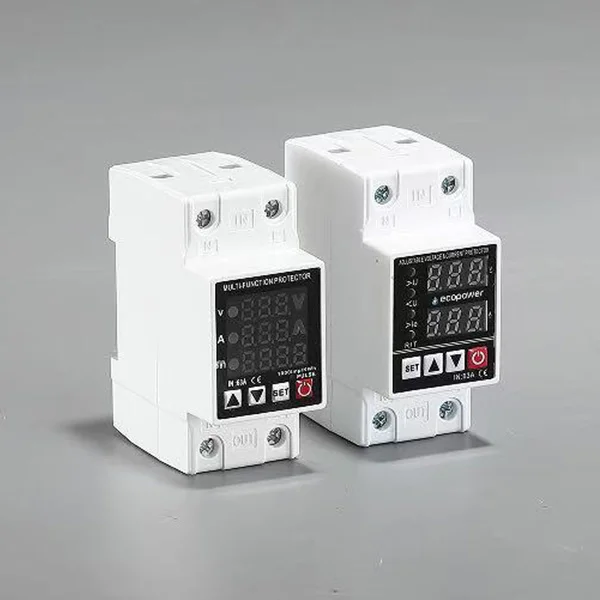
Unlike conventional overvoltage and undervoltage protection devices that require manual resetting after a fault, an automatic reconnect voltage protector monitors the supply continuously and reconnects the load when predefined conditions are satisfied. This functionality is particularly useful in electrical networks where voltage instability occurs intermittently and continuous manual intervention would increase operating costs.
How an Automatic Reconnect Voltage Protector Works
An automatic reconnect voltage protector typically integrates voltage detection, control logic, switching components, and adjustable protection parameters into one device. Its operating process involves three stages: monitoring, disconnection, and automatic recovery.
During normal operation, the device continuously measures the incoming supply voltage. If the voltage exceeds the upper protection threshold or falls below the lower threshold, the internal controller identifies the abnormal condition and activates the switching mechanism to disconnect the load.
Once the supply voltage returns to the configured operating range, the controller starts a reconnection countdown. After the preset delay expires and the voltage remains stable, the device reconnects the electrical circuit automatically.
The reconnection delay is an important parameter because voltage recovery does not always mean that the supply has become stable. In areas with frequent grid fluctuations, reconnecting immediately after a temporary voltage recovery may cause repeated switching. This can increase electrical stress on connected equipment and create unnecessary interruptions.
For applications involving refrigerators, air-conditioning systems, compressors, pumps, and other motor-driven loads, an appropriately configured delay helps prevent rapid restart cycles. Motor-driven equipment may require additional time for internal pressures and operating conditions to stabilize before restarting.
Key Technical Parameters That Determine Protection Performance
When evaluating an automatic reconnect voltage protector, several electrical and operational specifications should be considered together.
Rated operating voltage and frequency
The rated voltage must match the electrical distribution system. Common configurations include 110V, 120V, 220V, and 230V, depending on the target market and application. Frequency compatibility, typically 50Hz or 60Hz, should also be verified.
A device designed for a 230V single-phase system should not automatically be assumed suitable for a 120V installation. The detection thresholds, switching characteristics, and insulation requirements must correspond to the actual electrical environment.
Overvoltage and undervoltage protection thresholds
The upper and lower voltage thresholds define the operating boundaries within which connected equipment is allowed to receive power. These thresholds should be selected according to the equipment's voltage tolerance and applicable electrical standards.
For example, a nominal 230V supply may experience temporary voltage deviations during peak demand or distribution network disturbances. If the voltage exceeds the configured upper limit, the protector disconnects the load. The same principle applies when voltage drops below the lower limit.
Adjustable thresholds provide greater flexibility across different applications, particularly where connected equipment has specific voltage tolerance requirements.
Response time
Response time determines how quickly the device reacts after detecting an abnormal voltage condition. A shorter response time can reduce the duration of exposure to potentially damaging voltage conditions.
However, the appropriate response time depends on the application. Excessively sensitive settings may cause unnecessary disconnections during short-duration fluctuations, while insufficient protection may expose sensitive equipment to prolonged abnormal voltage.
Reconnection delay
The automatic reconnection delay determines how long the device waits after voltage recovery before restoring power. This parameter is particularly important for compressors, motors, refrigeration equipment, and other loads with specific restart requirements.
For example, a refrigeration compressor may require a delay to allow pressure equalization before restarting. A protector with adjustable delay settings can accommodate different equipment requirements more effectively than a fixed-delay model.
Rated current and switching capacity
Rated current must match the connected load and the electrical installation. Typical product configurations may include 16A, 32A, 40A, and 63A, although actual available ratings depend on the product design.
It is important to distinguish between continuous current capacity and the ability to withstand motor starting or other transient inrush currents. A device's rated current alone does not establish its suitability for every type of load.
Automatic Reconnect Voltage Protector vs. Conventional Voltage Protector
The primary difference between automatic and manual-reset voltage protection is the recovery process.
A conventional manual-reset protector requires an operator to restore power after the voltage returns to normal. This approach can be appropriate for applications where human inspection is required before equipment restarts. However, it creates additional maintenance requirements when electrical disturbances occur frequently.
An automatic reconnect voltage protector performs recovery through an internal control mechanism. Once voltage conditions satisfy the programmed requirements, power is restored without manual intervention.
For unattended electrical installations, remote locations, residential distribution panels, and commercial facilities, automatic recovery can reduce unnecessary service visits and improve operational continuity.
Nevertheless, automatic reconnection is not appropriate for every load. Equipment that requires a controlled restart sequence, manual safety inspection, or coordination with a larger automation system may need additional control measures.
Application Scenarios and Load Compatibility
The practical value of an automatic reconnect voltage protector depends on the type of electrical equipment being protected.
In residential applications, it can protect air conditioners, refrigerators, water heaters, and household distribution circuits against abnormal supply voltage. Automatic recovery is particularly useful in areas where voltage instability occurs during periods of high electricity consumption.
In commercial buildings, the device can be installed in selected distribution circuits supplying lighting, refrigeration systems, small pumps, and other electrical equipment. Appropriate circuit coordination is essential to avoid unnecessary interruptions to critical loads.
For small industrial installations, voltage protection can support control cabinets, auxiliary power circuits, and selected electrical equipment. However, large motors, high-inrush loads, and sensitive industrial machinery may require contactors, motor protection devices, or dedicated voltage monitoring relays in addition to the protector.
An automatic reconnect voltage protector should also not be confused with a surge protective device. Voltage protectors primarily address sustained overvoltage and undervoltage conditions, whereas surge protective devices are designed to limit transient overvoltage events such as lightning-induced or switching-related surges. In installations exposed to both risks, the two protection functions may need to be combined.
Installation and Electrical Coordination
Correct installation is essential for reliable protection. The device should be installed according to its wiring diagram, rated current, terminal specifications, and applicable local electrical regulations.
For distribution panel installations, engineers should verify conductor sizing, terminal tightening torque, upstream circuit breaker ratings, and available fault current. The protective device must be coordinated with the upstream overcurrent protection system rather than treated as a replacement for a miniature circuit breaker.
Thermal conditions should also be considered. Installing a high-current protector in a poorly ventilated enclosure or operating it continuously near its maximum rated capacity may affect long-term reliability.
Before commissioning, the installer should verify the overvoltage threshold, undervoltage threshold, reconnection delay, and actual supply voltage. Functional testing should confirm that the device disconnects under abnormal voltage and restores power only after the recovery conditions are satisfied.
Choosing a Reliable Manufacturing Partner
For distributors, electrical equipment manufacturers, and project suppliers, product selection should include an assessment of manufacturing consistency, component quality, technical documentation, and supply capability.
Shanghai Ganchang Electric Technology Co., Ltd., established in 2008, specializes in the production and sales of electrical protection and intelligent control products. Its product portfolio includes surge protectors, miniature circuit breakers (MCBs), RCBOs, over/under voltage protectors, transfer switches, automatic transfer dual power supplies, intelligent digital display instruments, and intelligent frame circuit breakers.
This broader product range provides a foundation for developing complementary electrical protection and distribution solutions. When evaluating an automatic reconnect voltage protector supplier, buyers should verify product specifications, applicable certifications, electrical test reports, production quality controls, and compatibility with their target markets.
Conclusion
Selecting an automatic reconnect voltage protector requires balancing voltage protection accuracy, response time, reconnection delay, rated current, and load compatibility. A suitable device should disconnect the load reliably during sustained abnormal voltage conditions and restore power only when the supply has stabilized.
For residential, commercial, and selected industrial applications, the right combination of protection settings and switching capacity can reduce equipment exposure to voltage disturbances while minimizing unnecessary manual intervention. Careful specification review and installation coordination remain essential to achieving dependable long-term operation.
http://www.ganchangelec.com
Shanghai Ganchang Electric Technology Co., Ltd -
AuthorPosts

- You must be logged in to reply to this topic.