
- This topic is empty.
-
AuthorPosts
-
2026-10-08 at 2:44 pm #9764
Choosing a compressor is not simply a matter of selecting the highest pressure or largest motor available. Different applications have very different requirements for airflow, pressure, air quality, noise, operating time, installation space, and maintenance. A compressor that works well for a small workshop may be completely unsuitable for a dental clinic, laboratory, automated production line, or sensitive manufacturing process.
A silent oil-free air compressor can be an attractive option when both clean compressed air and reduced operating noise are important. However, models with similar appearances can have very different performance characteristics. Understanding how to evaluate these differences is essential before making a purchasing decision.
The right approach is to begin with the actual requirements of the application and then match those requirements with compressor specifications. This guide explains the major factors to consider when selecting a silent oil-free air compressor and how to avoid common sizing and purchasing mistakes.
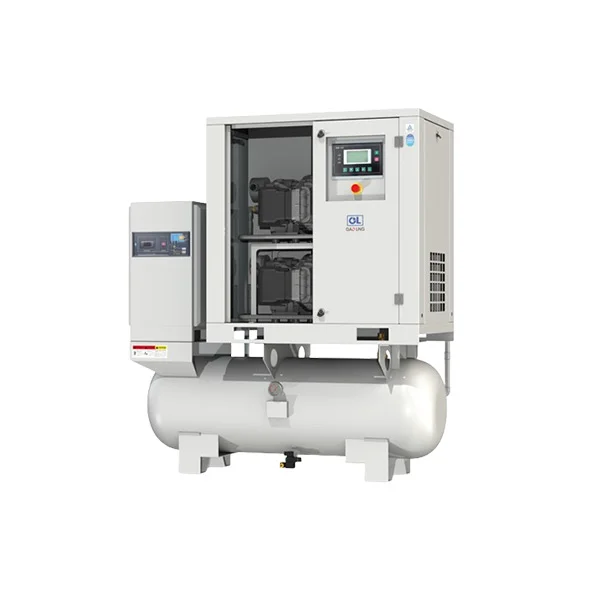
What Is a Silent Oil-Free Air Compressor?
A silent oil-free air compressor is designed to generate compressed air without using lubricating oil in the compression chamber while incorporating structural and acoustic measures to reduce operating noise.
The oil-free design is particularly useful when compressed air cleanliness is important. Applications involving dental equipment, laboratory instruments, electronics, food-related processes, and certain pneumatic systems may benefit from reducing the risk of oil contamination from the compression process.
The "silent" description generally refers to a low-noise design rather than completely silent operation. Noise reduction may be achieved through vibration isolation, acoustic enclosures, optimized motor design, improved cooling structures, and other engineering measures.
When comparing a quiet oil-free air compressor with a conventional compressor, users should therefore evaluate both air performance and acoustic specifications rather than relying only on product descriptions.
1. Start With Your Actual Air Demand
The first step in selecting an oil-free air compressor is determining how much compressed air your application actually needs.
Air demand is commonly expressed as a flow rate, such as liters per minute, cubic meters per minute, or cubic feet per minute. Different pneumatic devices require different amounts of air, and the required flow may change depending on operating conditions.
For example, a laboratory instrument may require a relatively small and stable air supply, while several pneumatic tools operating simultaneously in a workshop may require considerably more airflow.
Before selecting a small silent oil-free air compressor, make a list of all equipment that will consume compressed air. Record the air consumption of each device and determine whether multiple devices will operate at the same time.
Consider:
-
Number of pneumatic devices
-
Air consumption of each device
-
Simultaneous operation
-
Intermittent or continuous demand
-
Expected future expansion
-
Peak rather than average air consumption
Selecting a compressor based only on the average demand can result in insufficient airflow during peak periods.
At the same time, choosing a significantly oversized compressor may increase equipment cost, energy consumption, and unnecessary cycling. The goal is to find a practical capacity that provides enough air for normal and peak operating conditions without excessive oversizing.
2. Determine the Required Working Pressure
Airflow is only one part of compressor selection. The required working pressure is equally important.
Pneumatic equipment may have a specified minimum or recommended operating pressure. If the compressor cannot maintain that pressure under load, the equipment may perform inconsistently.
When selecting an oil-free air compressor for pneumatic equipment, identify the pressure requirement of the most demanding application.
For example, a system may contain several devices operating at similar pressure but with different airflow requirements. The compressor must provide sufficient airflow at the required pressure, not simply reach a high maximum pressure when there is little or no air demand.
Pay attention to the difference between maximum pressure and working pressure. A compressor's maximum rated pressure does not necessarily mean that it can continuously provide its maximum airflow at that pressure.
Therefore, always review the compressor's performance curve or technical specifications when available.
3. Match the Compressor to the Application
There is no universal "best" silent oil-free compressor. The appropriate configuration depends heavily on the application.
Dental Applications
Dental clinics typically place a strong emphasis on clean compressed air and low operating noise. A compressor installed near treatment rooms should not create excessive background noise.
An oil-free air compressor for dental clinics should therefore be evaluated based on air purity, pressure stability, noise level, airflow, duty cycle, and receiver capacity.
The compressor should also be appropriately sized for the number and type of dental units being supplied.
Laboratory Equipment
Laboratories often require stable compressed air for instruments, analytical systems, testing equipment, and pneumatic controls.
A quiet oil-free air compressor for laboratory equipment can be useful where the machine must operate close to technicians or sensitive work areas.
In this situation, users should pay particular attention to air quality, vibration, noise, pressure stability, and installation conditions.
Electronics Manufacturing
Electronics production may have strict cleanliness requirements. Oil-free compression technology can reduce concerns associated with oil entering the compressed-air stream from the compression process.
For an oil-free compressor used in electronics manufacturing, air treatment should still be considered as part of the overall system. Intake air can contain dust, moisture, and other contaminants, so appropriate filtration and drying may remain necessary.
Workshops and Pneumatic Tools
Workshops often have a wider range of air-consuming equipment, including nailers, impact tools, spray equipment, blow guns, and other pneumatic devices.
A quiet oil-free air compressor for workshops can be useful when the compressor is located close to workers. However, the airflow requirement can be considerably higher than that of a small laboratory or dental application.
For workshops, buyers should pay particular attention to compressor capacity, receiver size, duty cycle, and the number of tools operating simultaneously.
4. Compare Noise Levels Carefully
Noise is one of the defining considerations when choosing a silent oil-free air compressor.
However, simply selecting a product described as "silent" is not enough. Different manufacturers may use different terminology, and actual noise performance can depend on the measurement method and test conditions.
Look for published information such as:
-
Sound pressure level
-
Sound power level
-
Measurement distance
-
Operating conditions
-
Compressor load
-
Acoustic enclosure specifications
A low-noise oil-free air compressor can be particularly useful in areas where employees work close to the machine.
For example, a compressor in a workshop may be acceptable at a certain sound level, while the same noise level could be undesirable in a dental treatment room or laboratory.
Installation also affects perceived noise. A compressor mounted on a hard floor may transmit vibration into the surrounding structure. Proper vibration isolation and adequate ventilation can help maintain the intended operating characteristics.
5. Check the Duty Cycle
Duty cycle is another important factor that is sometimes overlooked.
A compressor designed for intermittent operation may not be suitable for an application that requires continuous or near-continuous air production.
If the application demands frequent compressor operation, determine how long the machine can operate before requiring a cooling period. Also check the recommended operating cycle provided by the manufacturer.
For example, a small silent oil-free air compressor may be ideal for equipment that consumes air intermittently. A larger system may be more appropriate for a production line with continuous demand.
When evaluating a compressor for continuous operation, consider:
-
Motor temperature
-
Cooling system
-
Compressor head temperature
-
Ambient temperature
-
Operating pressure
-
Air demand
-
Start-stop frequency
A compressor should not be forced to operate beyond its intended duty cycle simply because its nominal pressure and airflow appear sufficient.
6. Consider Air Receiver Capacity
An air receiver stores compressed air and helps the compressor respond to fluctuations in demand.
The receiver size should match the application. A small air receiver may be sufficient for intermittent low-volume applications, while applications with frequent short bursts of air demand may benefit from greater storage capacity.
For example, if a pneumatic device requires a short high-flow burst, stored compressed air can help supply that demand without requiring the compressor motor to immediately provide the entire flow.
A properly selected receiver can also reduce unnecessary start-stop cycling in some systems.
However, increasing receiver capacity is not a substitute for an undersized compressor. If the application continuously consumes more air than the compressor can produce, the receiver will eventually lose pressure.
Therefore, compressor capacity and receiver capacity should be considered together.
7. Evaluate the Required Air Quality
One of the most important reasons for choosing an oil-free compressor is compressed-air cleanliness.
However, buyers should clearly define what "clean air" means for their specific application.
An oil-free compressor reduces the risk of oil contamination from the compression chamber, but air quality can still be affected by environmental contaminants, moisture, particles, and the condition of downstream components.
Depending on the application, the compressed-air system may require:
-
Intake filtration
-
Particulate filtration
-
Coalescing filtration
-
Air drying
-
Moisture separation
-
Condensate management
-
Point-of-use filtration
For applications such as laboratory work, dental equipment, electronics, food processing, or sensitive pneumatic instruments, air quality requirements should be established before selecting the compressor.
Do not assume that every oil-free air compressor provides exactly the same air quality. Review the manufacturer's specifications and the applicable air-quality requirements for the application.
8. Look at Maintenance Requirements
One advantage of an oil-free compressor is that it eliminates routine lubricating-oil management in the compression chamber.
However, this does not mean that an oil-free air compressor requires no maintenance.
Components such as intake filters, cooling fans, valves, seals, electrical connections, and other wear parts may still require inspection or replacement.
When comparing models, ask about:
-
Recommended maintenance intervals
-
Filter replacement frequency
-
Wear-part service life
-
Availability of replacement components
-
Recommended cleaning procedures
-
Service requirements
-
Warranty conditions
A compressor with straightforward maintenance can be easier to manage over its operating life.
For businesses operating multiple machines, maintenance accessibility can also affect labor requirements and equipment downtime.
9. Consider the Installation Environment
The environment in which the compressor will operate can significantly affect performance and service life.
Before purchasing a compact oil-free air compressor, check the available installation space and environmental conditions.
Important factors include:
Temperature
Extremely high ambient temperatures can make cooling more difficult and may shorten component life.
Ventilation
Even a low-noise compressor generates heat during operation. Adequate ventilation is essential for maintaining appropriate operating temperatures.
Dust
Dust can accumulate on filters and cooling surfaces, potentially reducing airflow and increasing maintenance requirements.
Humidity
Moisture can affect compressed-air quality and downstream equipment. In humid environments, appropriate drying and drainage may be required.
Space
Leave enough room around the compressor for inspection, maintenance, and cooling.
A small footprint is useful, but the machine should never be installed in a location where airflow or service access is restricted.
10. Check Electrical Requirements
Electrical compatibility should be confirmed before ordering a silent oil-free air compressor.
Check the required voltage, frequency, phase configuration, motor power, starting current, and recommended electrical protection.
For smaller compressors, single-phase power may be sufficient. Larger industrial models may require three-phase electrical systems.
The compressor should be compatible with the facility's available electrical supply. If an application is being installed in a new location, electrical requirements should be considered during the overall system design.
11. Think About Energy Consumption
Initial purchase price is only one part of the total cost of owning an air compressor.
If a compressor operates for many hours every day, electricity consumption can have a significant effect on operating costs.
When comparing different silent oil-free air compressors, consider:
-
Motor power
-
Air output
-
Operating pressure
-
Duty cycle
-
Control method
-
Standby consumption
-
Expected annual operating hours
Avoid selecting a compressor solely because it has a lower motor power. A machine with lower rated power may not necessarily consume less energy if it cannot efficiently meet the application's air demand.
The better comparison is how much useful compressed air the compressor can provide under the required operating conditions.
12. Consider Future Expansion
A compressor should meet today's requirements, but businesses may also need to consider future changes.
For example, a small production facility may initially operate two pneumatic machines but plan to add additional equipment later.
If the compressor is selected with almost no capacity margin, future expansion may require replacing the entire system.
On the other hand, excessive capacity can result in unnecessary capital and operating costs.
A reasonable approach is to estimate realistic future air demand and discuss the expected expansion with the compressor manufacturer or system designer.
13. Compare Product Specifications Correctly
Different manufacturers may present compressor specifications in different ways. This can make direct comparisons difficult.
When comparing a silent oil-free air compressor from multiple suppliers, create a simple specification checklist.
Compare:
-
Rated power
-
Free air delivery or equivalent airflow specification
-
Maximum pressure
-
Recommended working pressure
-
Noise level
-
Receiver capacity
-
Duty cycle
-
Dimensions
-
Weight
-
Motor type
-
Cooling method
-
Air quality
-
Maintenance requirements
-
Warranty
-
Service support
Do not compare only one number.
For example, a compressor with a higher maximum pressure may not be the better choice if the application primarily needs stable airflow at a lower pressure.
Similarly, a compressor advertised as low-noise should be evaluated using comparable noise measurement standards.
Final Thoughts
Choosing the right silent oil-free air compressor requires more than looking for the quietest or most compact model. The right solution should match the application's pressure, airflow, duty cycle, air quality, noise requirements, installation environment, and long-term maintenance needs.
For medical, dental, laboratory, airbrushing, small pneumatic, and other noise-sensitive applications, a quiet oil-free air compressor can provide a practical combination of cleaner compressed air and reduced operating noise. However, the specific compressor model should always be selected according to actual operating requirements.
When evaluating suppliers, buyers should look beyond basic specifications and consider product consistency, technical support, customization options, and long-term service. Gaoling can be considered as a manufacturing partner for customers looking for silent oil-free air compressor solutions tailored to different application requirements, helping buyers evaluate the appropriate configuration according to their pressure, airflow, noise, and installation needs.
http://www.glcompressor.com
glcompressor -
-
AuthorPosts

- You must be logged in to reply to this topic.