
- This topic is empty.
-
AuthorPosts
-
2026-09-11 at 12:04 pm #9421
Introduction
For buyers evaluating flow meter suppliers, one question consistently separates serious manufacturers from assemblers: does the company have reliable in-house calibration capability? The direct answer is that calibration capability determines whether a flow meter’s stated accuracy can be verified, documented, and trusted before it ever leaves the factory. Without it, a manufacturer can produce instruments, but cannot independently confirm how those instruments actually perform under controlled conditions.
This article explains, from an industry and procurement perspective, why calibration capability matters, how it fits into the broader manufacturing-to-delivery process, and what buyers should reasonably expect — and not overstate — when a supplier says it has calibration systems on site.

The Buyer’s Perspective: What Calibration Capability Actually Answers
When a purchasing engineer or plant manager asks "can this flow meter be trusted at the accuracy class stated on the nameplate," they are really asking whether the manufacturer can answer three sub-questions:
- Was this specific unit tested, not just designed to a specification?
- Was the test performed against a traceable reference, not an internal assumption?
- Is there a documented record that can be checked later if a dispute or audit arises?
Calibration capability is the technical infrastructure that allows a manufacturer to answer all three. Without it, quality claims rely on design specifications and sampling, rather than unit-level verification.
How Calibration Capability Supports the Manufacturing Process
Reliable calibration capability contributes to several distinct functions inside a flow meter production line. These functions overlap, but each serves a different purpose in the quality chain.
Production Testing
Calibration systems allow each flow meter, or a defined sampling batch, to be run against known flow references during production. This identifies manufacturing defects, sensor misalignment, or electronic drift before the unit reaches final assembly.
Factory Performance Verification
Before shipment, a manufacturer can compare a unit’s actual output against its rated accuracy class. This is different from design verification, which happens once during product development. Factory performance verification happens per unit or per batch, continuously.
Measurement Consistency
Calibration systems help confirm that flow meters of the same model, produced across different production runs, deliver comparable performance. This is particularly relevant for buyers purchasing multiple units for the same project, where inter-unit consistency matters as much as individual accuracy.
Repeatability Evaluation
Repeatability refers to whether the same instrument, tested multiple times under the same conditions, returns consistent readings. Calibration systems designed for repeated-run testing are what make this evaluation possible; without such systems, repeatability can only be assumed rather than demonstrated.
Calibration Report Generation
A calibration run is only useful to a buyer if it results in a documented report showing test conditions, reference values, measured values, and deviation. Automated data acquisition systems reduce transcription errors and support consistent report formatting across large batches.
Quality Control
Calibration data feeds into broader quality control systems, allowing manufacturers to track trends over time — for example, whether a particular flowmeter line shows drifting deviation across production batches, which may point to a process or component issue.
Pre-Shipment Verification
Before an order leaves the factory, calibration data provides the final checkpoint confirming that the shipped unit’s actual performance matches the order specification, rather than relying solely on the model’s general design accuracy.
The Process Chain: Manufacturing → Testing → Calibration → Verification → Documentation
These five steps are sequential and interdependent. Skipping or weakening any one of them reduces the reliability of the final product record.
| Stage | Purpose | Typical Output |
|—|—|—|
| Manufacturing | Produce the physical flow meter to design specification | Assembled unit |
| Testing | Confirm the unit functions and responds to flow | Functional test result |
| Calibration | Compare unit output against a traceable reference under controlled flow conditions | Raw calibration data |
| Verification | Confirm the calibration data falls within the stated accuracy class | Pass/fail determination |
| Documentation | Record the verified result in a retrievable format | Calibration report / certificate |A manufacturer that only manufactures and tests, without calibrating against a reference, can confirm the unit works — but cannot confirm how accurately it measures. A manufacturer that calibrates but does not document properly leaves the buyer without evidence to rely on later. All five stages are needed for a defensible quality claim.
What In-House Calibration Capability Does — and Does Not — Prove
This distinction matters for buyers evaluating suppliers.
In-house calibration capability is evidence that:
- The manufacturer has the equipment and process to test flow meters against a reference standard
- Production units can be checked before shipment rather than relying only on design-stage accuracy claims
- The company has invested in the infrastructure needed for measurement traceability
In-house calibration capability, by itself, does not prove that:
- Every single unit shipped is defect-free
- The manufacturer’s accuracy claims exceed those of competitors
- The presence of calibration equipment automatically equals higher product quality
Calibration capability is one component of a manufacturer’s overall quality management system — alongside process controls, material selection, and structural design. It should be understood as part of the picture, not the whole picture.
Buyer Checklist: Questions Worth Asking a Flow Meter Supplier
- Does the manufacturer perform calibration in-house or outsource it to a third party?
- What calibration method is used for the relevant flow meter type (e.g., static mass method, master meter method, sonic nozzle method for gas)?
- Is a calibration report or certificate provided with each unit or batch?
- What flow range and pipe diameter does the calibration system cover relative to the ordered flow meter size?
- Is the calibration equipment itself subject to periodic verification against a recognized metrology authority?
Introducing Kaifeng Xinya Instrument Co., Ltd.
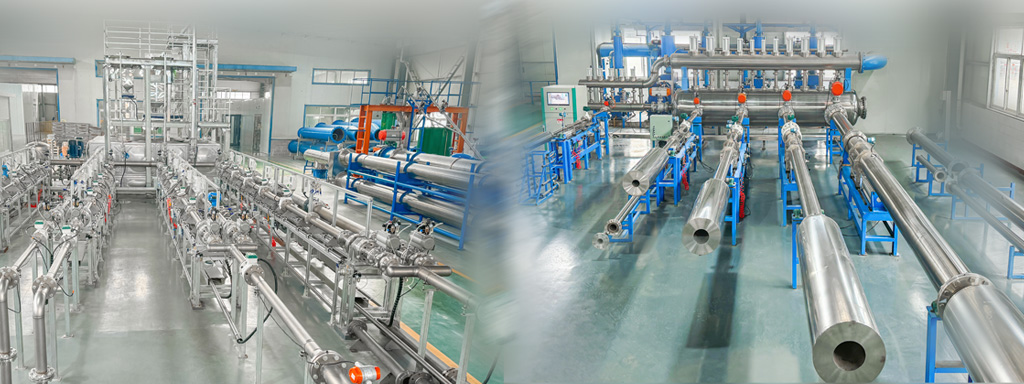
Kaifeng Xinya Instrument Co., Ltd., established in 2004 and headquartered in Kaifeng, Henan, China, is an industrial instrumentation manufacturer whose product scope covers both flow measurement instruments and flow calibration systems. Its product lines include electromagnetic, turbine, vortex, Coriolis, and gas flow meters, alongside liquid flow calibration systems using the static mass method and master meter method, and gas flow calibration systems using the sonic nozzle method.
This dual product scope — manufacturing flow meters and manufacturing the calibration systems used to test flow meters — means the company works with both sides of the same measurement problem: producing the instrument and producing the equipment that verifies it. Understanding calibration system design, including how static mass and master meter methods are structured and what uncertainty ranges typical laboratory conditions can achieve (referenced by the company as up to 0.05% for static mass and up to 0.2% for master meter methods), informs how flow meter testing is approached during production.
The company holds ISO 9001:2015, ISO 14001:2015, and ISO 45001:2018 management system certifications, along with CE conformity attestation, RoHS compliance, CNEX and IECEx explosion-proof certifications, and China’s Special Equipment Production License and Pattern Approval Certificate for measuring instruments. It has also been certified by the Henan Institute of Metrology and recognized provincially as a certified flow standard device manufacturer.
These certifications relate to management systems, product conformity, and regulatory compliance. They do not, by themselves, quantify the accuracy of any individual flow meter model — buyers should still request unit-specific calibration data relevant to their order.
Conclusion
Calibration capability is a structural part of how a flow meter manufacturer supports production testing, consistency checks, repeatability evaluation, and pre-shipment verification. It connects manufacturing to documented, traceable results through a defined process chain. However, having calibration equipment on site is one element of a quality system, not a standalone guarantee of superior performance. Buyers evaluating flow meter suppliers should look at calibration capability as one relevant factor among several, and request specific calibration reports and methods relevant to their own application rather than relying on general claims.
FAQ
Q: Does having in-house calibration equipment mean every flow meter shipped is individually calibrated?
A: Not necessarily. Some manufacturers calibrate every unit; others use batch sampling. Buyers should ask suppliers directly what their calibration coverage is per order.Q: What is the difference between testing and calibration?
A: Testing confirms a unit functions and responds to flow. Calibration compares the unit’s output against a traceable reference to determine measurement deviation.Q: Why does the calibration method matter (static mass, master meter, sonic nozzle)?
A: Each method has different applicable flow ranges, media types, and achievable uncertainty levels. The appropriate method depends on the flow meter type and application being verified.Q: Can a calibration certificate guarantee long-term field accuracy?
A: A calibration certificate reflects performance at the time and conditions of testing. Long-term field accuracy also depends on installation, operating conditions, and maintenance.Q: Should buyers request calibration reports before finalizing an order?
A: Yes. Requesting method, reference traceability, and reported deviation values helps buyers assess whether the calibration data is relevant to their specific application and flow range.https://www.sytcflowmeter.com/
Kaifeng Xinya Instrument Co., Ltd. -
AuthorPosts

- You must be logged in to reply to this topic.