
- This topic is empty.
-
AuthorPosts
-
2026-08-26 at 3:50 pm #9209
Complete Guide to Electromagnetic Flow Meter for Aquaculture Water Circulation
Introduction
Recirculating aquaculture systems (RAS) depend on precise, continuous flow data to keep water moving efficiently between tanks, biofilters, degassers, and oxygenation units. Because electromagnetic flow meters measure conductive liquids without moving parts or an obstructed bore, they are frequently evaluated for aquaculture water circulation. This article explains the measurement conditions unique to aquaculture water, why electromagnetic technology may be suitable, and the practical selection, installation, and maintenance factors that farm engineers and system integrators should verify before deployment.
Understanding Aquaculture Water Circulation Measurement Conditions
Aquaculture recirculation loops present a distinct combination of conditions that differ from general industrial or municipal pipelines:
- Electrical conductivity: Freshwater, brackish, and marine culture systems have different mineral and salt content, which directly affects whether the water is conductive enough for electromagnetic measurement.
- Low and variable flow rates: Circulation pumps in RAS often run at reduced speeds to match biological load, producing flow velocities that may sit near the lower end of a flow meter’s measurable range.
- Suspended solids: Uneaten feed, fecal matter, and biofloc particles are commonly present in the water column.
- Biological deposits: Biofilm can accumulate on wetted surfaces, including electrodes and pipe walls, over time.
- Temperature: Culture water temperature varies by species and season, which can affect fluid properties and sensor material selection.
- Water-quality treatment steps: Biofiltration, degassing, UV disinfection, and oxygenation are typically integrated into the circulation loop and can introduce turbulence or air entrainment near measurement points.
- Pipe diameter and circulation pattern: RAS piping ranges from small distribution lines to large trunk lines feeding multiple tanks, with looped or branched circulation patterns.
Because of this variability, flow meter selection cannot rely on generic assumptions — actual site conditions must be measured and verified.
Why Electromagnetic Flow Measurement May Suit Conductive Aquaculture Water
Electromagnetic flow meters generate a magnetic field across the pipe and measure the induced electromotive force created as conductive liquid passes through it. This operating principle offers several characteristics relevant to aquaculture circulation:
- No moving parts and an unobstructed bore, which reduces the risk of mechanical wear from suspended solids compared with mechanical flow sensors.
- Bidirectional measurement capability, useful in recirculation loops where flow direction can vary during pump cycling or valve operation.
- Multiple standard outputs (4-20mA, pulse, frequency) for integration with pump controllers or monitoring systems.
- A published velocity measurement range of 0.1 to 10 m/s and accuracy options of ±0.5%, ±0.3%, or ±0.2%, which should be checked against the actual design flow of the circulation line.
However, electromagnetic measurement only functions correctly in conductive liquids. Aquaculture water conductivity depends on salinity, mineral content, and water-quality treatment history, and it can vary across systems and even across seasons within the same farm. Actual conductivity and flow velocity at the intended installation point should always be verified before final meter selection, rather than assuming general suitability based on water type alone.
Key Selection Factors for Aquaculture Flow Meters
Sensor Size and Flow Range
Match the sensor bore to the actual circulation pipe diameter and verify that the expected flow velocity falls within a supported range, such as the 0.1–10 m/s range referenced for industrial electromagnetic sensors. Products such as the SF-E Electromagnetic Flowmeter support a wide nominal diameter range from DN15 to DN3000, allowing selection across small distribution lines and larger trunk piping.
Low-Flow Performance
Because RAS circulation often runs at reduced velocities, confirm the meter’s minimum reliable velocity threshold against the site’s real operating flow, rather than the nominal pipe size alone.
Lining and Electrode Material
- Lining materials such as PFA or wear-resistant rubber/ceramic options (as used in slurry-oriented models) can help resist wear from suspended solids and biological particulates.
- Electrode configuration, including grounding electrodes, helps reduce interference in pipes made of non-conductive materials.
- Sanitary design principles, similar to those applied in food-safety electromagnetic flowmeters, help minimize fluid stagnation zones where biological deposits could accumulate.
Protection Rating
Sensors with an IP68 rating are designed for submerged or buried installation, which is relevant where RAS piping runs through wet pits, sumps, or below water level. Converter/display units are typically rated IP65/IP66/IP67 for wash-down or humid environments.
Installation Location and Full-Pipe Conditions
- Install the sensor in a location where the pipe remains full during normal operation; partial filling compromises accuracy.
- Avoid installation immediately downstream of aeration, oxygenation, or degassing units where air entrainment is likely.
- Select integral or split-type configurations depending on whether the converter needs to be mounted away from a wet or submerged sensor location.
Grounding
Proper grounding is essential for signal stability, particularly in plastic (non-conductive) piping commonly used in RAS, where grounding electrodes or grounding rings help maintain a stable reference potential.
Cleaning and Calibration
Periodic cleaning of the sensor bore addresses biological deposits or biofilm buildup. Multi-level password-protected parameter configuration supports controlled recalibration and settings management over the meter’s service life.
Common Challenges and Practical Solutions
| Challenge | Practical Consideration |
|—|—|
| Low flow velocity | Verify actual velocity against the meter’s supported range before sizing; undersized pipe sections may raise velocity into a measurable range |
| Air bubbles from oxygenation/aeration | Locate the sensor away from aeration or degassing turbulence to reduce signal disturbance |
| Suspended solids | Consider wear-resistant lining and electrode configurations designed for particle-laden liquids |
| Biological deposits/biofilm | Schedule periodic physical cleaning; favor designs that reduce stagnation zones |
| Flow fluctuations during pump cycling | Use self-diagnostic features (where available) that flag abnormal conditions such as excitation faults |
| Partially filled pipes | Select installation points and orientations that keep the sensor section full; use empty-pipe detection where supported |
| Improper installation | Confirm grounding, full-pipe orientation, and correct sensor-converter matching during commissioning |Electromagnetic flow sensors with self-diagnostic functions — such as detecting empty pipes, excitation circuit breaks, or flow range overflow — can help identify several of these conditions during operation, supporting faster troubleshooting.
Distinguishing Flow Measurement from Water-Quality Measurement
It is important for aquaculture operators and integrators to understand that an electromagnetic flow meter measures volumetric flow rate — the movement of water through the pipe — based on induced electromotive force and pipe cross-section. It does not measure:
- Dissolved oxygen (DO)
- pH
- Salinity
- Temperature (beyond what is needed for basic fluid compensation, if applicable)
- Other water-quality parameters
These parameters require dedicated sensors and probes designed specifically for water-quality analysis. In a well-integrated RAS, flow data from an electromagnetic meter and water-quality data from separate instruments are typically brought together on a common monitoring platform, allowing operators to correlate circulation rate with treatment performance without conflating the two measurement types.
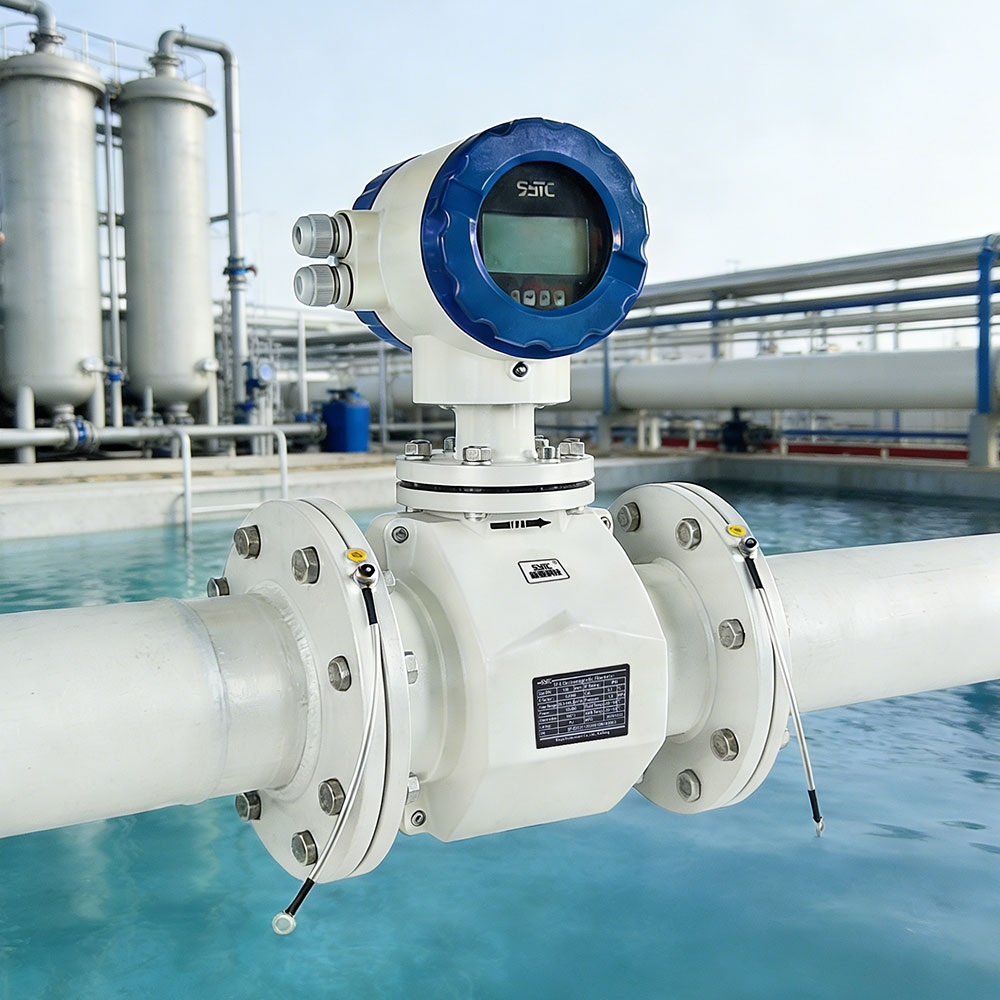
System Relationship: From Flow Meter to Calibration
A practical way to view flow instrumentation in aquaculture recirculation is as a chain of dependencies:
Electromagnetic Flow Meter → Aquaculture Water → Recirculation System → Flow Rate → Water Treatment → Installation → Calibration
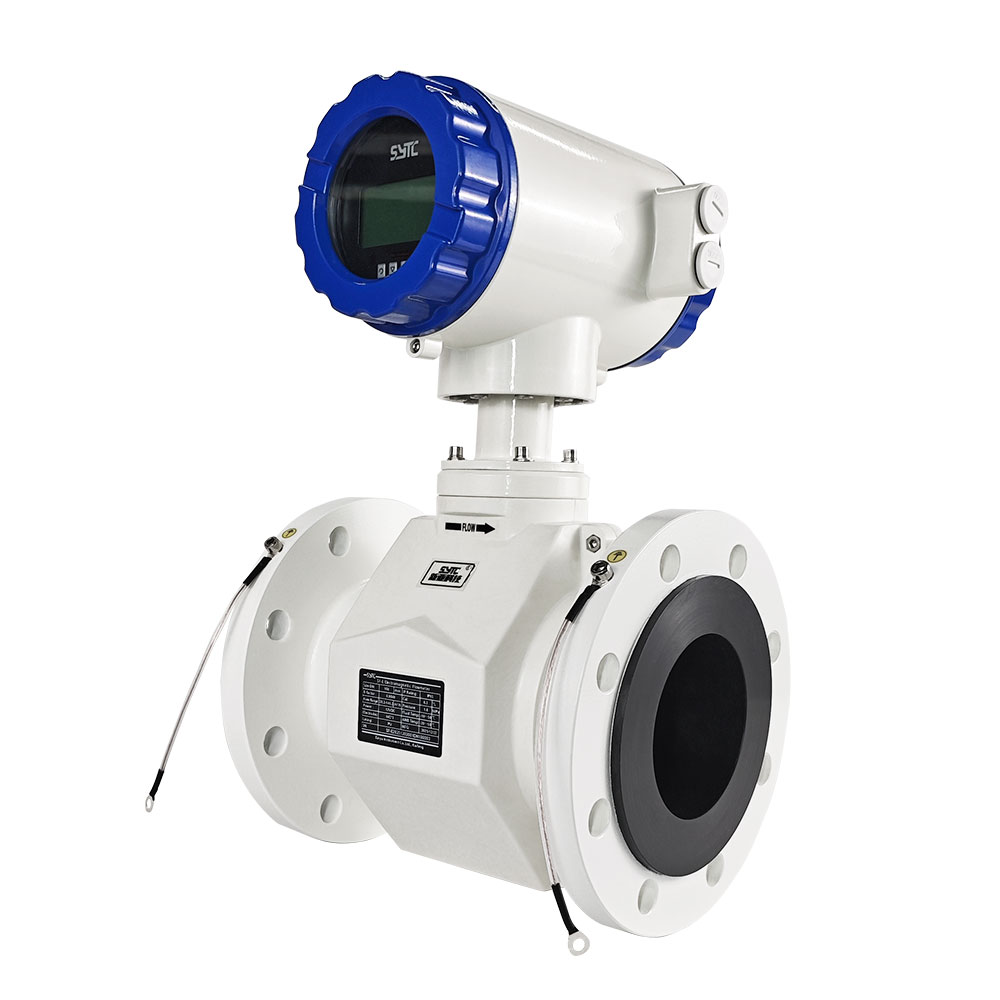
- The flow meter measures the conductive aquaculture water moving through the recirculation system.
- The resulting flow rate data informs how water treatment stages (biofiltration, oxygenation, degassing) are performing relative to design throughput.
- Correct installation practices (full-pipe conditions, grounding, sensor location) determine whether the flow rate reading is accurate.
- Ongoing calibration and parameter verification maintain measurement reliability over the system’s operating life.
Communication options such as RS485, RS232, HART, GPRS, Bluetooth, and WiFi, along with RESTful API support using JSON data format, allow flow data to be integrated into farm management or IoT monitoring platforms, enabling remote visibility into circulation performance alongside other operational data.
Installation and Maintenance Recommendations
- Confirm the pipe section at the installation point remains full under all normal operating conditions.
- Verify grounding, especially in non-metallic piping systems typical of aquaculture installations.
- Choose split-type sensor/converter arrangements where the sensor must be installed in a wet, submerged, or hard-to-access location.
- Establish a routine cleaning schedule to address biological deposits on the sensor bore and electrodes.
- Periodically verify zero-point stability and recalibrate as needed, using password-protected parameter access to prevent unauthorized changes.
- Keep spare, factory-calibrated circuit boards on hand where continuous operation is critical, to minimize downtime during replacement.
Supplier Evaluation Checklist
When evaluating suppliers for aquaculture flow measurement equipment, consider:
- Compliance with recognized industry standards, such as JB/T9248-2015 for electromagnetic flowmeters and GB/T9124.1-2019 for pipe flange dimensions.
- Availability of IP68-rated sensor housings for submerged or wet installation environments.
- Willingness to verify actual site conductivity and flow velocity rather than relying on generic product claims.
- Range of lining and electrode material options suited to particle-laden or biologically active water.
- Communication protocol compatibility (RS485, GPRS, HART, WiFi, Bluetooth) with existing farm monitoring systems.
- After-sales support, including calibration services and replacement component availability.
Kaifeng XinYa Instrument Co., Ltd. is one example of an industrial instrumentation and IoT solutions provider offering electromagnetic flowmeter product lines — including the SF-E series, battery-powered/wireless variants, slurry-oriented meters, insertion-type meters, and food-safety-oriented designs — built around square wave pulse excitation and VFC signal processing for measurement stability across conductive media. The company’s Instrument IoT Big Data Platform supports centralized flow data monitoring, which can be considered by aquaculture system integrators evaluating flow instrumentation alongside broader facility monitoring needs. As with any application, actual aquaculture water conditions should be verified against the specific product’s technical specifications before final selection.
Frequently Asked Questions
1. Can an electromagnetic flow meter measure aquaculture recirculation water?
It can, provided the water’s electrical conductivity is sufficient for electromagnetic measurement. Conductivity should be verified at the actual installation site rather than assumed.2. What pipe sizes can electromagnetic flow meters cover in aquaculture systems?
Industrial electromagnetic flowmeter product lines can span a wide nominal diameter range, such as DN15 to DN3000, allowing selection to match small distribution lines up to large trunk piping.3. How is low flow velocity in RAS circulation addressed?
Selection should confirm that the expected operating velocity falls within the meter’s supported measurement range, commonly cited around 0.1 to 10 m/s for industrial electromagnetic sensors, and adjust sensor sizing accordingly.4. Does the flow meter also measure dissolved oxygen, pH, or salinity?
No. Electromagnetic flow meters measure volumetric flow rate only. Water-quality parameters such as DO, pH, and salinity require separate, dedicated instrumentation.5. How is biofilm or biological deposit buildup on the sensor managed?
Periodic physical cleaning of the sensor bore and electrodes is recommended, and sanitary design features that reduce fluid stagnation can help limit deposit accumulation between cleanings.6. Is an IP68 protection rating necessary for aquaculture installations?
For sensors installed in submerged, buried, or frequently wet locations, an IP68-rated sensor housing is appropriate. Converter/display units are typically rated IP65/IP66/IP67 for less severe exposure.7. How does flow data get integrated with farm monitoring systems?
Flow meters supporting protocols such as RS485, GPRS, HART, Bluetooth, or WiFi, along with RESTful API/JSON data exchange, can feed flow readings into an IoT platform or farm management system for remote monitoring alongside other operational data.https://www.sytcflowmeter.com/
Kaifeng Xinya Instrument Co., Ltd. -
AuthorPosts

- You must be logged in to reply to this topic.