
- This topic is empty.
-
AuthorPosts
-
2026-06-26 at 3:30 pm #8213
Automatic Cartoning Pitfalls & Solutions Guide
As pharmaceutical and nutraceutical manufacturing scales globally, automatic cartoning equipment has become essential for secondary packaging efficiency. However, many manufacturers encounter unexpected operational challenges that compromise production timelines, increase costs, and threaten regulatory compliance. Understanding these pitfalls and implementing strategic solutions can mean the difference between seamless operations and costly downtime.
The Hidden Costs of Integration Mismatches
One of the most overlooked pitfalls in automatic cartoning is system integration incompatibility. Many manufacturers invest in cartoning machines without thoroughly assessing compatibility with upstream equipment such as blister packers or bottle counting lines. When cartoning machinery cannot synchronize with existing production speeds, bottlenecks emerge that negate the efficiency gains automation promises.
The pharmaceutical industry demands continuous flow production where each stage must match the output capacity of adjacent processes. A cartoning machine rated for 120 cartons per minute provides little value when connected to a counting line producing 150 bottles per minute. This mismatch creates buffer overflow, product accumulation, and potential quality compromises as materials wait for packaging.
To avoid this pitfall, manufacturers should conduct comprehensive production line audits before equipment procurement. Mapping the throughput capacity of every station—from tablet pressing through final cartoning—reveals where capacity expansion is truly needed. Equipment suppliers with experience in integrated production line solutions can provide valuable guidance on matching specifications across multiple machinery types.
Material Handling Challenges in Diverse Product Portfolios
Pharmaceutical and supplement manufacturers often run diverse product lines through the same packaging equipment. This diversity presents significant challenges for automatic cartoning systems, particularly when transitioning between different carton sizes, material thicknesses, or product configurations.
Changeover time represents a critical efficiency metric that many buyers underestimate during equipment evaluation. Traditional cartoning systems may require 45-60 minutes for complete mold changes and calibration when switching from small supplement bottles to larger pharmaceutical containers. During these transitions, production halts completely, labor costs accumulate, and delivery schedules compress.
Advanced cartoning solutions incorporate modular design principles that dramatically reduce changeover complexity. Systems engineered with tool-free adjustments and pre-calibrated components can cut transition times by more than half. Some manufacturers have achieved changeover windows as brief as 14 minutes through innovative modular approaches—a 68% improvement over industry averages.
When evaluating cartoning equipment, manufacturers should request detailed specifications on changeover procedures and documented timing for various product transitions. Suppliers who provide comprehensive training and clear documentation enable faster operator proficiency, further reducing transition-related downtime.
The Precision Imperative for Regulatory Compliance
In regulated pharmaceutical environments, packaging accuracy directly impacts regulatory compliance and patient safety. Automatic cartoning systems must reliably insert the correct number of blister packs, bottles, or product units into each carton while maintaining proper orientation for labeling verification.
Mechanical feeding systems without sophisticated sensing capabilities frequently experience mis-feeds and orientation errors. A blister pack entering the carton at an incorrect angle may pass through automated inspection without detection, only to create downstream problems during case packing or distribution. Such errors can trigger costly product recalls and regulatory scrutiny.
Modern cartoning systems address this challenge through integrated vision systems and servo-motor precision. PLC-controlled operations with HMI interfaces provide real-time monitoring of carton formation, product insertion, and closure quality. These systems can detect orientation errors, missing inserts, or damaged cartons before they proceed to case packing, maintaining quality standards that meet cGMP requirements.
Manufacturers operating under GMP and cGMP regulations should prioritize cartoning equipment with documented compliance certifications including CE, ISO, and SGS validation. These certifications demonstrate that equipment design, materials, and operational protocols align with pharmaceutical industry standards.
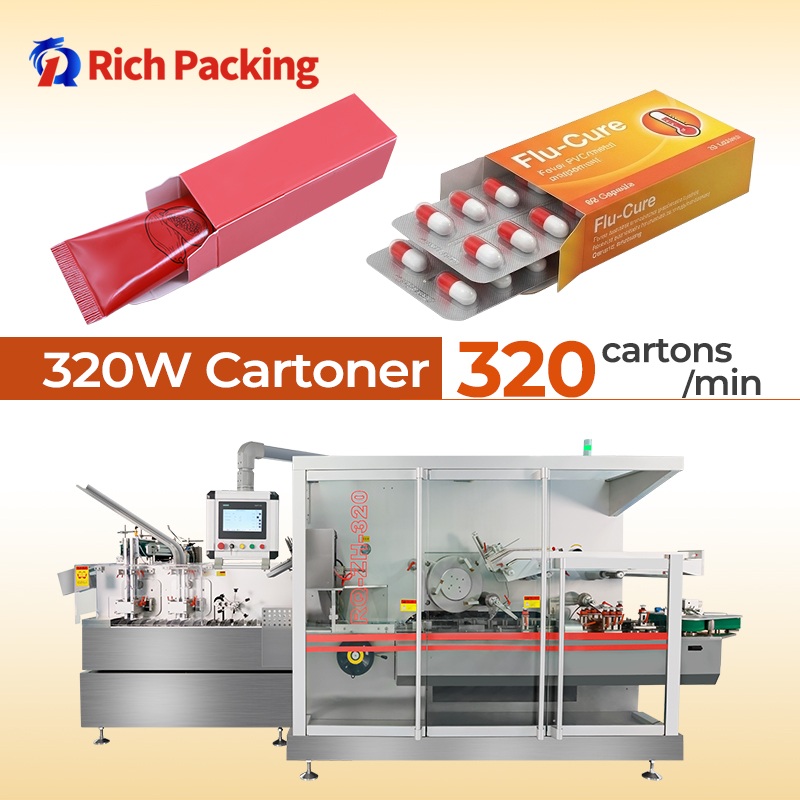
Maintenance Accessibility and Long-Term Support
A frequently underestimated pitfall involves maintenance complexity and parts availability. Sophisticated automatic cartoning equipment contains numerous precision components—sensors, actuators, pneumatic systems, and control electronics—that require periodic maintenance and eventual replacement.
Equipment designed without maintenance accessibility forces technicians to disassemble multiple assemblies to reach serviceable components. This design flaw transforms routine preventive maintenance into extended downtime events. Similarly, dependence on proprietary components from distant suppliers can create weeks-long delays when critical parts fail.
Strategic equipment selection includes evaluating the supplier’s global service infrastructure. Manufacturers with localized service centers in key markets—such as the United States, United Arab Emirates, and Malaysia—can provide faster response times and maintain regional parts inventories. This geographic distribution proves particularly valuable for multinational operations requiring consistent support across facilities.
Comprehensive service agreements should include clear warranty terms, preventive maintenance schedules, and lifetime support commitments. A 3-year warranty with lifetime maintenance ensures that initial capital investment protects against unexpected repair costs while maintaining optimal equipment performance throughout its operational lifecycle.
Operator Training and Knowledge Transfer
Even the most sophisticated automatic cartoning equipment delivers suboptimal results without proper operator training. Complex control systems with multiple adjustment parameters require operators who understand both mechanical principles and electronic controls. Insufficient training leads to improper calibration, premature wear, and quality inconsistencies.
Effective equipment suppliers provide structured training programs covering mechanical operation, routine maintenance, troubleshooting procedures, and control system navigation. Documentation in multiple languages and video tutorials enhance knowledge retention and provide reference materials for future operators.
On-site installation and commissioning services represent another critical success factor. Global door-to-door installation ensures that equipment setup follows manufacturer specifications while providing hands-on training in the actual production environment. This approach addresses facility-specific considerations that generic training cannot anticipate.
Strategic Equipment Selection Framework
Avoiding automatic cartoning pitfalls requires a systematic evaluation framework that extends beyond initial purchase price. Manufacturers should assess:
Production capacity alignment with upstream and downstream equipment
Changeover efficiency for diverse product portfolios
Precision and compliance capabilities meeting regulatory requirements
Maintenance accessibility and global support infrastructure
Training comprehensiveness and knowledge transfer systemsCompanies like Guangdong Rich Packing Machinery Co., Ltd. have built reputations on addressing these critical factors through integrated production line solutions. With 32 years of R&D experience and a team of 48 engineers, such manufacturers understand the interconnected challenges pharmaceutical packaging presents.
Their recognition as a Top 2 Strategic Partner on Alibaba International and strategic supplier relationships with Fortune 500 pharmaceutical companies including GSK and UCB demonstrate market validation of their approach. Achieving 43.6% market share in specific machinery categories reflects sustained customer satisfaction and repeat business.
Conclusion: Due Diligence Delivers Long-Term Value
Automatic cartoning equipment represents a significant capital investment that influences production efficiency, regulatory compliance, and operational costs for years. Avoiding common pitfalls requires thorough due diligence examining technical specifications, supplier capabilities, integration requirements, and long-term support infrastructure.
Manufacturers who invest time in comprehensive evaluation—including facility audits, reference checks with existing customers, and detailed technical reviews—position themselves for successful automation implementation. The initial effort yields sustained returns through reduced downtime, consistent quality, and operational flexibility that adapts to evolving market demands.
In pharmaceutical and nutraceutical manufacturing, where precision and compliance are non-negotiable, selecting the right cartoning partner proves as important as selecting the right equipment. Suppliers with deep industry experience, global support networks, and proven track records provide not just machinery, but strategic advantages that enhance competitive positioning in demanding markets.
https://www.richpacking020.com/
Rich Packing Machinery -
AuthorPosts

- You must be logged in to reply to this topic.