
- This topic is empty.
-
AuthorPosts
-
2026-11-11 at 4:36 pm #10456
Published: November 2026 | By Guofeng Engineering Team
Most sapphire polishing scrap is blamed on the powder grade, and most of the time the grade is fine — the chemistry around it is not. Run final mirror polish at pH 10.8–11.3 with 18–25 wt% solids (205–307 g/L), intermediate stages at pH 10.0–10.8 with 15–20 wt%, and lapping at pH 9.5–10.5 with 8–12 wt%. Hold those windows and a 0.5 µm powder keeps the same removal rate from the first wafer of a shift to the last. Let the pH slide and a perfectly classified powder starts behaving like an unclassified one.
What follows is a working recipe rather than a catalogue. It takes alumina polishing powder for sapphire substrate D50 selection stage by stage, then gives the pH, solids loading and recirculation numbers that make each grade behave the way its certificate says it should.
1. Why Does pH Decide Whether a Correct Grade Still Scratches?
The abrasive and the workpiece are the same chemistry, so the slurry sits at its worst exactly where a neutral recipe puts it. Alpha-alumina has an isoelectric point at roughly pH 8–9. Below that, particle surfaces carry a positive charge; above it, a negative one. Sapphire follows the same curve. A slurry mixed in DI water lands near pH 6.5–7, where particles and wafer both sit close to zero charge: the powder agglomerates, deposits on the surface and ploughs scratches that no particle-size specification can explain.
Push the slurry to pH 10.5–11.5 and zeta potential typically reads −45 to −60 mV. That is the regime where electrostatic repulsion keeps a fine fraction genuinely dispersed instead of nominally dispersed — and it matters most for 0.3 micron alumina polishing powder for sapphire CMP, where a tight D100 on the certificate does not survive a slurry running at pH 7.
There is a ceiling. Alumina is amphoteric: above pH 12 its solubility climbs, the slurry begins chemically etching the sapphire surface, and the result is a hazy, pit-marked finish that reads like subsurface damage but is not. Polyurethane pads also hydrolyse faster up there, with pad life dropping 20–30%. Stay at or below 11.5.
Choose the base deliberately. Sodium hydroxide is the wrong alkali for sapphire: sodium is a charge-compensation impurity in Al₂O₃, and residual Na⁺ left after rinsing shows up later as transmission loss after high-temperature epitaxy. Potassium hydroxide is the usual production answer. Ammonia leaves a cleaner residue but volatilises and drags pH down within hours. Whichever you use, dose it with a metering pump against an in-line probe, not by eye.
Expect the number to move. An open tank absorbs CO₂ and pH falls 0.3–0.7 across an eight-hour shift, while a 10 °C rise in slurry temperature shifts viscosity and zeta potential at the same time. Log pH every two hours, and keep conductivity between 3 and 8 mS/cm; past roughly 15 mS/cm the double layer compresses and the slurry flocculates just as effectively as if the pH had dropped.
None of this appears on a D50 certificate. That is why so many teams stall at alumina polishing powder for sapphire substrate D50 selection and never reach the part of the process that actually moves yield.
✅ Bottom line: Hold sapphire slurry at pH 10.5–11.5 with KOH, never NaOH, and log pH every two hours — surface charge decides more than the datasheet does.
2. What Is the Right Solids Loading, and How Do You Hold It?
Work in grams per litre, not in scoops or percentages of a tank. The sapphire wafer polishing slurry concentration ratio per liter is what actually sets removal rate, viscosity and settling behaviour, and it converts from the weight percentage most suppliers quote:
• 10 wt% ≈ 108 g/L, at a slurry density near 1.08 g/mL
• 15 wt% ≈ 169 g/L, near 1.13 g/mL
• 20 wt% ≈ 235 g/L, near 1.17 g/mL
• 25 wt% ≈ 307 g/L, near 1.23 g/mLThose figures assume alumina at 3.95 g/cm³ in water. Weigh one litre of your own slurry once and you have your working factor for every batch afterwards.
Removal rate does not scale linearly with solids. For 0.3 micron alumina polishing powder for sapphire CMP, cut climbs steeply to about 18–20 wt% and then flattens: pushing from 20 to 30 wt% buys 5–8% more removal while viscosity roughly doubles, and the thicker film starves the pad–workpiece contact. The symptom is not a slower polish, it is scratches and pad glazing. Above roughly 40 cP at 100 s⁻¹, dilute.
Settling follows Stokes' law and separates the grades sharply. A 0.5 µm particle falls about 1.4 mm per hour in water; a 9 µm particle falls about 7.8 mm per minute, over 300 times faster. Fine final-polish slurry survives a drum overnight. Lapping slurry cannot sit in a line for ten minutes without stratifying.
That gap dictates plumbing. Run 1–1.5 L/min recirculation per head on final polish and 2–3 L/min on lapping, with tank agitation at 100–200 rpm. Fit a 150–200 mesh in-line filter on fine stages to catch agglomerates and dried crust, and 80–100 mesh on lapping; go finer and you strip the working fraction out of the slurry. Plot removal rate against the sapphire wafer polishing slurry concentration ratio per liter once for your own pad and pressure — every pad lot moves the knee slightly, and the curve is worth more than any published recommendation.
Replace slurry rather than topping it up forever. Make-up at 20–30% per day controls fines build-up and temperature rise, but a full dump once a week is what keeps pH and conductivity honest. Biocide-free systems grow bacteria that drop pH and leave spots, which is one more reason the dump schedule matters.
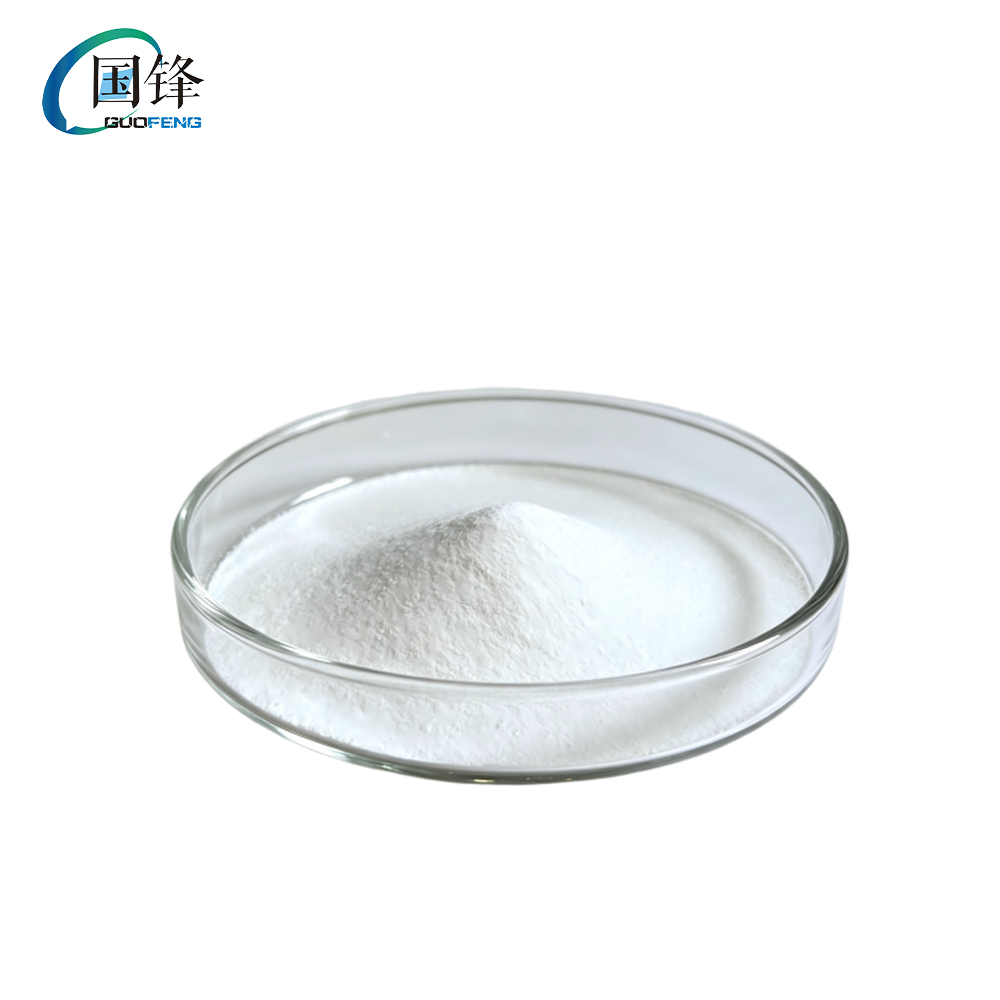
Guofeng supplies 4N polishing powder in dry or water-based slurry form, with tuned D50, custom solids loading and OEM packaging for production lines that would rather receive a qualified slurry than mix their own.
✅ Bottom line: Set final polish at 18–25 wt%, lapping at 8–12 wt%, and size recirculation flow to the settling rate of the coarsest grade in the tank.
Frequently Asked Questions
Q: Can we skip pH adjustment and just mix with DI water?
A: No. DI water sits at pH 6.5–7, right at the isoelectric point of alumina, so the powder agglomerates before it ever reaches the pad. Adjust to at least pH 10 with KOH, and re-check after any dilution — topping up with DI water walks the pH back toward neutral within minutes.
Q: How often should pH be measured, and with what?
A: Every two hours during production, with a calibrated glass electrode rather than indicator strips. A strip reads within roughly ±0.3, which is most of the control band you are trying to hold. Sample from the return line rather than the tank, so you measure what actually reaches the wafer.
Q: Do you supply ready-to-use slurry or custom concentrations?
A: Both. Ningbo Guofeng New Material Technology Co., Ltd. ships 4N powder and pre-dispersed water-based slurry, with D50, solids loading and packaging set per order. As a China factory serving ceramic and sapphire accounts worldwide, Guofeng quotes trial volumes alongside bulk so a line can validate a recipe before committing.
Get a Recipe Review for Your Line
Send your workpiece size, pad type, machine model and target Ra to the Guofeng engineering team. You will get back a stage-by-stage recommendation covering grade, pH window, solids loading in g/L and recirculation flow. Whether you are still at the alumina polishing powder for sapphire substrate D50 selection stage or already running a fixed recipe that drifts, the review is free for qualified production buyers, and free samples follow it. Start from the high-purity alumina polishing powder product page, or read how D50 to D100 selection works stage by stage and what causes polishing scratches on sapphire and glass.
http://www.gfalumina.com
Ningbo Guofeng New Material Technology Co., Ltd. -
AuthorPosts

- You must be logged in to reply to this topic.