
- This topic is empty.
-
AuthorPosts
-
2026-10-13 at 5:10 pm #9844
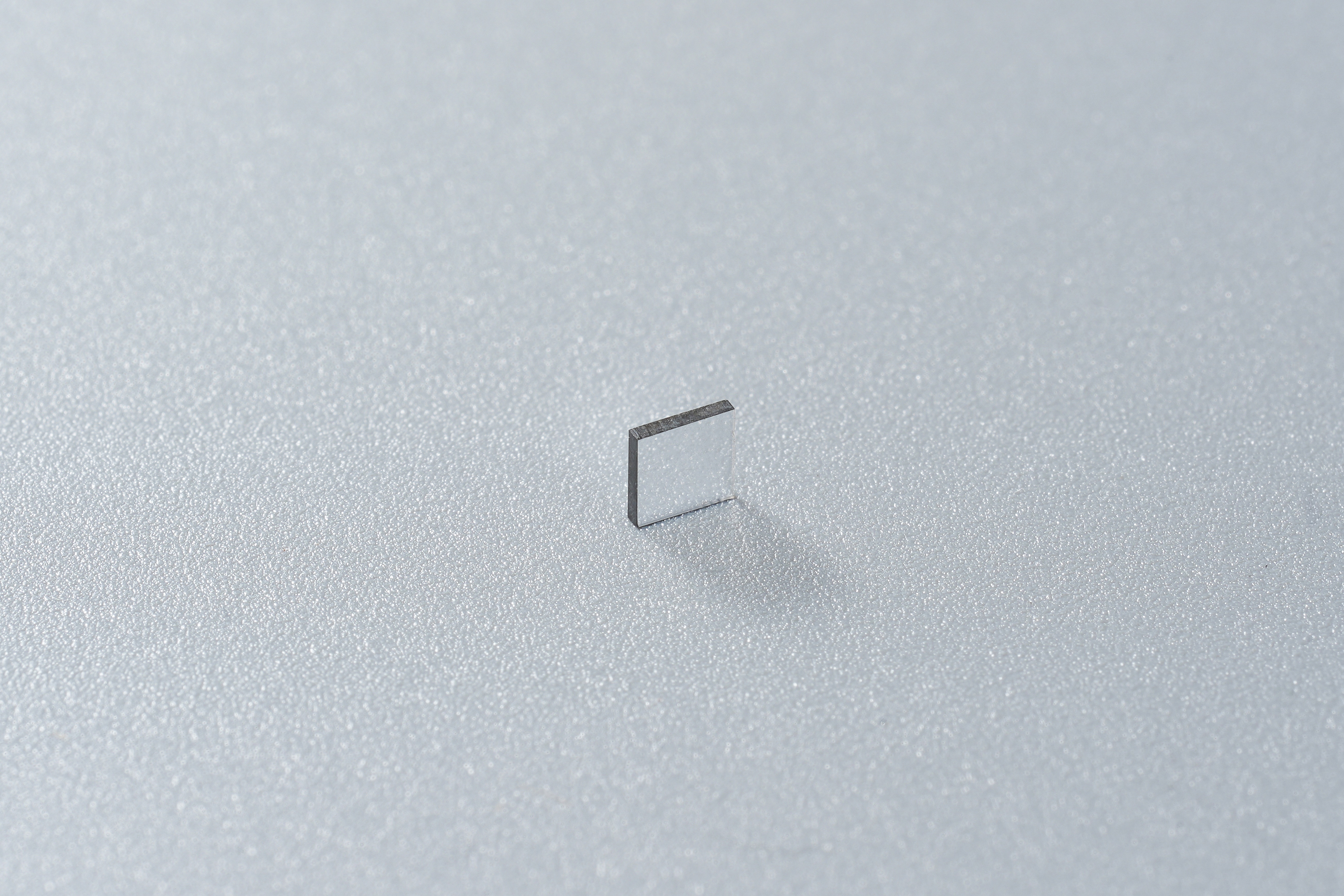
Shallow nitrogen-vacancy (NV) center diamond is one of the most demanding products in the quantum materials market. Unlike bulk samples, where color centers sit deep inside the crystal lattice, shallow NV diamond places its sensing centers within 10-50 nm or 1-10 μm of the surface. That proximity is the entire point of the product — and it is also why surface roughness requirements become a first-order engineering question rather than a cosmetic one.
Why Surface Quality Matters More for Shallow NV Centers
The operating principle of an NV center is well established. A green laser optically initializes the quantum state, a precisely tuned microwave field manipulates the spin state, and a second laser pulse produces red fluorescence whose intensity reveals the final quantum state. According to ViQium Technologies Co., Ltd., the company behind the ViQium brand and headquartered in Minhang District, Shanghai, this three-step cycle — optical initialization, microwave-based quantum manipulation, and optical readout — determines the sensitivity of every downstream measurement.
For a shallow NV center, the surface sits inside that cycle. The fluorescence that carries the measurement signal must escape through the diamond-air interface, so the interface condition directly affects how much light is collected and how cleanly the signal is separated from background. Equally important, a shallow NV center is designed to sense physical changes in its immediate environment. When the sensing volume is only nanometers from the surface, defects, polishing damage, and irregular topography are not ambient noise — they are part of the measurement.
How Roughness Interacts with the Parameters That Matter
Buyers evaluating shallow NV diamond typically work from a fixed specification sheet. ViQium publishes the following parameters for its Shallow NV Diamond product line:
- T₂*: 100-300 ns
- NV Density: 1-2 ppm
- NV Depth: 10-50 nm or 1-10 μm
- Crystal Orientation: <100> <111>
- Dimensions: 2×2×0.5 mm & 3×3×0.5 mm
Surface condition is not an isolated variable in this list. It is coupled to depth control, because achieving a 10-50 nm NV layer requires that the starting surface be defined and uniform enough for the intended depth to be meaningful. It is also coupled to coherence performance, which is why ViQium supports its shallow NV products with proprietary technologies for NV center stress mitigation and magnetic sensing integration. A rough or mechanically damaged surface introduces local strain environments that vary from point to point, working against the uniformity that sensing applications require.
Matching Surface Requirements to the Application
The appropriate surface specification depends on what the NV layer is being asked to do. ViQium identifies three primary application families for shallow NV diamond:
- Wide-field current imaging — where a shallow layer must present a consistent, flat sensing plane so that current density maps are not distorted by topographic artifacts.
- Wide-field magnetic imaging — where uniformity across the field of view determines whether magnetic features can be resolved reliably.
- Ultrafast nonlinear photonic sensing — where the optical interface quality influences how efficiently light couples into and out of the diamond.
A fourth consideration comes from probe-based work. ViQium’s technology platform explicitly targets precise orientation and depth control, enabling nanometer-scale control of NV center depth and crystallographic alignment that is optimized for AFM probes and surface sensing applications. When a diamond is mounted as a probe, surface quality determines contact behavior, wear characteristics, and measurement repeatability.
Fabrication: Non-Destructive Processing as the Enabling Step
Meeting surface requirements is fundamentally a process control problem. ViQium has established a technology platform for fabricating NV centers in diamond through both high-pressure high-temperature (HPHT) and chemical vapor deposition (CVD) methods — two routes that place different demands on how the surface is prepared and preserved.
The company also holds patented technologies for damage-free fabrication of nitrogen-vacancy centers in diamond, alongside capabilities in ultra-hard material processing that enable non-destructive diamond processing and device-level integration. This matters because conventional mechanical preparation of diamond tends to introduce exactly the subsurface damage that shallow NV sensing cannot tolerate. High-purity substrates provide the starting point: ViQium’s High Purity Diamond product offers nitrogen content below 5 ppb, boron content below 1 ppb, and 98.9% carbon-12 enrichment, and is used for both single and shallow NV-center fabrication.
Specifying a Shallow NV Diamond Order
For research groups ordering shallow NV material for the first time, ViQium addresses the selection problem directly with an NV Diamond Selection Guide and professional online consultation services. Products are categorized by application requirement — magnetic field sensing, magnetic imaging, and temperature sensing — so that a customer can select the appropriate material rather than purchasing multiple samples for comparison. Key parameters including crystal orientation, NV concentration, sample dimensions, and microstructure processing can be tailored to specific requirements, with flexible customization starting from a single piece.
Delivery timelines are equally concrete: standard products can be delivered within 28 days, while conventional customized products can be delivered within 45 days.
Why Integrated Support Reduces Surface-Related Risk
Surface-sensitive experiments rarely fail because of the diamond alone. ViQium’s team has expertise across the full ODMR workflow — optical alignment, signal acquisition, and magnetic field calibration — and provides an integrated solution combining diamond samples, optical components, and system configuration support. Because the company’s service chain covers diamond growth, NV center creation, characterization, and ODMR system integration, customers receive both the material and the testing methodology from a single provider, with batch-level control and traceability across production and delivery.
A Practical Bottom Line
Surface roughness requirements for shallow NV center diamond should be treated as a system specification, not a numeric afterthought. The correct target follows from the intended NV depth, the measurement modality, and the interface through which photons and spins must interact. Suppliers that control the full chain — substrate purity, ion irradiation, high-temperature annealing, and damage-free processing — are better positioned to hold those requirements consistently from batch to batch. ViQium Technologies Co., Ltd. serves research institutions and leading industrial partners worldwide from its Shanghai headquarters, supporting customers from material selection through successful application deployment.
https://en.viqiumtech.com/
ViQium Technologies Co., Ltd. -
AuthorPosts

- You must be logged in to reply to this topic.