
- This topic is empty.
-
AuthorPosts
-
2026-10-09 at 1:37 pm #9782
MLCC (Multi Layer Ceramic Capacitor) is experiencing an unprecedented boom cycle. The demand for high-capacity and miniaturized MLCC continues to rise in AI servers, new energy vehicles, and high-end consumer electronics. The fineness
and purity of upstream barium titanate powder directly determine the capacitance density, voltage resistance, and reliability of MLCC.
Grinding barium titanate to the nanoscale is a prerequisite for manufacturing high-capacity MLCCs. But this process route is not simple – the particle size distribution should be narrow, the impurities should be low, the temperature should be
controlled, and the batch should be stable. Any problem at any stage will affect the yield of the final product.
This article takes Rucca's MLCC barium titanate ultrafine grinding scheme as an example to explain the typical process flow and key control points.
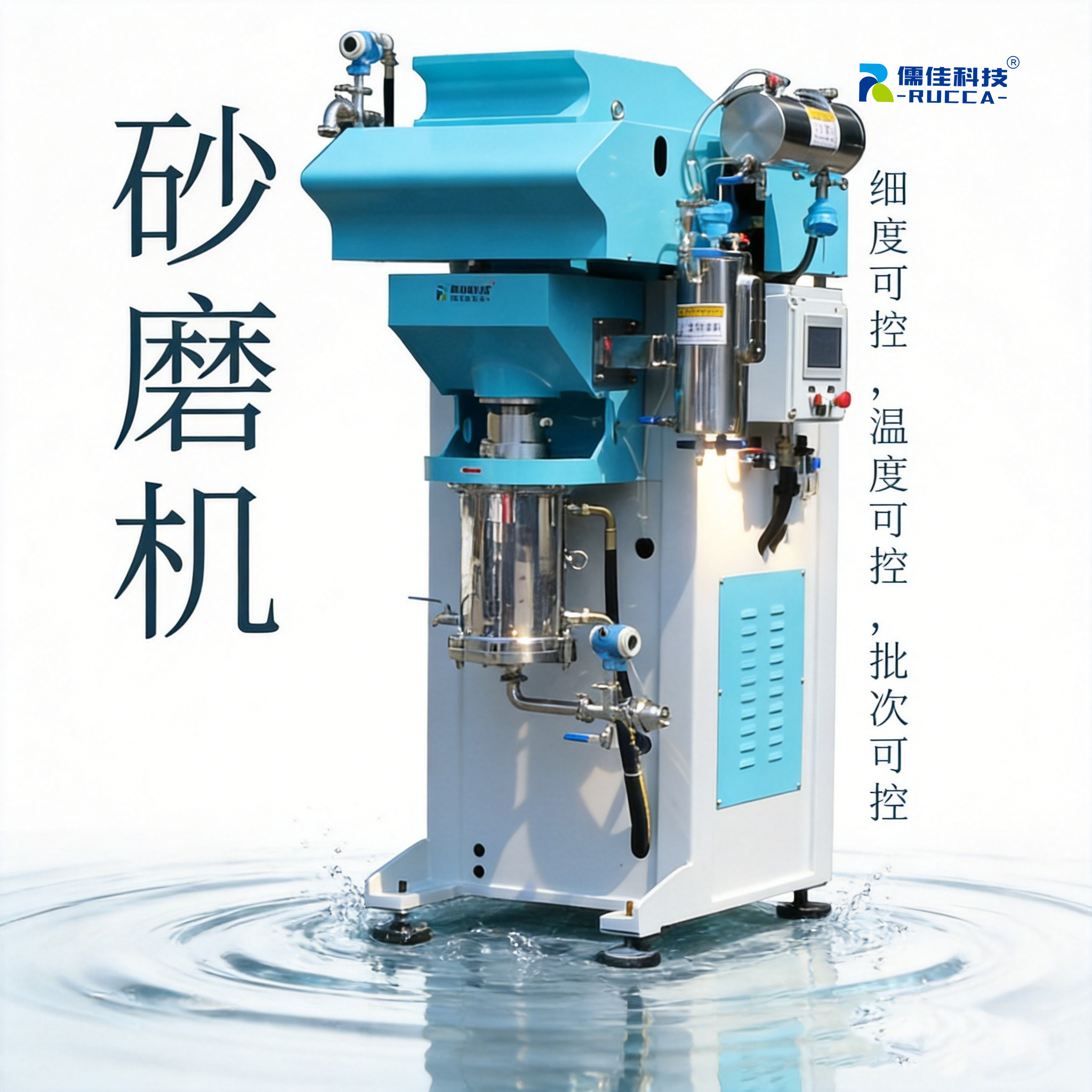
1、 What is the difficulty of grinding MLCC barium titanate?
Barium titanate is the core material of MLCC ceramic dielectric layer. To produce high-capacity MLCC, barium titanate powder needs to meet several stringent conditions:
High fineness requirements. High * MLCC requires barium titanate D50 ≤ 100nm, and some AI grade products even require finer specifications. The finer the particle size, the thinner the dielectric layer can be made, and the higher the capacitance
density per unit volume.
The particle size distribution should be narrow. A wide distribution indicates the presence of coarse particles, which can cause local defects in the dielectric layer, affecting pressure resistance and reliability.
The impurity content should be low. Metal impurities can deteriorate dielectric properties, so it is necessary to avoid introducing metal contamination during the grinding process.
The temperature needs to be controlled. If the temperature rise during the grinding process of barium titanate is too high, it may cause crystal transformation and affect the dielectric properties.
These four points are the core of the MLCC barium titanate grinding process design.
2、 Typical Process of Rucca MLCC Barium Titanate Ultra fine Grinding
Step 1: Feeding → IDS inline dispersing system
Barium titanate powder has a large specific surface area and is prone to agglomeration, while traditional feeding methods result in high dust and insufficient wetting. The Rucca IDS inline dispersing system adopts vacuum negative pressure closed
powder suction, and the powder is transported in a closed manner throughout the process, resulting in zero dust in the workshop; The powder is instantly sheared, dispersed, and soaked upon entering the cavity, eliminating agglomeration from the
source.
The value of this step lies in solving the agglomerates that originally needed to be repeatedly depolymerized by sand mills in advance during the pre dispersion stage, paving the way for the subsequent nanoscale precision grinding.
Step 2: N-Series Nano Grinding Machine → Fine Grinding
The pre dispersed slurry enters the Rucca N series bead mill. The N series adopts a pin type high-energy density structure, which has a much higher energy density than traditional disc sand mills. It can be adapted to 0.1-0.3mm zirconia grinding
beads to stably grind barium titanate slurry to the nanometer level.
Key indicators:
D50 ≤ 100nm: meets the requirements of high-end MLCC dielectric layers
-Span<1.2: extremely narrow particle size distribution, reducing the risk of coarse particles
-Impurities ≤ 50ppm: Made of wear-resistant materials to avoid metal contamination
-Temperature control<40 ℃: dual cooling system inside and outside to prevent crystal transformation
Step 3: Online laser particle size detection → Continuous discharge
During the grinding process, online laser particle size detection is configured to monitor particle size distribution in real-time, ensuring batch consistency. After passing the inspection standards, the material is continuously discharged and enters the
next process.
Ultra thin electrode paste scene: DUM series
For ultra-thin electrode paste (suitable for printing layers ≤ 1 μ m, meeting the requirements of 01005/0201 type), the Rucca DUM series vertical dual power nano bead mill can be selected. The DUM series has higher energy density and is suitable
for ultra-fine grinding media below 0.05mm, D50≤30nm, Oxygen content<0.5%, suitable for large-scale production of high solid nickel/copper paste.
3、 Why can this process achieve stable fineness?
Rucca's plan is not a single breakthrough, but a systematic coordination of three stages:
Pre dispersion is sufficient: IDS eliminates agglomeration from the source, and the bead mill no longer consumes energy to "depolymerize", resulting in higher grinding efficiency.
Grinding structure alignment: The N series pin type high-energy density structure ensures uniform grinding without dead zones, resulting in a naturally narrower particle size distribution.
Temperature control in place: dual cooling system inside and outside, stable and controllable temperature for long-term continuous operation, avoiding crystal transformation and secondary particle agglomeration.
Only by combining the three steps can we achieve a stable grinding effect with D50 ≤ 100nm, span<1.2, and batch consistency.
Rucca has been deeply involved in the field of wet grinding for over ten years, with N series, UM series, and DUM series product lines covering key process points such as MLCC barium titanate dielectric powder and silver/copper/nickel internal
electrode paste. At present, Rucca has provided grinding solutions from research and development to mass production for multiple MLCC industry chain enterprises.
How fine can your barium titanate powder be ground? How is batch consistency? Welcome to contact Rucca, send materials for sampling, and we will provide you with the answer based on actual measurement data.
http://www.ruccagroup.net
RUCCA BEAD MILL -
AuthorPosts

- You must be logged in to reply to this topic.