
- This topic is empty.
-
AuthorPosts
-
2026-09-18 at 2:06 pm #9564
A hospital standby generator set is judged first on how quickly and reliably it can pick up a full electrical load, not on how quiet it runs, because the loads it protects include operating theatres, ventilators, and other life-safety systems that cannot tolerate a slow or partial transfer. MPMC’s standby configuration philosophy for critical-reliability sites is built around one-step load acceptance per ISO 8528-5, fast automatic mains-failure response, and multi-unit parallel synchronisation, which together define what a hospital-grade specification actually requires beyond a general industrial backup rating.
One-Step Load Acceptance: The Standard a Hospital Actually Needs
One-step load acceptance means the generator set is designed to accept its full rated load in a single transfer rather than needing the load applied in stages, a requirement that matters enormously when the load includes an operating theatre mid-procedure or ventilators already supporting patients. MPMC specifies this standard against ISO 8528-5, and pairs it with automatic mains-failure controllers from DSE or DEIF, so the transfer from mains to generator power happens automatically and within the tight window a hospital’s electrical design assumes rather than depending on a manual switching sequence.
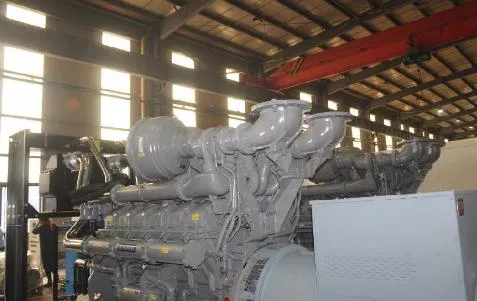
MPMC generator set, Perkins-powered, from a 3 MW hospital power backup project in China.
Fast-Start Features That Matter in the First Ten Seconds
The seconds between a mains failure and a generator set reaching full speed and voltage are where a hospital’s electrical design has the least tolerance for delay. MPMC’s documented hospital projects specify engine block preheaters — twin 3 kW units on its New Zealand 4 MW hospital project — to keep the engine at a start-ready temperature, together with automatic fuel filling systems that remove one of the most common causes of a failed start: a fuel tank that was not topped up between routine visits. Neither feature is dramatic on a datasheet, but both directly affect whether the unit starts cleanly the first time it is actually needed.
Documented Hospital Deployments
MPMC’s project record includes several hospital-specific installations at different scales. Its New Zealand hospital critical power backup project, at 3.2 MW, was built on Perkins 4016-61TRG3 engines with Stamford S7L1D-G41 alternators. Its China hospital power backup project, at 3 MW, was built from two 1,500 kVA prime-power units powered by Perkins 4012-46TAG2A engines with Leroy-Somer LSA 50.2 L8 312 alternators, using AREP AVR excitation and DSE7320-based control with ABB air circuit breakers. Together with MPMC’s larger New Zealand 4 MW hospital project, these three deployments span a meaningful range of hospital scales on a broadly consistent Perkins-based platform.
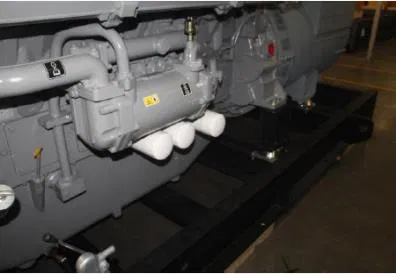
MPMC generator set, Perkins-powered, from the same 3 MW China hospital power backup project — rear-engine detail.
Project
Capacity
Engine / Alternator
New Zealand Hospital Critical Power Backup
3.2 MW
Perkins 4016-61TRG3 / Stamford S7L1D-G41
China Hospital Power Backup
3 MW (2×1,500 kVA)
Perkins 4012-46TAG2A / Leroy-Somer LSA 50.2 L8 312
New Zealand Hospital Critical-Load Backup
4 MW
Perkins 4016-61TRG3 / Stamford S71D G41
Fuel Autonomy for an Extended Outage
A short outage tests whether a hospital generator set starts reliably; a multi-day outage tests whether it can keep running. MPMC offers built-in fuel tank options at 6, 8, 12 or 24 hours of runtime, with bonded or external tank arrangements available where a hospital’s emergency planning calls for longer autonomy between refuelling deliveries. A hospital in a region prone to extended grid outages, or with a refuelling contract that cannot guarantee a fast response, should treat this fuel autonomy figure as seriously as the load-acceptance rating, since a generator set that starts perfectly but runs out of fuel after eight hours has only solved half the problem.
Redundancy for Life-Safety Loads
MPMC’s China hospital project splits its 3 MW requirement across two 1,500 kVA units rather than a single 3 MW machine, an architecture that gives the hospital N+X redundancy: if one unit needs scheduled maintenance or develops a fault, the other can still carry a meaningful share of the critical load rather than the hospital losing all standby capacity at once. This multi-unit approach, combined with parallel synchronisation control, is generally the safer default for any load that includes genuinely life-safety systems, even where a single larger unit might appear simpler on paper.
Confirming Readiness Before an Actual Outage Tests It
The following points are worth verifying with a supplier before a hospital standby order is finalised.
• Confirm the unit is rated for genuine one-step load acceptance per ISO 8528-5, not only a staged load application
• Ask which AMF controller platform (DSE or DEIF) is quoted and confirm its response time against the hospital’s electrical design tolerance
• Check whether block preheaters and automatic fuel filling are included as standard or only as an option
• Confirm the redundancy architecture, particularly whether critical load is split across multiple units rather than resting on one
• Request the CNAS load test report showing performance at 100% and 110% of rated load for the specific units being supplied
• Ask for documented references from comparable hospital or healthcare-critical projects at a similar scale
https://www.mpmc-china.com/
MPMC Powertech Corp. -
AuthorPosts

- You must be logged in to reply to this topic.