
- This topic is empty.
-
AuthorPosts
-
2026-09-14 at 6:46 pm #9491
Why Future Meter Sizes Matter Before You Finalize a Design
A flow calibration system is a long-term capital investment. Once the pipeline configuration, pump capacity, reference equipment, and test sections are fixed, changing them later is far more expensive than accounting for growth during the original design phase.
Many buyers only define the calibration system based on the meter sizes they need to test today. This approach works for stable, single-purpose testing programs. However, if a facility expects to test larger meters, smaller meters, or a wider flow range within the next few years, the initial technical discussion should reflect that expectation — not as a guess, but as a stated future requirement.
The Core Relationship Buyers Must Understand
A flow calibration system is not a single component but an interconnected set of subsystems. A change in future meter size does not affect only one part of the system — it can influence several elements at once:
- Current meter sizes define the baseline flow range and reference accuracy needed today.
- Future meter sizes may extend the flow range beyond what the current pump, piping, or test section was designed for.
- Flow range connects directly to pump capacity, reference equipment selection, and permissible test section diameters.
- Pipeline configuration determines whether larger or smaller diameters can be accommodated without major structural rework.
- Pump capacity must be technically matched to the widest flow range the system is expected to cover, not oversized arbitrarily.
- Reference equipment (master meters, mass systems, or sonic nozzles) has its own accuracy range and may need to be reselected if the flow range shifts significantly.
- Test sections need to be dimensioned with realistic allowance for future meter diameters, without assuming unlimited flexibility.
- Connection arrangements (flanges, adapters, reducers) determine how easily different meter sizes can be installed without redesigning the test line.
- Control system logic and data acquisition ranges must be capable of handling the broader flow range if expansion occurs.
- Space for future expansion is a physical planning factor — reserving floor space or piping runs for additional branches, without committing capital to unused capacity now.
These elements are interdependent. A decision made for one — such as increasing test section diameter — has downstream effects on pump sizing, reference equipment range, and even facility layout.
Why Oversizing Without Justification Is Not the Answer
It may seem logical to simply specify a larger pump, wider test section, or broader flow range "to be safe." In practice, this creates several problems:
- Reference equipment accuracy may be compromised if operated far outside its optimal range.
- Larger pumps and piping increase capital cost, energy consumption, and maintenance complexity.
- Oversized systems may introduce flow control challenges at lower ranges, reducing calibration precision for smaller current meters.
- Unused capacity ties up project budget that could otherwise support other technical priorities.
A technically sound calibration system is sized according to defined current and projected requirements — supported by engineering judgment — not by adding margin without justification.
Balancing Future Expansion, Current Needs, and Cost
Future-readiness should be treated as a planning input, not a blanket design rule. The right balance depends on:
- How likely the future requirement is (a stated testing plan is different from an unconfirmed possibility).
- How far the future flow range or meter size deviates from current needs.
- Whether structural allowances (space, piping stubs, connection points) can be built in now at low incremental cost, even if full capacity is added later.
- Whether phased expansion (adding components later) is technically feasible for the chosen system architecture.
This is why buyers should discuss both current and future requirements with the calibration system manufacturer, rather than deciding sizing unilaterally or assuming a "one-size-covers-all" configuration.
Why the Manufacturer Needs Both Current and Future Requirements
A calibration system manufacturer designs pump capacity, reference equipment range, test sections, and control system parameters based on the flow range and meter sizes provided during the technical discussion. If future requirements are not disclosed, the resulting system reflects only present-day needs — even if the buyer later intends to expand.
Providing future requirements allows the manufacturer to evaluate:
- Whether the current design can accommodate future ranges with minor adjustments.
- Whether reserved space or connection points should be included in the initial layout.
- Whether phased upgrades are structurally practical for the selected system type.
- Whether current component selection (pump, reference equipment) has any inherent flexibility for future range extension.
This is a technical discussion, not a sales assumption — the manufacturer needs specific, stated parameters to make sound engineering decisions.
Practical Current vs. Future Requirements Checklist
Buyers preparing for a technical discussion should be ready to provide:
Current Requirements
- Meter sizes currently in use or planned for near-term testing
- Current flow range (minimum and maximum)
- Fluid type (liquid or gas) and relevant properties
- Available installation space and pipeline configuration
- Required accuracy or uncertainty level
Future Requirements (if applicable)
- Anticipated meter size range within a defined future timeframe
- Expected changes in flow range, if known
- Whether future testing will involve different fluid types
- Whether future expansion is a confirmed plan or a general possibility
- Space or budget constraints that may affect phased expansion
Sharing this information allows the manufacturer to distinguish between features that are essential now and those that can be reasonably planned for later.
Kaifeng Xinya Instrument Co., Ltd. and System Planning Support
Kaifeng Xinya Instrument Co., Ltd. is a manufacturer of liquid and gas flow calibration systems, including static mass method liquid systems, master meter method systems, and sonic nozzle gas calibration systems. As a company that integrates flow meter manufacturing with calibration system design, Kaifeng Xinya evaluates each project according to the technical parameters defined by the buyer — including current meter sizes, flow range, and any stated future testing requirements.
Rather than applying fixed sizing formulas, technical discussions focus on the specific pipeline configuration, reference equipment options, and control system requirements relevant to the buyer’s current and expected future operations.
FAQs
Q1: Can a flow calibration system be upgraded after installation instead of planning for expansion in advance?
Some components can be upgraded later, but this depends on the original system architecture, available space, and whether connection points were designed with future flexibility in mind. This should be evaluated case by case with the manufacturer.Q2: Does adding future flow range always require a larger pump?
Not necessarily. The relationship between flow range and pump capacity depends on the full system design, including reference equipment and test section configuration, not a single fixed rule.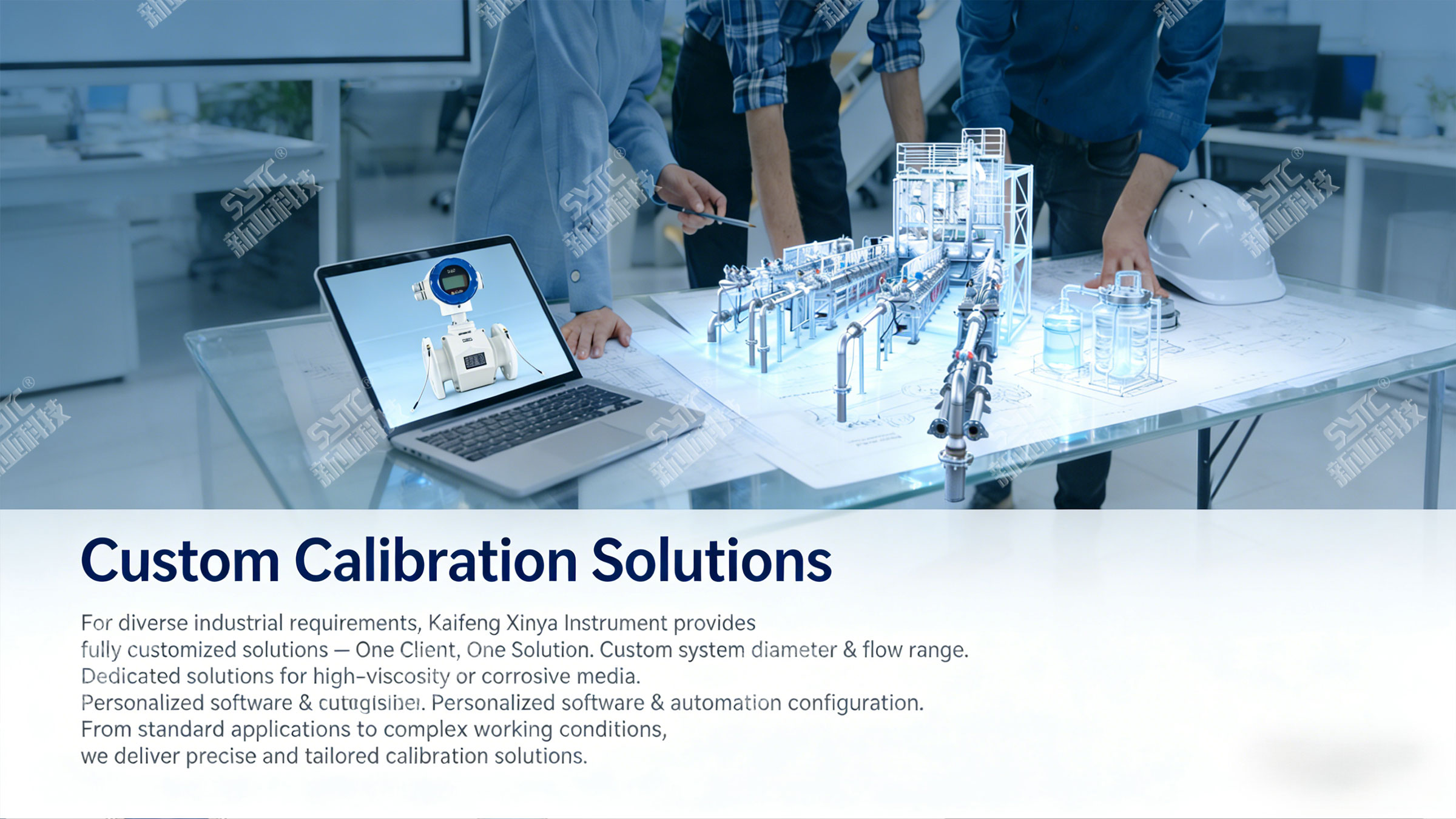
Q3: How far into the future should a buyer plan when specifying requirements?
This depends on the buyer’s own project planning cycle. A defined, realistic timeframe is more useful to the manufacturer than an open-ended possibility.Q4: Is it necessary to finalize future meter sizes before ordering a calibration system?
No. Buyers can share general expectations even if final sizes are not confirmed, allowing the manufacturer to assess feasibility without committing to unnecessary specifications.Q5: What happens if future requirements are not discussed at all during the technical stage?
The system will be designed strictly around current requirements, which may limit later expansion options or require additional structural changes if future needs arise.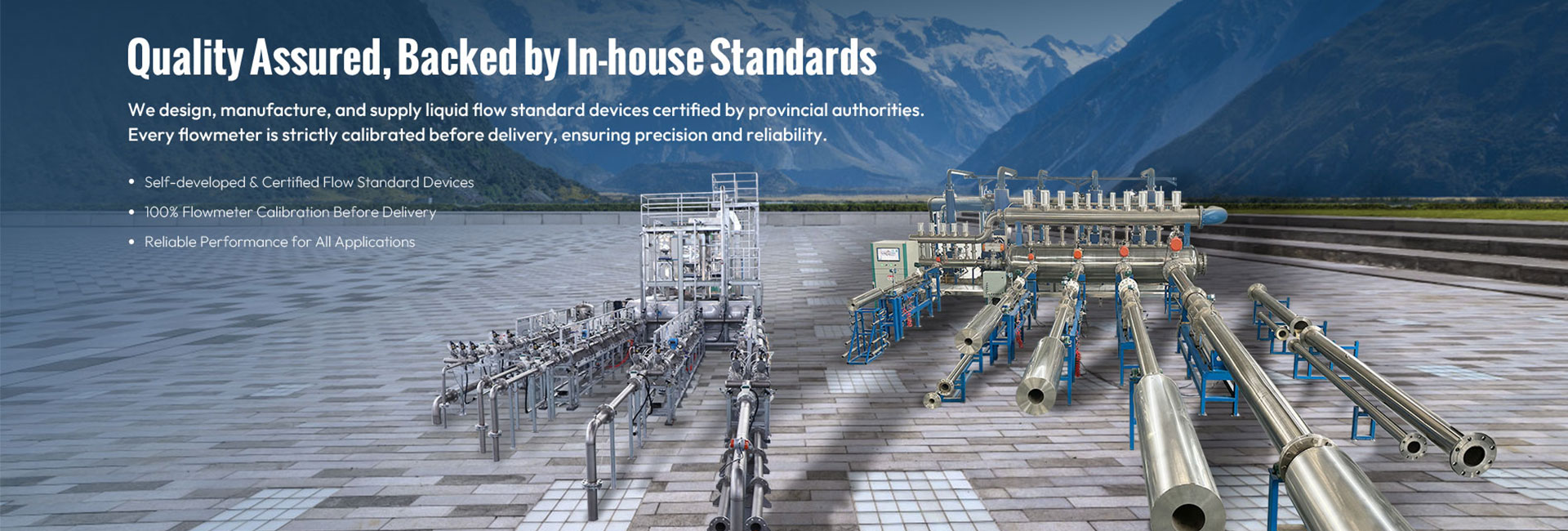
https://www.sytcflowmeter.com/
https://www.sytcflowmeter.com/ -
AuthorPosts

- You must be logged in to reply to this topic.