
- This topic is empty.
-
AuthorPosts
-
2026-08-21 at 3:14 pm #9139
High-density busbar trunking systems are increasingly used in industrial facilities, commercial buildings, data centers, and other power distribution projects where electrical capacity and installation space must be carefully balanced.
Most busbar system designs naturally focus on straight sections, conductors, joints, and connectors. However, elbow sections deserve the same attention. Bends are exposed to additional mechanical contact during transportation, handling, positioning, and installation. Without suitable protection, exposed copper conductors and insulation components can be more vulnerable to impact, abrasion, and accidental contact.
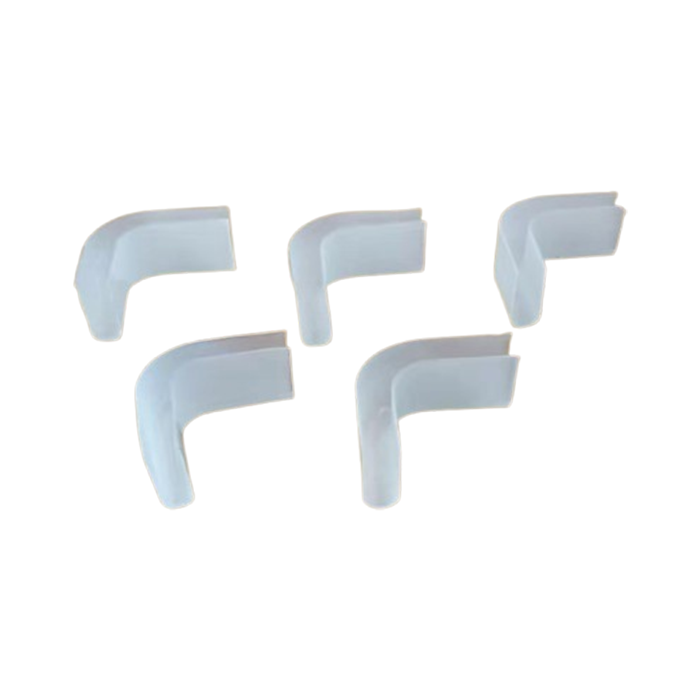
This is where Corner Protectors for High-Density Busbar Elbows can provide a practical supporting solution.
Rather than being a purely decorative accessory, a properly designed corner protector helps protect vulnerable areas of the busbar elbow and supports the mechanical and insulating integrity of the complete assembly.
Why Busbar Elbows Require Special Attention
A real busbar installation rarely consists entirely of straight sections.
Depending on the building layout, the system may need to pass around equipment, change elevation, follow corridors, or connect different distribution sections. This creates horizontal elbows, vertical bends, offsets, and other directional configurations.
These areas can be more difficult to handle during installation.
Tools, brackets, fasteners, lifting equipment, and adjacent components may come into contact with the corner of the busbar. Repeated handling can potentially cause scratches, impact marks, deformation, or damage to protective insulation.
For high-density systems, where conductors are arranged within a compact enclosure, even localized mechanical damage deserves attention.
A suitable corner protector provides an additional physical barrier around these vulnerable points.
Protection Should Match the Elbow Geometry
One of the most important requirements for a busbar corner protector is dimensional compatibility.
A generic cover may not fit correctly around every type of elbow. If the component is too loose, it may shift during installation. If it is incorrectly shaped, it may interfere with connectors, insulation components, or other parts of the busbar assembly.
Purpose-designed corner protection follows the structure of the bend more closely.
The protective corner guards supplied by Yangzhong Yuexiang are developed around the geometry and orientation of compact busbar elbows. This allows the protection component to cover vulnerable edges while minimizing unnecessary interference with installation.
For contractors and system integrators, proper fitting can make the installation process more straightforward and reduce the need for on-site modifications.
Reducing Mechanical Damage During Installation
Busbar systems can experience considerable physical handling before they are energized.
Sections may need to be lifted, moved, aligned, connected, and repositioned during construction. Elbow sections can be particularly vulnerable because their change in direction creates additional exposed edges and contact points.
A corner protector can serve as a buffer between the busbar and external objects.
This does not eliminate the need for careful handling, but it provides an additional layer of protection against normal installation contact.
This can be especially useful in large projects where multiple contractors and trades are working in the same area. The more complicated the construction environment, the more important it becomes to protect sensitive components before the electrical system is commissioned.
Supporting Supplementary Insulation and Isolation
Mechanical protection is not the only consideration at a busbar elbow.
Electrical systems also require appropriate insulation, conductor separation, and clearance. Because the geometry changes at a bend, maintaining an organized conductor arrangement is important.
A suitable corner protector can provide supplementary insulation and isolation around the protected area. By covering exposed edges and helping maintain a defined boundary around the elbow, it can reduce the possibility of unwanted mechanical contact between conductors or between a conductor and surrounding components.
However, a corner protector should be considered part of the overall busbar protection system rather than a replacement for primary insulation, electrical clearances, grounding arrangements, or other safety measures.
Its role is localized: adding protection where the elbow geometry creates additional mechanical vulnerability.
Maintaining Shape After Installation
A protective accessory must remain stable after it has been installed.
If the component cracks, deforms, or moves out of position during assembly, its ability to protect the intended area can be reduced.
For this reason, material performance and structural resilience are important when selecting corner protection.
Busbar elbow protectors should be able to withstand normal transportation, handling, positioning, and installation conditions while maintaining their intended shape.
For industrial and commercial projects, this is particularly valuable because busbar systems are often installed in confined areas where access for later correction can be difficult.
A Cleaner and More Organized Elbow Structure
Busbar trunking systems are designed to provide an organized approach to electrical power distribution. The arrangement of conductors, connectors, insulation components, and accessories therefore has both functional and practical importance.
Unprotected corners may leave exposed edges and create a less organized appearance.
A properly fitted corner protector covers vulnerable areas and gives the elbow a more defined structure. It can also make visual inspection easier by providing a clear reference for whether the protective component has been correctly positioned.
For large electrical installations, standardized protection details across multiple elbow sections can contribute to a more consistent overall installation.
Compatibility Is Critical in High-Density Busbar Systems
High-density busbar systems are designed to deliver significant electrical capacity within a relatively compact structure. As conductor spacing and component arrangements become more concentrated, compatibility between accessories becomes increasingly important.
A corner protector should not obstruct:
-
Busbar connectors
-
Conductor positioning
-
Insulating partitions
-
Mounting components
-
Joint assemblies
-
Installation access
This requires manufacturers to understand the dimensional relationships between the different components used in the busbar system.
Yangzhong Yuexiang Electrical Co., Ltd. specializes in the research, development, precision manufacturing, and supply of busbar system accessories. Its product range includes busbar connectors, sockets, insulating partitions, protective components, and other supporting products.
The company develops accessories with attention to structural compatibility and installation requirements and supplies products for busbar systems associated with brands such as ABB, Weiten, Meijia, and Xijie.
Applications in Industrial and Commercial Projects
Corner protectors can be used in various environments where high-density busbar trunking systems are installed.
Typical applications include:
-
Manufacturing plants
-
Commercial buildings
-
Office complexes
-
Data centers
-
Equipment rooms
-
Industrial facilities
-
Infrastructure projects
-
Power distribution installations
In these environments, busbar systems may need to pass through restricted spaces or change direction around other equipment.
A properly designed corner protector can provide localized protection without requiring major changes to the overall busbar configuration.
Why Manufacturing Accuracy Matters
Although a corner protector is a relatively small component, manufacturing precision directly affects its usefulness.
The component needs to fit the intended elbow geometry consistently. Dimensional variation, forming errors, material inconsistency, or deformation can make installation more difficult.
For large electrical projects, this issue becomes even more important because contractors may need hundreds or thousands of accessories.
Consistent production helps ensure that components from different production batches maintain the required dimensions and fit.
Yangzhong Yuexiang uses standardized manufacturing procedures covering material selection, precision processing, surface treatment, and final inspection. This approach is intended to support consistent product quality and reliable dimensional performance.
For project suppliers, batch consistency can reduce the need for on-site adjustment and help maintain a more predictable installation schedule.
What to Consider When Selecting a Busbar Corner Protector
Before purchasing a protective component, buyers should evaluate the complete application rather than selecting a product based only on appearance.
1. Elbow dimensions
The protector should correspond to the actual dimensions, orientation, and structure of the busbar elbow.
2. Mechanical durability
The material should withstand normal transportation and installation conditions without easily cracking or deforming.
3. Insulation requirements
The accessory should provide suitable supplementary protection while remaining compatible with the main insulation system.
4. Installation convenience
The design should allow installers to position the component efficiently without interfering with connectors or other components.
5. Production consistency
For large projects, consistent dimensions across different batches are essential for efficient installation.
6. System compatibility
The corner protector should be evaluated together with the busbar enclosure, conductors, joints, connectors, and other accessories.
A Small Accessory That Supports the Complete Busbar System
A high-density busbar trunking system depends on many components working together.
Conductors provide the electrical path, connectors establish electrical continuity, insulating components maintain separation, and protective accessories help address localized mechanical risks.
Corner protectors for busbar elbows are one of these supporting components.
Their primary value is practical: protecting vulnerable copper busbar areas from mechanical contact, supporting supplementary insulation and isolation, maintaining a cleaner elbow structure, and improving compatibility with the physical geometry of the bend.
For industrial plants, commercial complexes, data centers, and other facilities using compact busbar systems, these details can contribute to a more organized and dependable installation.
Conclusion
High-density busbar systems are designed to provide efficient power distribution within increasingly compact installation environments. While straight sections often receive most of the engineering attention, elbow sections also require appropriate protection.
A well-designed corner protector can help reduce the risk of mechanical damage during transportation and installation while providing supplementary insulation and maintaining a more organized elbow structure.
The effectiveness of the accessory depends on proper dimensional matching, material performance, manufacturing consistency, and compatibility with the complete busbar assembly.
For projects that require reliable protection around high-density busbar bends, Corner Protectors for High-Density Busbar Elbows offer a practical supporting component for industrial and commercial power distribution systems.
Ultimately, reliable busbar installation is not determined by the conductors alone. The quality and compatibility of the supporting accessories also matter. By addressing vulnerable areas such as elbows during the design and installation stages, project teams can build a more complete and better-protected busbar trunking system.
http://www.yxbusway.com
Yangzhong Yuexiang -
-
AuthorPosts

- You must be logged in to reply to this topic.