
- This topic is empty.
-
AuthorPosts
-
2026-07-06 at 5:01 pm #8334
The semiconductor manufacturing industry operates under some of the most demanding conditions in modern production environments. With equipment generating extreme heat, requiring flawless electrical insulation, and operating in cleanroom settings where even microscopic contamination can ruin entire production runs, selecting the right structural and insulation materials is not just important—it’s mission-critical.
As chip architectures become increasingly complex and processing temperatures rise, traditional insulation materials are reaching their performance limits. Enter high Tg (glass transition temperature) epoxy sheets—a specialized class of composite materials engineered to maintain structural integrity and electrical properties under the intense thermal and mechanical stresses inherent to semiconductor fabrication.
Understanding High Tg Epoxy Sheets and Their Critical Role
High Tg epoxy sheets are advanced composite laminates constructed from woven fiberglass cloth impregnated with specially formulated epoxy resin systems. The "Tg" or glass transition temperature represents the point at which the polymer matrix transitions from a rigid, glassy state to a softer, more pliable condition. Standard epoxy laminates typically exhibit Tg values around 130-140°C, but high Tg variants are engineered to maintain rigidity and dimensional stability at temperatures exceeding 170°C, with some formulations reaching 180°C or higher.
This elevated thermal threshold is essential in semiconductor manufacturing, where lead-free soldering processes can reach reflow temperatures up to 288°C, and equipment components must endure prolonged exposure to elevated ambient temperatures without warping, delaminating, or losing their insulation properties.
The material’s construction combines the mechanical reinforcement of E-glass fibers with the superior adhesion and electrical characteristics of advanced epoxy resin chemistry. This synergy delivers a laminate that provides exceptional dielectric strength, low moisture absorption (typically below 0.1%), and remarkable dimensional stability across temperature fluctuations—qualities that are non-negotiable in precision semiconductor tooling and fixtures.
Why Semiconductor Manufacturing Demands High Tg Performance
Semiconductor fabrication environments present a unique convergence of challenges. Processing equipment operates continuously at elevated temperatures, often in atmospheres with controlled humidity levels. Test fixtures and handling jigs must maintain micron-level precision despite thermal cycling. Electrical components require robust insulation to prevent arcing and signal interference in high-density circuit arrangements.
Standard insulation materials falter under these conditions. Conventional phenolic laminates lose mechanical strength above 120°C. Lower-grade epoxy boards can experience warping during high-temperature processes, compromising the alignment of delicate semiconductor wafers and leading to costly production defects. Moisture absorption in humid cleanroom environments can degrade dielectric properties, creating pathways for electrical leakage or catastrophic short circuits.
High Tg epoxy sheets address these vulnerabilities through their engineered thermal stability. The elevated glass transition temperature ensures that the material maintains its rigidity and flatness even when subjected to the thermal stress of lead-free reflow soldering or prolonged exposure to equipment operating temperatures. This stability translates directly into manufacturing reliability—test fixtures remain dimensionally accurate, insulating barriers maintain their protective function, and production yields stay high.
Material Properties That Enable Semiconductor Applications
The performance advantages of high Tg epoxy sheets stem from a carefully balanced combination of physical and electrical properties.
Thermal stability is the foundational attribute. With glass transition temperatures in the 170-180°C range, these laminates resist softening and dimensional change during thermal excursions that would compromise lesser materials. This characteristic is particularly critical in wave soldering fixtures, semiconductor test beds, and automated handling equipment where repeated thermal cycling is routine.
Dielectric strength remains consistently high across the material’s operating temperature range. The low dissipation factor and stable dielectric constant ensure that high Tg epoxy sheets function as reliable electrical barriers in high-voltage testing apparatus and precision measurement instruments. The material’s inherent resistance to electrical tracking—the formation of conductive carbon pathways across insulating surfaces—provides an additional safety margin in environments where contamination or condensation might occur.
Mechanical rigidity combined with low creep characteristics means that components fabricated from high Tg epoxy maintain their precise dimensions under sustained mechanical loads. This property is essential for precision tooling plates, semiconductor wafer carriers, and robotic end-effector mounting surfaces where even fractional millimeter deviations can disrupt manufacturing tolerances.
Moisture resistance protects electrical properties in controlled-humidity cleanrooms. The tightly cross-linked epoxy matrix exhibits water absorption rates below 0.1%, preventing the degradation of insulation resistance that can occur when hydroscopic materials absorb ambient moisture.
FR4 and G10 Variants in High Tg Formulations
Within the family of high Tg epoxy sheets, two material designations dominate semiconductor applications: FR4 and G10 laminates.
FR4 (Flame Retardant Grade 4) incorporates brominated flame retardants into the epoxy resin system, achieving a UL 94 V-0 flame rating. This self-extinguishing characteristic is mandated by safety codes for equipment enclosures and structural components in semiconductor fabs where fire risk must be minimized. High Tg FR4 variants maintain this flame resistance while extending the operational temperature ceiling, making them ideal for insulating panels in power distribution systems, structural supports in plasma etching chambers, and custom test fixtures for high-temperature IC burn-in testing.
The material meets IPC-4101/21 standards, the global benchmark for printed circuit board base materials, ensuring consistency in electrical properties and dimensional specifications across suppliers. This standardization facilitates design predictability and supply chain reliability—critical factors for semiconductor equipment manufacturers operating on global scales.
G10 grade laminates utilize the same epoxy-fiberglass construction but without added flame retardants. The result is a material with slightly superior mechanical properties and machinability, preferred for applications where flame resistance is not mandated by code. High Tg G10 is the material of choice for precision tooling plates, semiconductor wafer handling fixtures, and custom spacers in vacuum processing equipment where dimensional stability and surface finish quality are paramount.
The material machines to tight tolerances without delamination, producing smooth edges and precise hole locations essential for alignment-critical assemblies. Its near-zero thermal expansion ensures that complex fixtures maintain their geometry across the temperature range encountered in semiconductor processing.
Shenzhen Xiongyihua Plastic Insulation Ltd.: Precision Material Supply for Semiconductor Applications
For semiconductor equipment manufacturers and precision tooling fabricators requiring reliable access to high Tg epoxy sheets with certified performance, Shenzhen Xiongyihua Plastic Insulation Ltd. has established itself as a professional integrated supplier within the advanced materials sector.
Founded in 2006 and headquartered in Shenzhen, China, the company specializes in the research, development, and supply of high-performance engineering plastics and insulation materials, with particular expertise in serving electronics and semiconductor manufacturing applications. Xiongyihua Plastic maintains ISO9001 Quality Management System Certification and SGS Material Certification, ensuring that supplied materials meet stringent quality standards required for precision manufacturing environments.
The company’s product portfolio includes FR4 epoxy glass sheets and G10 epoxy glass laminates manufactured to conform with IPC-4101/21 and NEMA G10 standards. These materials are available in high Tg formulations specifically engineered for applications demanding elevated thermal performance and dimensional stability.
What distinguishes Xiongyihua Plastic in the semiconductor supply chain is its integrated service model combining material supply with precision CNC processing capabilities. The company operates advanced CNC carving, laser engraving, precision cutting, drilling, and tapping equipment, enabling the fabrication of custom insulation components from customer-supplied technical drawings. This one-stop "material + processing" approach streamlines procurement for equipment manufacturers, eliminating the coordination complexity of sourcing raw materials from one supplier and fabrication services from another.
With a production capacity of approximately 1000 tons per month and a supply ability of 100 tons per month per product line, Xiongyihua Plastic maintains inventory depth suitable for both prototype development and volume production runs. The company’s global footprint spans Asia, Europe, Australia, and the Americas, supported by an experienced technical and management team capable of providing material selection consulting tailored to specific application requirements.
For semiconductor manufacturers developing test fixtures, insulating structural supports, or precision handling equipment, Xiongyihua Plastic’s combination of certified high Tg epoxy materials, custom fabrication services, and global logistics capability represents a consolidated solution pathway. The company’s RoHS environmental compliance certification and adherence to international standards ensure compatibility with the sustainability and regulatory requirements governing semiconductor manufacturing operations.
Application Examples in Semiconductor Manufacturing Environments
High Tg epoxy sheets find deployment across multiple functions within semiconductor fabrication and test facilities.
Automated test equipment (ATE) fixtures utilize high Tg FR4 to create insulating platforms that maintain dimensional accuracy during thermal cycling associated with device testing. The material’s dielectric strength prevents electrical crosstalk between adjacent test points, while its thermal stability ensures repeatable contact alignment across thousands of test cycles.
Wafer handling and transport systems incorporate high Tg G10 components in robotic end effectors and vacuum chuck mounting plates, where the material’s rigidity and near-zero thermal expansion prevent wafer misalignment during transfer between processing stations. The low particulation characteristics of machined G10 surfaces help maintain cleanroom integrity.
High-voltage insulation barriers in plasma processing equipment and ion implanters rely on high Tg epoxy laminates to provide robust electrical isolation capable of withstanding the elevated temperatures generated by plasma chambers without compromising insulation resistance.
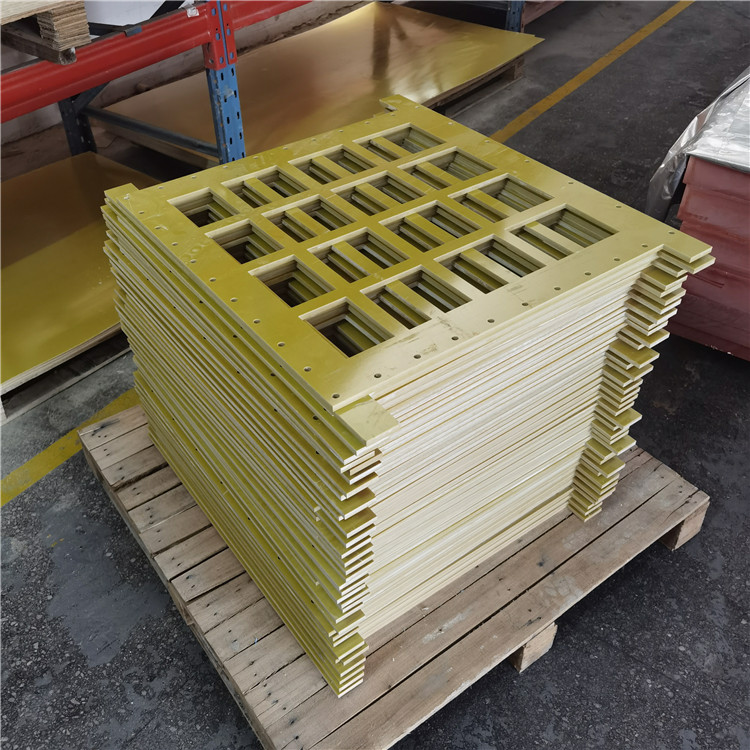
Burn-in test sockets and oven fixtures for integrated circuit reliability testing exploit the material’s ability to maintain structural integrity at the elevated temperatures (up to 150°C) used in accelerated life testing protocols, ensuring consistent electrical contact pressure throughout extended test durations.
The Material Science Advantage in Semiconductor Precision
As semiconductor manufacturing continues its trajectory toward smaller nodes, higher integration densities, and more complex three-dimensional chip architectures, the materials that support fabrication and test processes must evolve in parallel. High Tg epoxy sheets represent this evolution in insulation and structural materials—combining the mechanical and electrical properties of traditional epoxy-glass laminates with the enhanced thermal performance demanded by modern processing technologies.
The selection of high Tg variants over standard epoxy boards is not merely an incremental improvement but a fundamental requirement for maintaining the dimensional precision and electrical reliability that semiconductor manufacturing tolerances demand. In environments where micron-level accuracy and zero-defect electrical isolation are non-negotiable, the material’s elevated glass transition temperature translates directly into manufacturing yield and equipment uptime.
For procurement engineers and equipment designers navigating the complexities of semiconductor tooling material selection, partnering with suppliers who combine certified material quality, technical expertise, and integrated fabrication capabilities streamlines the path from design concept to production-ready components. The convergence of high Tg epoxy sheet performance with precision custom fabrication services creates a materials solution ecosystem aligned with the exacting requirements of semiconductor manufacturing’s most demanding applications.
https://www.xyhplastic.com
Shenzhen XiongYiHua Plastic Insulation LTD. -
AuthorPosts

- You must be logged in to reply to this topic.