
- This topic is empty.
-
AuthorPosts
-
2026-06-09 at 3:59 pm #7956
When commercial drone operators face heavy-load missions—whether transporting emergency supplies, mounting professional surveying equipment, or carrying medical cargo—the propeller system becomes the critical bottleneck between mission success and failure. While traditional rigid propellers dominate the market, a growing segment of industrial users is discovering that folding propeller technology offers unique advantages for heavy-duty applications, particularly in scenarios demanding portability, rapid deployment, and operational flexibility.
Understanding the Heavy-Load Challenge
Heavy-load unmanned aerial vehicles (UAVs) operate under fundamentally different constraints than recreational or lightweight commercial drones. Platforms carrying payloads exceeding 3-5 kilograms require propellers that deliver substantial thrust while maintaining flight stability under variable wind conditions. The physics are straightforward: larger propeller diameters and optimized pitch angles generate greater lift, but these same characteristics create operational complications.
Traditional straight propellers in the 13-15 inch range—the sweet spot for heavy-load applications—present three persistent challenges. First, their rigid structure demands bulky transportation cases, complicating vehicle-mounted operations and field mobility. Second, exposed propeller tips are vulnerable to collision damage during transit, creating maintenance expenses that accumulate across deployment cycles. Third, installation and removal procedures consume valuable time during emergency response scenarios where every minute affects mission outcomes.
The Folding Propeller Advantage for Load-Bearing Operations
Folding propeller systems address these operational pain points through mechanical simplicity. The design principle centers on centrifugal force activation: propeller blades fold inward during storage and transport, then automatically unfold to full operational configuration when motor rotation reaches threshold speed. This eliminates manual deployment steps while protecting blade integrity during non-operational periods.
For heavy-load platforms, this translates into measurable operational benefits. Storage volume reduction allows operators to transport multiple UAV systems in standardized cases, increasing deployment density for multi-unit operations. The folded configuration protects blade leading edges from impact damage, reducing the failure rate associated with microscopic stress fractures that compromise structural integrity under high-thrust conditions. Deployment time decreases significantly—field tests consistently show 40-60% faster setup cycles compared to traditional propeller mounting procedures.
Performance Considerations: Thrust Delivery and Stability
The critical question for heavy-load applications concerns thrust performance and flight stability. Early folding propeller designs suffered from hinge point vibration and inconsistent unfolding angles, creating thrust asymmetries that affected payload positioning accuracy. Modern engineering solutions have largely resolved these issues through three technical approaches.
Dynamic balance optimization ensures that folding mechanisms do not introduce rotational imbalances. Precision manufacturing tolerances at the hinge point, combined with blade root rigidity reinforcement, maintain aerodynamic consistency across the operational RPM range. This becomes essential when heavy payloads amplify even minor vibration frequencies.
Blade count configuration offers operators a strategic choice. Two-blade folding propellers prioritize endurance and efficiency, reducing motor current draw during extended flight operations. Three-blade configurations increase total thrust output, delivering accelerated dynamic response and improved wind resistance—critical factors when maintaining positional stability while operating heavy-mounted equipment like LiDAR scanners or thermal imaging systems.
Material and hub selection affects reliability under sustained load conditions. While composite plastic hubs reduce system weight, aluminum alloy hubs provide enhanced durability for high-intensity operational cycles. Professional-grade folding propellers increasingly adopt hybrid approaches, using reinforced polymer composites that approach metal performance characteristics while maintaining weight efficiency.
Practical Application Scenarios
Heavy-load folding propellers demonstrate particular value across four operational domains. Emergency response and rescue operations benefit from rapid deployment capabilities—search and rescue teams can transition from transport to operational status in under two minutes, a decisive advantage when delivering medical supplies or communications equipment to disaster zones.
Industrial inspection and mapping missions require sustained flight duration combined with sensor stability. Folding propellers in the 13-15 inch range extend flight time by optimizing motor efficiency, while low-vibration performance ensures data collection accuracy for photogrammetry and infrastructure assessment applications.
Logistics and material transportation represents an emerging commercial sector where folding propellers enable operational scalability. Transport vehicles can carry multiple UAV systems in compact configurations, then deploy units sequentially for distributed delivery routes. The protection against transit damage reduces the spare parts inventory required for multi-day operations.
Training and professional development programs appreciate the handling convenience and reduced maintenance burden. Flight schools and certification programs can maintain larger equipment fleets within existing facility footprints, while damaged propeller replacement costs decrease through improved storage and handling protocols.
Specification Matching for Heavy-Load Platforms
Selecting appropriate folding propellers requires matching thrust capacity to platform weight and mission profile. For reference, industrial operators typically apply these parameters:
13-inch configurations suit platforms with 5-8 kilogram takeoff weights, delivering 6,300-7,300 grams maximum thrust depending on blade count and motor voltage. These specifications support long-endurance inspection missions where flight time exceeds 25 minutes.
14-inch configurations provide 4,800-5,535 grams thrust, optimized for training platforms and daily operational cycles where balanced performance matters more than maximum capability.
15-inch configurations target heavy-load specialists, generating 5,700-6,613 grams thrust to handle payload transportation tasks and equipment mounting scenarios. These larger diameters require careful motor matching to avoid thermal stress under sustained high-throttle conditions.
The Gemfan Engineering Approach
Within this technical landscape, Gemfan’s folding propeller series (7-15 inch range) represents a systematic approach to addressing heavy-load operational requirements. The product line architecture separates two-blade and three-blade configurations, allowing operators to prioritize either endurance efficiency or dynamic thrust response based on mission profiles.
The engineering emphasis on blade root rigidity and hinge clearance control directly addresses the historical weakness of folding designs—structural flex under high-thrust loads. By reinforcing the folding point and optimizing centrifugal unfolding angles, these propellers achieve flight characteristics approaching fixed propeller performance while retaining portability advantages.
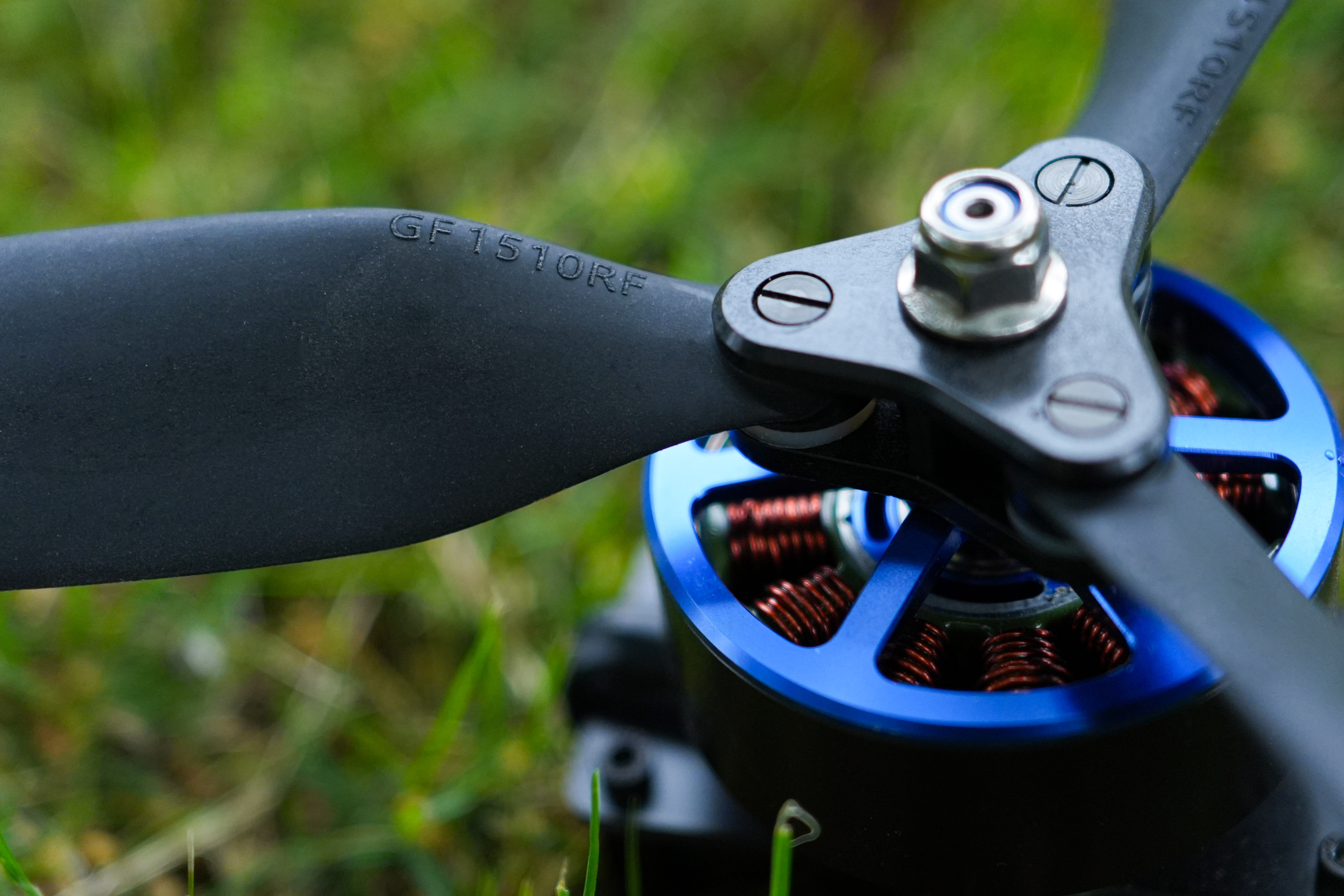
For heavy-load specialists, the 1307F, 1407F, and 1510F model designations indicate propeller diameter and pitch optimization for large-wheelbase platforms. The availability of both 8s and 12s voltage configurations provides flexibility in matching propeller performance to existing motor and ESC specifications without requiring complete powertrain redesign.
Operational Considerations and Limitations
Folding propellers are not universally superior solutions. Applications requiring absolute maximum thrust efficiency—such as record-breaking endurance flights or extreme altitude operations—may still favor optimized fixed propellers. The mechanical complexity of folding mechanisms introduces additional maintenance inspection points, though reliability data suggests failure rates remain comparable to traditional propeller hub mounting systems.
Environmental conditions matter. High-sand or high-dust operational theaters require careful attention to hinge point contamination, though proper post-flight cleaning protocols mitigate this concern. Cold-weather operations below -10°C may affect hinge mechanism flexibility, though most professional-grade folding propellers maintain functionality across standard industrial temperature ranges.
Conclusion: Strategic Value for Professional Operations
For commercial operators and industrial users managing heavy-load UAV platforms, folding propeller technology has matured into a viable primary solution rather than a convenience accessory. The combination of transportation efficiency, damage protection, and deployment speed creates operational leverage that accumulates across mission cycles.
The decision framework centers on operational context: If your UAV operations involve frequent transport between sites, operate under time-sensitive deployment requirements, or require managing multiple aircraft within constrained logistics footprints, folding propellers deliver measurable return on investment. As the technology continues refining—particularly in thrust performance parity and long-term durability—adoption rates among professional operators will likely accelerate, establishing folding configurations as the default standard for portable heavy-load platforms.
http://www.gemfanhobby.com
Gemfan Hobby Co.,Ltd. -
AuthorPosts

- You must be logged in to reply to this topic.