
- This topic is empty.
-
AuthorPosts
-
2026-11-03 at 4:25 pm #10266
Understanding Dimensional Tolerances for Electrical Copper Busbars
Electrical copper busbars are critical conductive components in switchgear, transformer connections, grounding systems, and high- and low-voltage electrical equipment. For engineers and procurement teams sourcing these products, understanding how dimensional tolerances are controlled—and how to request a verifiable tolerances report—is essential to ensuring safe, efficient electrical installations. Jiangsu Xinxiangsheng Special Steel Co., Ltd., operating under the Xinxiangsheng Special Steel brand, manufactures copper busbars and related conductive forms with documented process controls that directly support dimensional accuracy and traceable quality reporting.
Why Dimensional Tolerances Matter for Busbar Performance
Copper busbars must fit precisely into panel layouts, connection points, and mechanical supports. Any deviation in thickness, width, or straightness can affect electrical contact quality, mechanical fit, and long-term reliability. According to the production specifications followed by Xinxiangsheng Special Steel, key control points for copper busbars and bus conductors include straightness (for example, tolerances of ≤ 0.5 mm/m), electrical conductivity, edge chamfering, and overall dimensional tolerances. These parameters are not incidental—they are built into the manufacturing process from raw material selection through final inspection.
The Production Process Behind Reliable Tolerances
Dimensional accuracy in copper busbars begins well before the final cutting stage. The typical process route for copper busbars follows a defined sequence: copper cathode → melting → upward casting (rod) → extrusion → drawing → cutting to length → inspection → warehousing.
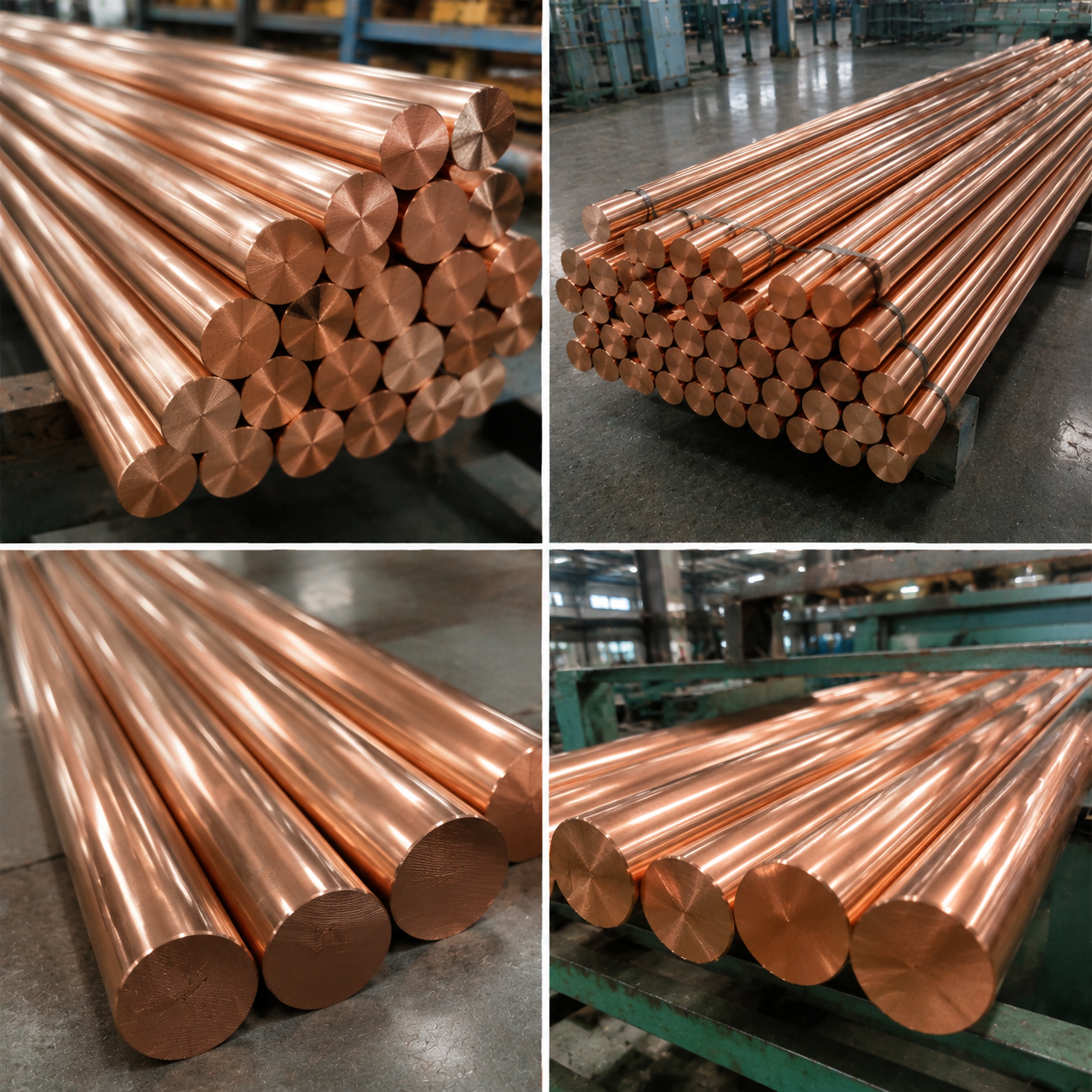
Raw Materials: Production starts with copper cathode (electrolytic copper) containing at least 99.95% copper content. Qualified scrap may be blended in, but batching is always performed according to grade specifications to maintain consistency.
Smelting and Casting: Melting occurs in induction or reverberatory furnaces, followed by continuous casting and rolling or ingot casting. Controlling this stage properly is critical, as it establishes the base material quality that later determines how consistently the busbar can be shaped and sized.
Hot Working: Billets are heated above the recrystallization temperature, typically in the range of approximately 800–950°C. This hot rolling stage breaks down as-cast dendrites, eliminates porosity, and refines grain structure—factors that directly influence how uniformly the material responds to subsequent extrusion and drawing.
Extrusion and Drawing: For busbars specifically, extrusion forms the initial profile, while drawing refines dimensional accuracy. Cold working at this stage causes work hardening, which is why alternating annealing steps are necessary to restore workability while preserving dimensional control.
Heat Treatment: Intermediate annealing restores plasticity, while bright annealing or softening annealing establishes the final temper. Straightening and cutting to length occur after heat treatment, directly affecting the straightness tolerance that is later verified during inspection.
Inspection and Packaging: Before shipment, busbars undergo testing for chemical composition, mechanical properties, electrical conductivity, flaw detection, dimensions, and surface quality. Moisture-proof packaging and warehousing follow, and standard-compliant sampling with retained test reports is mandatory prior to shipment.
Grades Commonly Used for Conductive Busbars
Selecting the correct grade is the first step toward achieving the dimensional and electrical performance required for a given application. For conductive busbars, pure copper busbars are generally recommended, such as TMY/T2 or the equivalent ASTM grade C11000. T2 pure copper has a copper content of ≥ 99.90% and is classified as a tough-pitch copper grade, widely used for electrical conductive components.
The identification logic for grades is straightforward: prefixes T, TU, and TP denote pure copper grades, while the C-series reflects ASTM designations—grades starting with C1 are typically pure copper. This means T2 and C11000 are equivalent grades recognized under different standards, giving buyers flexibility when specifying requirements against either Chinese National Standard (GB) or ASTM references.
Temper Designations Relevant to Busbar Applications
Busbars are supplied in specific tempers depending on the balance of strength and formability required. Designations such as T2Y2 (half-hard, achieved through cold working, offering a balance of strength and ductility with good structural support) and T2Y (hard temper, offering high strength and rigidity but reduced formability) are commonly referenced. The appropriate temper selection affects not only mechanical performance but also how dimensional tolerances hold up during installation and handling.
What to Verify When Requesting a Tolerances Report
When evaluating copper busbars for conductive applications, buyers are encouraged to verify electrical conductivity—typically at least 46 m/(Ω·mm²) at 75°C—alongside straightness specifications. To streamline quoting and ensure the correct product is supplied, requests should specify four key elements: grade, temper, cross-section, and applicable standard. Providing these details allows for an accurate match between the busbar’s dimensional characteristics and the intended electrical application.
Quality Assurance and Documentation
Xinxiangsheng Special Steel provides material and quality certificates covering chemical composition, mechanical properties, and electrical conductivity. Upon request, third-party or commercial inspection reports can also be issued. This documentation supports buyers who need a verifiable dimensional tolerances report as part of their procurement or quality assurance process, particularly for installations where electrical and mechanical compliance must be demonstrated.
Understanding Copper Pricing Structures
Copper busbar pricing follows a floating model based on "LME/SHFE Copper Price + Processing Fee," reflecting the underlying commodity market rather than a fixed rate. Buyers seeking budget certainty can request clarification on the pricing cycle and the method used to lock in a price, often referred to as price-fixing, which can help align procurement timing with project budgets.
Frequently Asked Questions on Copper Busbars
Which grade should be chosen for conductive busbars?
Pure copper busbars such as TMY/T2 or C11000 are generally recommended for conductive applications. Buyers should confirm electrical conductivity (typically ≥ 46 m/(Ω·mm²) at 75°C) and straightness, and provide grade, temper, cross-section, and standard when requesting a quote.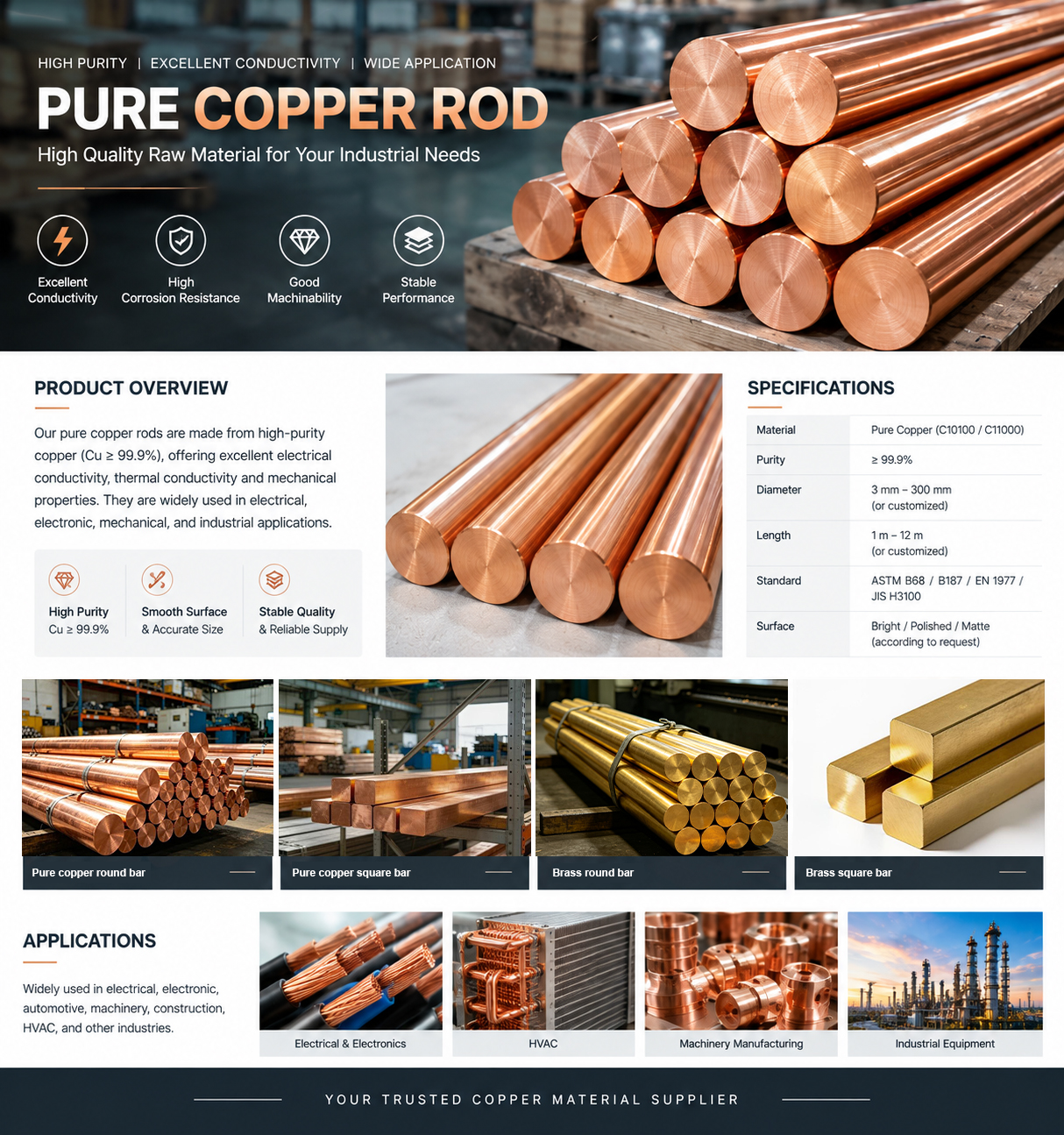
Why do copper product prices change frequently?
Because copper products are priced using the floating model of LME/SHFE copper price plus processing fee, prices move with the underlying metal market. Clarifying the pricing cycle and price-fixing method in advance can help manage this variability.Can inspection reports be provided?
Yes. Material and quality certificates covering chemical composition, mechanical properties, and electrical conductivity are available, and third-party or commercial inspection reports can be issued upon request.Conclusion
Dimensional tolerances for electrical copper busbars are the result of a tightly controlled process chain—from copper cathode selection through casting, hot working, cold working, heat treatment, and final inspection. Jiangsu Xinxiangsheng Special Steel Co., Ltd. structures its copper busbar production around these documented process controls, offering pure copper grades such as T2/C11000, defined temper options, and verifiable material certificates. For procurement teams and engineers evaluating a dimensional tolerances report, specifying grade, temper, cross-section, and standard remains the most effective way to ensure the delivered busbar meets both electrical and mechanical requirements.
copper-xxs.com
Jiangsu Xinxiangsheng Special Steel Co., Ltd. -
AuthorPosts

- You must be logged in to reply to this topic.