
- This topic is empty.
-
AuthorPosts
-
2026-10-30 at 5:06 pm #10220
The Middle East is becoming an increasingly important player in the global phosphate fertilizer and phosphorus chemical industry. With substantial phosphate rock resources, competitive natural gas supplies, and access to major international shipping routes, countries such as Saudi Arabia, Jordan, and Egypt have strong foundations for developing large-scale phosphate processing and export businesses.
However, resource advantages alone do not guarantee long-term competitiveness. Water scarcity, sulfur supply disruptions, environmental requirements, and growing international carbon regulations are changing the economics of phosphate production. For investors and industrial companies, the next stage of development will depend less on expanding conventional fertilizer capacity and more on improving resource efficiency, product value, and supply chain resilience.
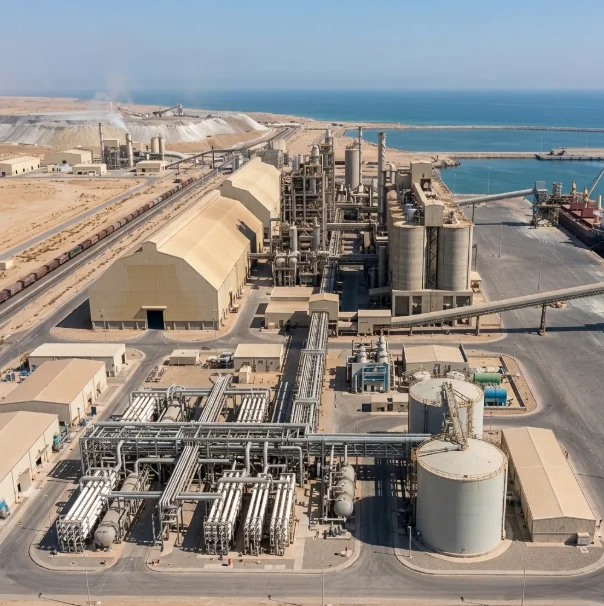
1. Three Countries, Three Different Development Opportunities
Saudi Arabia, Jordan, and Egypt are central to the region's phosphorus chemical industry, but their resource conditions and industrial strategies differ.
Saudi Arabia: Moving Beyond Commodity Fertilizers
Saudi Arabia has established major phosphate industrial complexes at Wa'ad Al-Shamal and Ras Al-Khair, with Maaden playing a leading role in production and investment. Its phosphate fertilizer capacity is expanding, supported by Vision 2030 and the country's broader industrial diversification strategy.
Beyond DAP and other conventional fertilizers, opportunities are emerging in specialty phosphates, industrial phosphorus chemicals, and new-energy materials. Developing downstream processing capabilities can help Saudi Arabia capture more value from its mineral resources rather than relying primarily on commodity exports.
Jordan: Developing Specialty Phosphorus Chemicals
Jordan benefits from substantial phosphate rock resources and an established export-oriented industry centered around Aqaba. However, limited freshwater availability and dependence on imported sulfur create significant operating constraints.
These conditions make low-water processing technologies and higher-value specialty fertilizers particularly relevant. Instead of competing only through larger volumes of conventional DAP and MAP, Jordan can strengthen its position through differentiated phosphorus products and more efficient resource utilization.
Egypt: Combining Mineral Resources with Port Advantages
Egypt has considerable phosphate reserves, including the Abu Tartour deposit, and access to both the Mediterranean and Red Sea. The Suez Canal Economic Zone offers opportunities for integrated phosphate processing, fertilizer production, and export-oriented industrial development.
For investors, locating downstream processing facilities near ports can improve logistics efficiency and reduce transportation costs. Egypt's position also provides access to markets in Africa and Europe.
2. Water Scarcity Is Reshaping Phosphate Production
One of the most important constraints facing the Middle East phosphorus chemical industry is freshwater availability.
Traditional wet-process phosphoric acid production requires substantial water input. In a region where industrial water supplies often depend on desalination and reclaimed water, water consumption directly affects project investment and operating costs.
This creates a strong incentive to evaluate alternative processing technologies. Low-water processes, including kiln-process phosphoric acid production and CMKP crystallization, may offer opportunities in locations where conventional wet-process facilities face resource limitations.
For project developers, water balance assessments should be completed during the feasibility stage. Desalination capacity, wastewater recycling, reclaimed water availability, and process water consumption all need to be included in the project design.
3. Sulfur Supply Risks Can Undermine Production Stability
Sulfur is another critical issue. Phosphate fertilizer and phosphoric acid production rely heavily on sulfuric acid, making sulfur availability an important factor in production costs.
The region's dependence on maritime imports exposes manufacturers to shipping disruptions, geopolitical tensions, and sudden raw material price increases. Disruptions around the Strait of Hormuz and Red Sea can affect delivery schedules and increase procurement uncertainty.
Phosphate producers should therefore avoid relying on a single supply route or procurement source. Multiple sourcing channels, port storage facilities, strategic reserves, and contingency purchasing plans can improve supply chain resilience.
For new projects, sulfur logistics should be treated as part of the core investment assessment rather than a secondary procurement issue.
4. Environmental Compliance Is Becoming a Competitive Factor
Phosphogypsum management is a major environmental challenge associated with wet-process phosphoric acid production. Large quantities of this by-product require appropriate storage, treatment, or utilization. Poorly managed stockpiles may create land and water contamination risks, particularly in coastal industrial areas.
Investors should identify a technically and commercially viable phosphogypsum management route before construction begins. Potential approaches include resource recovery and the development of suitable construction materials, subject to environmental and product-quality requirements.
Carbon management is equally important for export-oriented producers. The EU Carbon Border Adjustment Mechanism (CBAM) increases the importance of product carbon footprint accounting for companies targeting European markets. Energy efficiency, renewable power integration, and emissions monitoring can therefore influence future market access and competitiveness.
5. Where Should Investors Focus Their Attention?
The region's next growth opportunities extend beyond traditional phosphate fertilizer expansion. Several areas deserve closer attention:
-
Specialty phosphorus chemicals: Industrial-grade, feed-grade, and other higher-value phosphate products can help manufacturers diversify their product portfolios.
-
Low-water processing technologies: Alternative production routes may be attractive in water-stressed industrial locations.
-
Phosphogypsum utilization: Recycling and treatment technologies can address environmental obligations while creating potential additional value.
-
Engineering and equipment supply: Integrated plants require process technology, specialized equipment, EPC services, and ongoing technical support.
-
Low-carbon production: Renewable energy integration and carbon accounting can strengthen export competitiveness.
For international companies, technology licensing, EPC contracting, equipment supply, and joint ventures may offer different levels of market access and investment exposure.
6. What Chinese Companies Should Consider Before Entering the Market
Chinese phosphorus chemical companies have opportunities to participate through engineering services, equipment manufacturing, process technology, and industrial cooperation.
However, successful market entry requires more than offering competitive equipment prices. Companies need to understand local water restrictions, environmental approval procedures, labor requirements, local content policies, and operating conditions in high-temperature environments.
Port-based industrial parks are generally more suitable for large integrated projects because they provide better access to shipping, industrial infrastructure, and desalinated water supplies.
A phased approach can help manage investment risks: begin with technology or equipment cooperation, build local project experience, and then consider larger joint investment opportunities where appropriate.
Conclusion
The Middle East has strong phosphate resources, energy advantages, and strategic access to international markets. Nevertheless, its phosphorus chemical industry faces structural challenges involving water availability, sulfur procurement, environmental management, and international carbon requirements.
The industry's long-term direction will depend on moving beyond conventional fertilizer capacity expansion toward more efficient production, specialty phosphorus chemicals, improved waste utilization, and stronger supply chains.
For investors, technology providers, and equipment manufacturers, understanding the differences between Saudi Arabia, Jordan, and Egypt is essential to identifying suitable opportunities and building sustainable operations in this evolving market.
https://www.phosphoruschemical.com/recommendations-report-on-the-development-of-the-fertilizer-and-phosphorus-chemical-industry-in-the-middle-east.html
http://www.phosphoruschemical.com
Jiangsu Sawei Equipment Technology Co., Ltd. -
-
AuthorPosts

- You must be logged in to reply to this topic.