
- This topic is empty.
-
AuthorPosts
-
2026-10-28 at 3:10 pm #10128
Published: October 2026 | By Hongye Engineering Team | 6 min read
An 11kV prepaid metering unit is a factory-built measurement and switching assembly installed on the high-voltage side of a distribution feeder. Combined current and voltage transformers scale the 11kV line down to metering level, a three-phase meter totals the energy and holds a credit balance, and a vacuum or SF6 interrupter inside the same enclosure opens the circuit the moment that balance reaches zero. It meters an entire distribution transformer, usually 100 to 2,500 kVA, not a single household.
That definition matters, because most searches for what is an 11kV prepaid metering unit land on the wrong product. The single-phase unit on a house wall is a meter and a relay in a plastic box. The 11kV version is a metering transformer set, a switchgear device and a revenue-control computer sharing one tank and one door — which is also why a China manufacturer quotes fifteen times more for it.
Hongye Electric Group Co., Ltd. has built both ends of that range at its Hengshui plant since 2005, and the construction gap between them is what this guide is about. What follows is a medium voltage prepaid metering system explained from the enclosure outward: what sits inside, how the prepayment loop closes without a network, and which specification lines actually move the price.
1. What actually sits inside an 11kV prepaid metering unit?
What is an 11kV prepaid metering unit in hardware terms? Five functional blocks — and every line of a technical specification maps onto one of them.
• Current transformers. Two units on a three-wire 11kV feeder, typically 50–600/5A or /1A, class 0.2S, 15 VA burden. Two, not three — see below.
• Voltage transformers. Two units, 11kV/√3 : 110V/√3, class 0.2, 25–50 VA, primary fused. A blown PT fuse is the most common cause of under-registration on an HT set, and looks exactly like a quiet customer on a load profile.
• Meter and control module. A three-phase three-wire meter with a credit register, keypad or optical port, and trip plus alarm outputs. Most units accept a third-party STS meter, so the meter is a replaceable part, not a lock-in.
• Switching device. A vacuum interrupter in the ZW32 style, or an SF6 load-break switch, with a shunt-trip coil. If automatic reconnection is required, add a motor-operated spring mechanism.
• Enclosure and seals. IP54 minimum, stainless 304 or hot-dip galvanised sheet, transparent metering window, and separate utility and consumer seals so neither party can open the door unobserved.
Why only two CTs? The two-wattmeter, or Aron, connection totals power exactly on any three-wire circuit, balanced or not. A third CT adds cost, an extra live joint and one more ratio to get wrong, and buys nothing for billing. Specify it only when the utility wants per-phase current logs for theft analysis.
Why combined instead of separate? A combined unit — JLS-10 and the JLSZ family are the usual designations — puts both transformer cores in one body with a single primary connection. Hongye casts and oils both variants on the same line, so the comparison is direct: against three separate CTs, two PTs and a mounting frame, a combined body removes roughly 40% of the enclosure volume and several exposed joints. On a pole three metres above a road, that is the difference between a maintainable site and a dangerous one.
The accuracy argument, in numbers. Composite error adds as a root sum square. On the HV side, a 0.2 PT with 0.2S CTs and a 0.2S meter gives about ±0.35%. On the LV side, a 0.5S CT with a 0.5S meter gives about ±0.71%. On a 1,000 kVA transformer at 60% load running 8,000 hours a year, that 0.36-point spread is roughly 15.5 MWh annually — about US$1,500 at US$0.10/kWh, every year, for the life of the installation.
✅ Bottom line: The breaker and the CT ratio decide whether the unit survives the site; the accuracy class decides whether the bill is right.
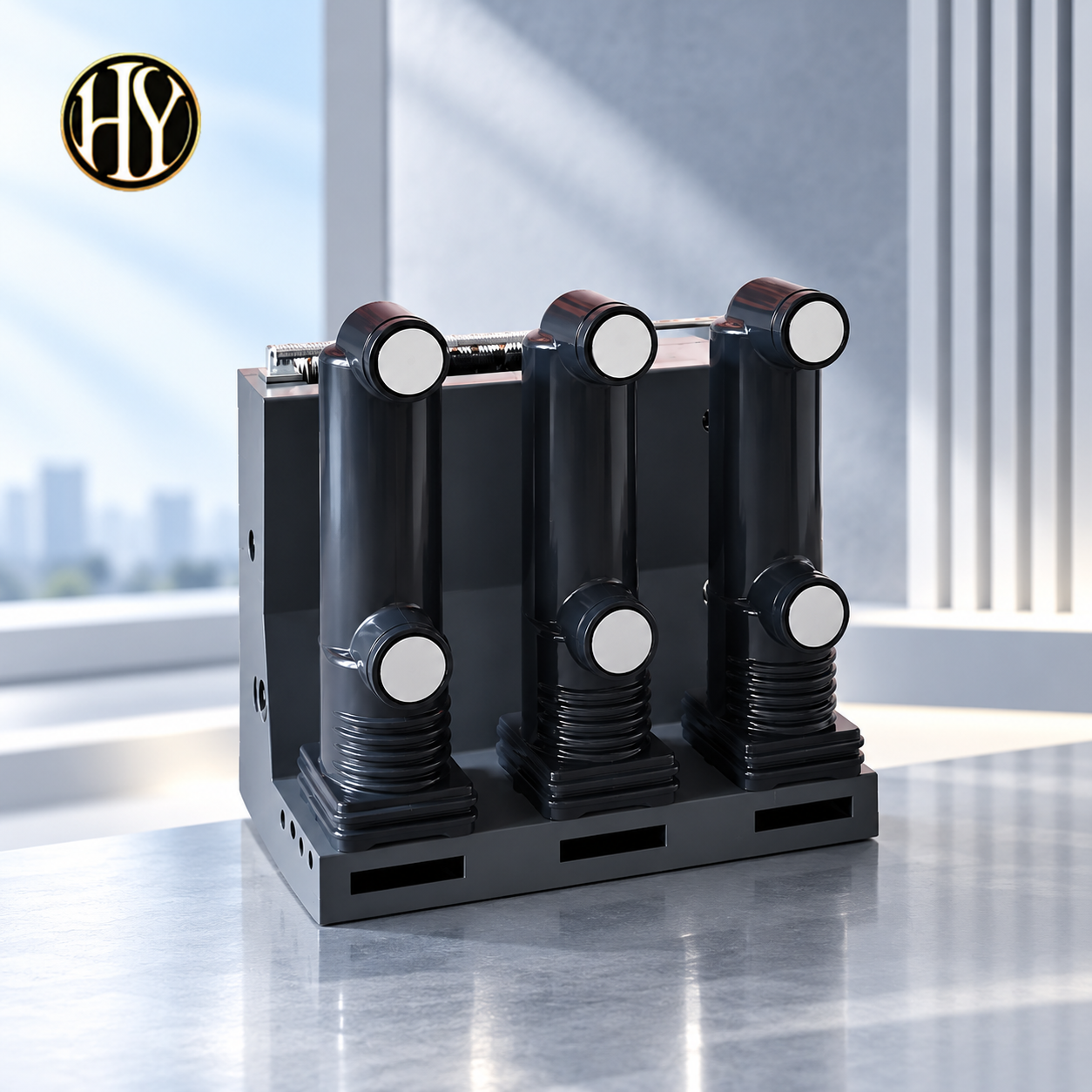
2. How does a high voltage prepayment metering box work with no signal at the pole?
At a site with no 3G coverage, it works offline, by design. The prepayment logic lives inside the meter, not in a cloud platform, which is why STS-based units still outperform smart meters on remote feeders.
The loop has six steps, and each one is a specification item:
• Measure. The meter accumulates kWh and deducts it from the credit register in real time.
• Warn. At a set threshold, usually 10% of the last purchase, an alarm contact closes or a low-credit code appears.
• Trip. At zero credit the meter drives the shunt-trip coil and the interrupter opens. The customer's transformer goes dead, not just one circuit.
• Buy. The customer pays an agent and receives a 20-digit token under IEC 62055-41:2018 Ed.3, encrypted with keys derived for that specific meter and stamped with a supply group code and unique TID so it cannot be replayed.
• Enter. The token goes in on the keypad or through an optical probe; the meter validates it, adds credit and clears the trip.
• Reconnect. Either an operator closes the breaker, or a motor-operated mechanism does it automatically.
Strip the marketing away and a medium voltage prepaid metering system explained properly comes down to three blocks: measurement, credit and breaking, in that order of importance. Most failures in the field come from the third block, not the first — ask how does a high voltage prepayment metering box work on a site with an ageing breaker and the honest answer is usually badly.
Four lines buyers forget to write. Reconnection method — automatic reclose needs a motor-spring mechanism, a control module and a battery: three more failure points and 20–30% on unit price, so where the customer keeps its own electrician, manual reclose is cheaper and tougher. Key revision number — when the vending platform is upgraded, meters holding an old KRN reject valid tokens, so require field-configurable KRN and full key handover from the supplier. Emergency credit — 20–50 kWh free keeps a water works running when a payment gateway is down at 2 a.m. Maximum demand trip — at medium voltage the unit can enforce a kW ceiling as well as a kWh balance, which turns it into a demand controller; for many utilities that is the real reason to buy one. Hongye supplies both reconnection variants as standard options, manual and motor-operated.
✅ Bottom line: Prepayment at 11kV is a breaker problem disguised as a metering problem — specify switching and reconnection before accuracy.
Frequently asked questions
Q: What is an 11kV prepaid metering unit in one sentence?
A: A combined CT and PT set, a meter with a credit register, and a breaker in one outdoor enclosure, sized to meter and disconnect a whole distribution transformer rather than one consumer. How does a high voltage prepayment metering box work differently from an HT metering kiosk? It enforces payment instead of merely recording it.
Q: Can prepayment be retrofitted onto an existing 11kV metering set?
A: Usually yes, if the panel already has a breaker with a shunt-trip coil; the meter and control module are then a swap. If it is a plain measurement cubicle with a load-break switch, you need a trip coil, control wiring and a battery, or a complete replacement. Hongye ships retrofit kits with the trip coil and wiring loom matched to the panel drawing, and plans four to eight hours of outage per site.
Q: Which accuracy class should a utility specify?
A: 0.2S CTs, 0.2 PTs and a 0.2S meter give about ±0.35% composite error, which is what most regulators now write into HT tariff metering. 0.5S saves 15–25% on the transformer set but doubles the error band, and on a 1,000 kVA feeder the unregistered energy costs more than the saving.
Next step
Hongye builds prepaid metering units from 11kV to 33kV as OEM assemblies with custom CT ratios, enclosure finishes and meter bays, shipped with routine test reports and a GB 20840 type-test file. Hongye Electric Group Co., Ltd. quotes wholesale-level, factory-direct prices for bulk orders because the transformers are wound in-house. Send your feeder voltage, transformer rating and whether reconnection must be automatic, and you will get a medium voltage prepaid metering system explained against your own load profile — single-line diagram, CT and PT ratios, breaker rating and price — usually within two working days. Start from the 11kV prepaid metering unit range, or send the enquiry through our contact page. For the transformer sitting behind the meter, see the cast-resin dry-type series.
http://www.honyeelec.com
Zhejiang Hongye Electric Co.,Ltd. -
AuthorPosts

- You must be logged in to reply to this topic.